
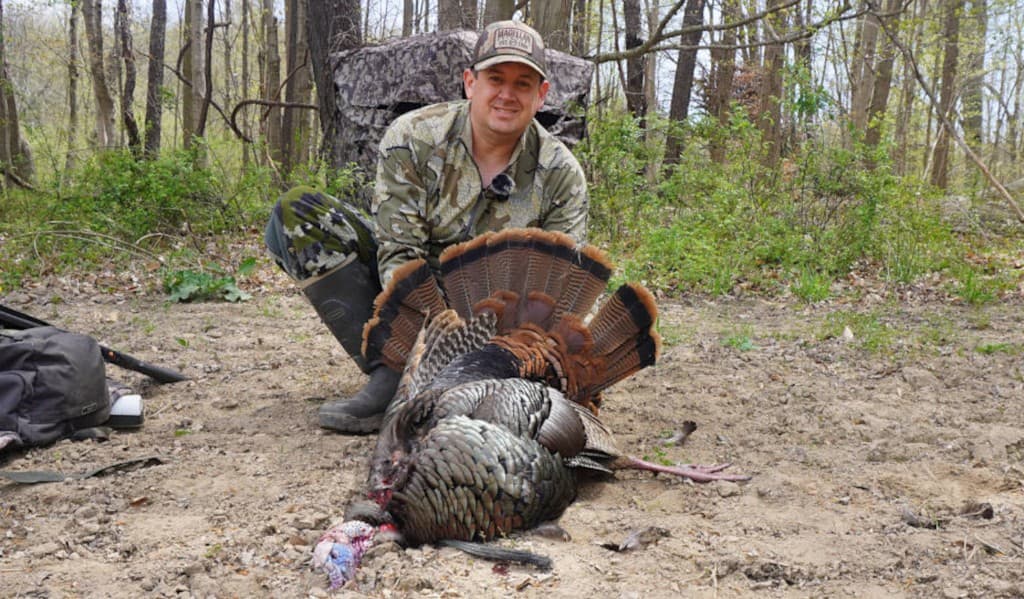
Seasons, license fees, and where to hunt eastern wild turkeys in Michigan—plus why the state flies under the radar as a turkey destination.
Every spring the Michigan woods echo with a symphony of gobbles. It's a testament to the conservation success story of wild turkeys in the state. Only 35 to 40 years ago, it was rare to see a turkey. Today, Michigan's natural areas are overflowing with them. To the point that some have started to frequent the urban areas, too.
Michigan flies under the radar as a turkey hunting state. However, it's a solid option for anyone looking to notch the eastern wild turkey portion of their belt. Tags are easy to procure. Public lands are plentiful, and hunting pressure is lower than other seasons.
Today we'll go over everything you need to know to plan your turkey trip to the Great Lakes State.
Michigan Turkey Seasons and Management Units
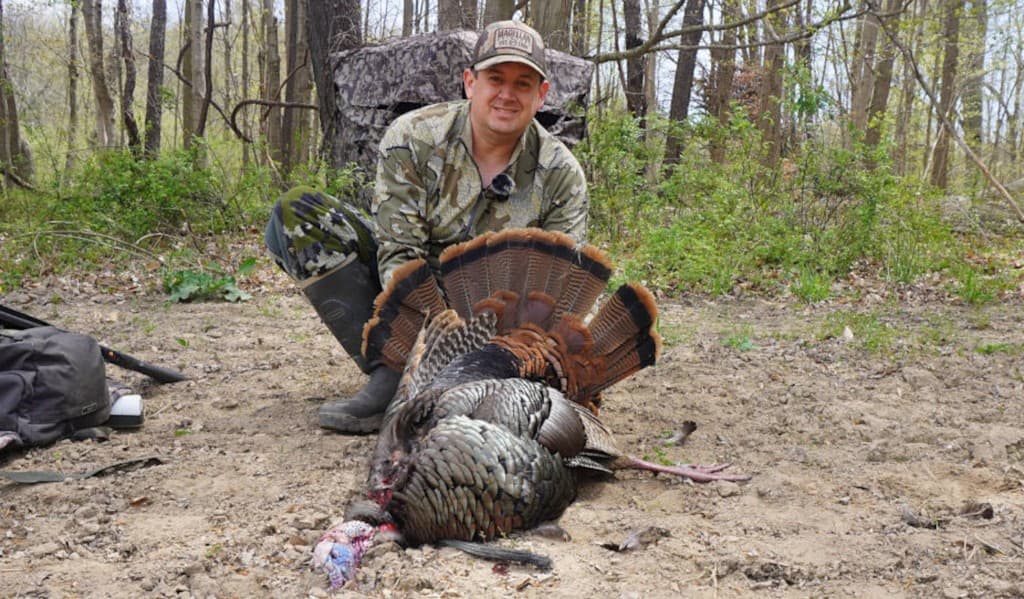
Michigan's turkey regulations seem complex at first glance but are simple. The state is divided into three turkey management units or TMUs. The Upper Peninsula is TMU "M," the northern lower peninsula has been designated "NN." This TMU extends down to about the middle of the state. The line runs from the northern border of Muskegon County across the state to Saginaw Bay.
The Michigan DNR has designated six different hunt numbers for the three TMU units. Units M and NN have a license quota of 6,000 and 18,000 for hunt numbers 0110 and 0134. Hunters must apply for these licenses in advance. The same goes for hunt numbers 302 and 303 in TMU ZZ. (These hunts allow hunting on public lands in the ZZ TMU.) Applications start January 1 and run through February 1. The cost of an application is $5.
There is no need to panic if you miss the application deadlines. There are plenty of guaranteed turkey opportunities with unlimited quotas. Hunt 0234 is a guaranteed turkey license that is good statewide. The downside is that it cannot be used on public lands in the ZZ TMU.
Another option is to buy a hunt 0301 license, which also has an unlimited quota. The catch here is that hunt 0301 is only valid on private land in the ZZ TMU. It sounds confusing but is simpler than it looks on paper. No matter what hunt is chosen, there are plenty of opportunities to bag a Tom in Michigan.
Michigan Turkey License Fees
Michigan's turkey license fees are not bad, especially for hunters visiting from out of state. Most of the cost for non-residents will be in the $151 base license. After that, the turkey license itself is the same cost to residents as it is non-residents. The complete costs break down like this:
Base License Fees
- Residents: $11
- Youth (9 and under): n/a
- Youth (10–16): $6
- Senior (65+): $6
- Non-resident: $151
Spring Turkey License Fees
- Residents: $15
- Youth (9 and under): n/a
- Youth (10–16): $15
- Senior (65+): $6
- Non-resident: $15
Michigan also requires a DNR sportscard for anyone without a valid driver's license or other ID card. However, the cost is only $1. Compared to neighboring Indiana, Ohio, and Wisconsin, Michigan's turkey licenses are cheap. The total is only $166 when buying a leftover tag over the counter. Even when entering a draw, the cost is only $171 total. That leaves a little more budget for travel and lodging costs.
Where to Hunt
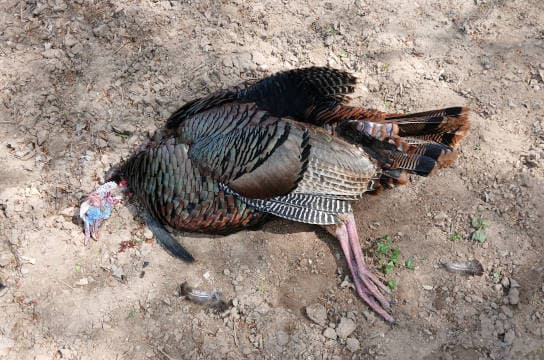
This state has a little something for every turkey hunter. The southern half of Michigan has heavy agriculture, making it easy to pattern birds. It's well suited for a strategic blind and decoy ambush style. The downside is that the southern half of the state doesn't have nearly as much public land. Consider St. Clair County, on the eastern half of the state for bigger turkeys. This county has produced hundreds of record book birds. (As recorded by the Commemorative Bucks of Michigan.) St. Clair is easy access for out-of-state hunters. It is only an hour's drive from Detroit. The downside to St. Clair County is that public lands are limited.
Clinton County is the second-best producer of CBM record book birds. Like other central and southern parts of the state, it has heavy agriculture and is mostly flat. Sleepy Hollow State Park is one of the few public land opportunities.
A solid option for run and gun turkey hunters is the Allegan State Game Area. It is heavily forested and has plenty of accessible two-tracks. The southwestern part of the state has the Crane Pond and Cornish State Game Areas. These two areas are a bit scattered but do have agriculture. Some parts are very hilly, providing an extra challenge.
In Northern Michigan's NN TMU, things get a bit more challenging. Lake County, especially the Baldwin area, has a reputation for quality turkey hunting. It is home to the sprawling Huron-Manistee National Forest. This would be a big woods hunt requiring some homework and legwork to find the birds. This would be a good area to cruise the back roads with a locator call. It's also a good option for anyone wanting to do a turkey camp because there's lots of camping opportunities.
A similar option is the Roscommon State Forest. It boasts loads of camping opportunities. The downside is that much of the wooded areas are very dense, making for tough hunting.
The last area to consider is the Pigeon River State Forest. This area is home to Michigan's elk herd and was inspirational to Ernest Hemingway. The birds won't come easy here, but it's a beautiful area with plenty of camping opportunities.
The Upper Peninsula has plenty of public land, but the turkey hunting is notably worse. Several counties have never produced a CBM-qualifying bird. This area is probably best reserved for the turkey hunters who want a real challenge. There are two agriculture-heavy counties worthy of consideration. Delta County has AG that is comparable to the lower peninsula. This comes at the downside of not many public opportunities. Hunting there may require some door knocking.
The other option is Menominee County, which has a nice mix of big woods and agriculture. Consider the Escanaba River State Forest for public opportunities.
The Vibe of Michigan Turkey Hunting
As a lifelong Michigan resident, I'd never recommend someone visit here for our deer. The herds are heavily pressured. It's common for deer to go nocturnal in firearms season. Turkey season is a different matter. The Michigan DNR has done an excellent job managing the herd, resulting in plentiful numbers. Birds weigh in the 20-pound range and offer a decent amount of meat.
Michigan's turkeys are vocal, and responsive to calls and decoys. Hunting pressure is also not nearly as intense during turkey season. It's not difficult to find a spot on public land that's undisturbed by other hunters.
There is a little something for every hunter in Michigan. As a rule of thumb, hunting gets harder the further north one travels. The north will appeal to hunters who love the run-and-gun style. The southern half of the state tends to lend itself more to a strategic ambush-style approach. It's not uncommon for hunters to spend more time scouting and setting out blinds ahead of time.
Bring warm clothing options, especially if heading to the northern parts of the state. Michigan can be surprisingly cold in April and May sometimes. Be prepared to sit all day, especially on food plots. Turkeys can move through these areas at any time of the day.
Overall, Michigan is a solid turkey hunting state that flies a bit under the radar. However, it's a solid choice for anyone looking for an extra opportunity at a gobbler this spring.
Written by
Travis Smola
Travis Smola grew up hunting and fishing in rural southwest Michigan. He started writing in traditional newsprint journalism before deciding outdoor topics were more fun. Travis has interviewed famous outdoor figures like Remi Warren, Bill Dance, and Kevin VanDam. Over the last decade, he's shared boats and blinds with dozens of pro anglers, hunters, and outdoor influencers. When he isn't hunting or fishing, he's probably out geocaching or camping in his homemade van conversion. He has a strong desire to try homesteading and farming in the future. His bylines have appeared in Field & Stream, Outdoor Life, Great Days Outdoors, Knife Informer, Gear Junkie, and Wide Open Spaces.
Comments
No comments yet. Be the first to share your thoughts.
More in hunting
Pre-Rut Whitetail Guide: How to Hunt Bucks Right as They Go On Their Feet
A complete pre-rut whitetail guide covering scrape lines, rub lines, scent-checking behavior, rattling tactics, and how to adjust your setup as bucks shift off food and onto their feet in October.
Early Season Whitetail Guide: What Deer Are Doing Right Now (And How to Cash In Before the Rut)
A complete early season whitetail guide covering deer behavior, food source patterns, buck sighting tactics, and the best time to harvest a doe before the rut kicks in.
What to Look for When Walking Hunting Land for the First Time
On the first walk of hunting land, look past acreage. Judge food, water, cover, and neighboring properties the way deer actually use the landscape.
Best Trail Camera Deals This Week: Cellular Cameras, Feeders & Bows Worth Buying
This week's Academy Sports hot deals—cellular trail cameras, feeders, and archery gear worth buying, plus a few we'd skip.