
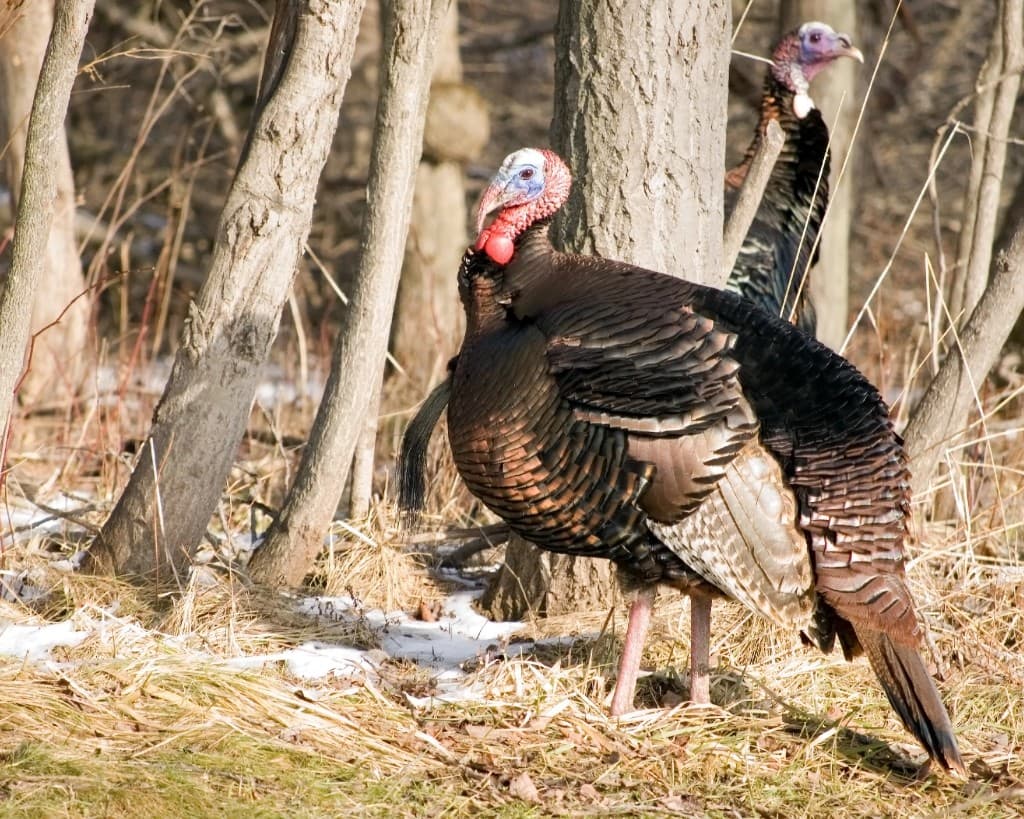
Wisconsin spring turkey 2026—six hunting periods from April 15 to May 26 across seven zones. Drawing, bonus tags, and how to get in the woods.
Wisconsin splits its spring turkey season into six one-week periods across seven management zones. That system limits hunter density, keeps birds from going call-shy too early, and gives you a real shot at a gobbler on public land—if you draw the right period. Here's how the 2026 season breaks down.
- Youth hunt: April 11–12
- Regular season: April 15 – May 26 (six periods)
- Zones: 7 turkey management zones statewide
When Is Wisconsin Spring Turkey Season 2026?
The youth hunt opens April 11–12, giving hunters under 16 a two-day window before the regular season. The six regular periods run back-to-back from mid-April through late May:
- Youth hunt: April 11–12
- Period A: April 15–21
- Period B: April 22–28
- Period C: April 29 – May 5
- Period D: May 6–12
- Period E: May 13–19
- Period F: May 20–26
Each hunter receives a harvest authorization for one specific period in one specific zone. You hunt only during your assigned period unless you pick up a bonus tag for a different period. Verify all dates at Wisconsin DNR's turkey page before your hunt.
How the Zone and Period System Works
Wisconsin divides the state into seven turkey management zones. When you apply for a harvest authorization, you choose both a zone and a period. The drawing allocates permits based on turkey population data and hunter demand for each zone-period combination.
- 7 management zones statewide
- Drawing application deadline: December 10
- Drawing results available: mid-February
- Each authorization is valid for one zone and one period only
Early periods (A and B) are the most popular because they overlap with peak gobbling activity. Periods C and D offer solid hunting with less pressure. Late periods (E and F) can be productive—hens are on nests and gobblers are still looking—but foliage makes calling and spotting harder.
If you didn't draw your first choice, don't write off the season. Bonus tags and leftover permits open up additional opportunities, and late-period hunting on unpressured public land can be excellent. Our last-minute turkey hunting guide covers how to pull a hunt together on short notice.
Bonus Harvest Authorizations
After the initial drawing, Wisconsin sells leftover harvest authorizations on a first-come, first-served basis. These bonus tags let you hunt additional periods or zones beyond your original authorization.
- Bonus tag sales begin March 16–21 (staggered by zone)
- Cost: $10 resident / $15 non-resident
- Limit: 1 bonus tag per hunter per day until sold out
- Valid for any open period in the designated zone
Bonus tags in high-demand zones sell fast—especially for Periods A and B. Set a reminder for your zone's sale date and be online early. Zones in western and southwestern Wisconsin, where bird numbers are strong, tend to sell out within hours.
License Requirements
Wisconsin turkey hunters need several items before heading to the field:
- Small game hunting license: $18 resident / $90 non-resident
- Turkey license: $15 resident / $65 non-resident
- Wild turkey stamp: $5.25
- Harvest authorization (from drawing or bonus tag purchase)
All licenses and stamps are available through Wisconsin's Go Wild system. Non-residents pay significantly more but have full access to the same public lands and can apply for the same zones and periods as residents.
Youth under 12 must complete a hunter education course or hunt under the Mentored Hunting Program with a licensed adult. The mentored program lets kids as young as 10 hunt without completing hunter education, provided the mentor stays within arm's reach.
If you're working with a young hunter, our guide on inspiring youth in hunting has tips for making those early seasons count.
Where to Hunt on Wisconsin Public Land
Wisconsin offers extensive public land for turkey hunting, including state forests, county forests, and federal land. Some of the best areas by region:
Southwest Wisconsin is the state's turkey hunting epicenter. The Driftless Area's steep coulees and oak-hickory ridges hold excellent bird numbers. Kickapoo Valley Reserve (8,600 acres), Blackhawk Lake Recreation Area, and the Lower Wisconsin State Riverway provide walk-in access to prime habitat.
Central Wisconsin features Buena Vista Marsh Wildlife Area and Meadow Valley Wildlife Area—large tracts of mixed forest and grassland. Turkey densities are moderate but hunting pressure is lighter than in the southwest.
Northern Wisconsin has growing turkey populations, especially in the southern counties of the northern forest zone. Flambeau River State Forest and the Chequamegon-Nicolet National Forest offer remote hunting with minimal competition.
- Kickapoo Valley Reserve: 8,600 acres; Driftless Area; walk-in only
- Lower Wisconsin State Riverway: River-bottom timber and bluff-top fields
- Chequamegon-Nicolet National Forest: 1.5 million acres; low pressure, growing bird population
- County forests: Over 2.4 million acres statewide; often overlooked by out-of-state hunters
County forests are Wisconsin's hidden advantage—2.4 million acres of public land that many non-resident hunters don't even know exist. They're managed for timber, so you get a mix of mature hardwoods and openings that turkeys love.
For the full picture on Wisconsin seasons, licenses, and public access, see the Wisconsin hunting guide.
Key Regulations
- Bag limit: 1 bearded turkey per valid harvest authorization
- Legal weapons: shotguns (10-gauge or smaller), archery, crossbows
- Shot size: No. 4 or smaller for shotguns
- Hunting hours: Wisconsin splits legal hours by period (often half-day early season and full-day later periods)—download the current spring turkey shooting hours PDFs from Wisconsin DNR turkey for your year and zone
- No baiting or feeding within 100 yards of your hunting location
- Electronic calls are legal on private land; check specific area rules for public land
When half-day hours apply to your period, plan setups for legal shooting light; when full-day hours apply, midday hunting can be an option. Always follow the DNR shooting hours document for your zone and period.
Choosing the right decoy setup matters in Wisconsin's mixed terrain. In open fields, a hen-and-jake spread pulls gobblers across distance. In tight timber, a single hen decoy at 15 yards is often enough.
For gear recommendations, see our best turkey hunting camo and gear guide and budget turkey gun breakdown.
Plan Your Wisconsin Turkey Hunt
Wisconsin's zone-and-period system takes more planning than an OTC state, but the payoff is quality hunting with managed pressure. Apply by December 10, watch for bonus tag sales in March, and scout your zone before your period opens.
The Driftless Area in the southwest is the headliner, but don't sleep on the northern zones where growing turkey populations meet vast, lightly hunted public land. The hunting experience in Wisconsin is as much about the landscape—limestone bluffs, spring wildflowers, morning fog in the coulees—as it is about filling a tag.
Every turkey stamp and license dollar goes directly to habitat management and population monitoring. Who funds wildlife conservation? Hunters do—and Wisconsin's turkey program is a clear example of how that investment pays off.
Sources
- Wisconsin Department of Natural Resources. "Spring Turkey Hunting." Wisconsin DNR, dnr.wi.gov/topic/hunt/turkey. Accessed 18 Mar. 2026.
- Wisconsin Department of Natural Resources. "Season dates and application deadlines." Wisconsin DNR, dnr.wi.gov/topic/hunt/dates.html. Accessed 31 Mar. 2026.
Official state agency
Wisconsin Department of Natural ResourcesVerify seasons, bag limits, and license rules with the agency before you hunt.
Written by
The Inside Spread Team
The Inside Spread team covers turkey hunting seasons, regulations, and public land access across all 50 states. Our writers have chased longbeards through Wisconsin's oak ridges and river-bottom timber.
Comments
No comments yet. Be the first to share your thoughts.
More in state-guides
Arkansas Duck Hunting 2026: Season Dates, WMA Permits, License Costs & Complete Guide
Arkansas duck hunting 2026-27—three-segment season dates, nonresident WMA waterfowl permits, Black River and Bayou Meto access changes, and Delta license costs.
Georgia Whitetail Deer Hunting 2026: Season Dates, Extended Counties, License Costs & Nonresident Guide
Georgia whitetail deer hunting 2026-27—archery, primitive weapons, and firearms dates, 29-county extended archery, 12-deer bag, Game Check, and the nonresident guide.
Kentucky Whitetail Deer Hunting 2026: Season Dates, Zone Changes, License Costs & Nonresident Guide
Kentucky whitetail deer hunting 2026-27—archery, crossbow, and modern gun dates, the 2026 zone map, license and deer permit costs, Telecheck, and the nonresident guide.
Michigan Whitetail Deer Hunting 2026: Season Dates, License Costs, UP vs LP & Nonresident Guide
Michigan whitetail deer hunting 2026—archery, firearm, and three-day December dates, DNR license fees, Upper vs Lower Peninsula rules, baiting, and the nonresident guide.