
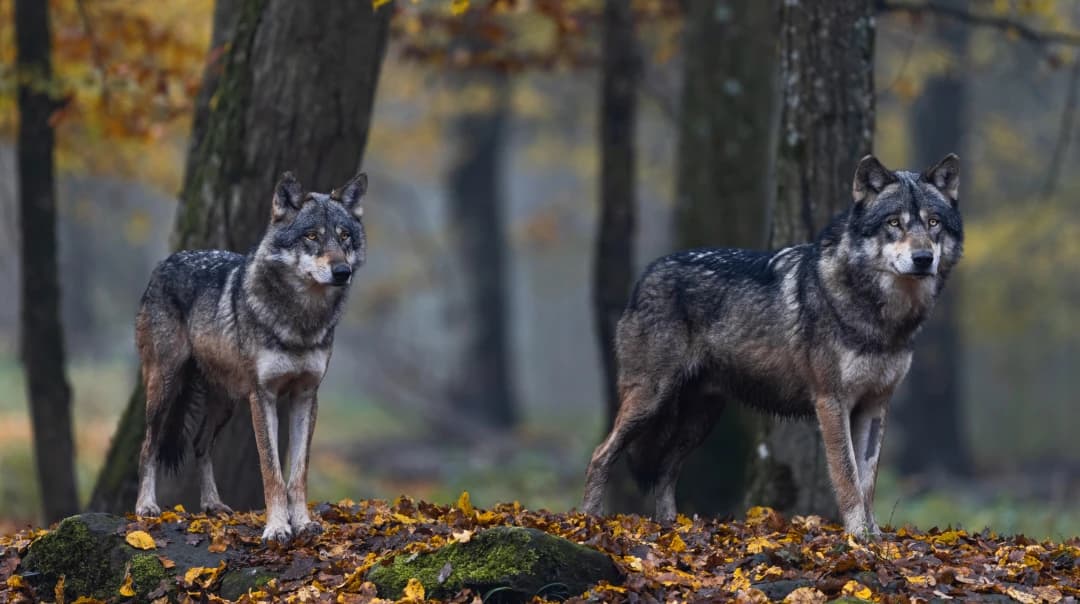
A guide to hunting wolves in Idaho, covering movement patterns, territory, calling techniques, gear recommendations, and ethical considerations from a…
I'll start honest: everything I'm about to tell you comes from reading, YouTube, talking to hunters, and the one time I saw a wolf from my truck. I've never harvested a wolf. That matters because I'm writing from curiosity and preparation — not from a long list of personal kills. If you're after wolves in Idaho like I am, take these notes as what I'd do and what I've learned so far: the mistakes to avoid, the gear I'd trust, and how to find a shadow that likes to keep its distance.
Wolves move like weather — big, quiet, and often invisible
Wolves aren't coyotes. Their home ranges are huge compared to most predators you're used to seeing in the West. In Idaho, a single pack can roam dozens to hundreds of square miles depending on prey density, terrain, and season. That means a wolf you hear howl on Tuesday might be a hundred miles away by Friday if food or pressure pushes it. Movement patterns shift with the calendar: pups and denning change spring behavior, rut and hunting needs affect fall movement, and winter snow can compress travel routes into predictable saddles and river bottoms.
Translation for hunters: don't expect consistent, small-scale movement. Plan for country, not a trail, and be willing to abandon a set if the sign is stale.
Territory: learn the highways and the rest is details
Wolves use the same big landscape features we do — ridgelines, river corridors, bench edges, and logging roads — but they connect them in long loops. You'll see them using elk and deer travel routes because that's where food is. Look for ridges that funnel animals, bench shelves with thick cover, and the bottoms where ungulates bed down. Fresh scat, bed sites with fur, and trail widths are good indicators. When I'm hunting out West I overlay my map with reported elk movement and then glass the pinch points — where animals bunch up is where wolves will travel and hunt.
Locating wolves: ears + other people trump any single trick
I've heard wolves in the early mornings while out hunting, but I've only had one glimpse from a vehicle. Most of the time, finding wolves requires multiple information streams:
- Old sign is educational but not decisive. Snow and fresh droppings matter.
- Talk to ranchers, outfitters, and other hunters — if someone heard a howl from a ridge, it narrows your search much more than you'd expect. It's imperfect (wolves roam), but it's actionable.
- Use online forums and local social groups cautiously — a reported howl is a lead, not a guarantee.
- Glass valleys and bench lines at first and last light. Wolves travel those routes to get between bed and feed.
Talking to other hunters helps — but remember the caveat: wolves cover so much ground that the intel is useful for short windows, not a season-long guarantee.
Calling: old school work, e-callers are a force multiplier
My rough how-to:
- Start with a locator howl — one or two long notes — then wait and listen. Wolves often respond on their timeline.
- If you're getting no attention, switch to a pup-distress or calf distress track for longer periods; these are what trigger a movement response in hungry or curious adults.
- Electronic callers are great for multi-hour sets. But don't over-call in one spot; wolves are patient and suspicious. Long sets (30–60 minutes) are often necessary.
- Be mindful of legality: e-callers and what you broadcast are regulated by state rules — check Idaho rules before your hunt.
Scouting & camo — blend into the big picture
Wolves see shapes and listen for outline changes. That means:
- No skylining. Get down in the bench or saddle and keep your profile low.
- Camo matters less at extreme ranges but more at the approach — muted, broken patterns that match local terrain work best. In timbered country, texture beats high-contrast patterns.
- Kill straps taped, external gear muted, and movement rehearsed. Tape your pack straps. Tape your buckles. Everything that can rattle will at the worst moment.
Scouting is a map game: layer telemetry or trail cameras (where legal and appropriate), glass the corridors, and do the boring work of walking ridges to verify fresh sign. If you're patient, the landscape gives you hints: a fresh bedline, a bleeding game carcass, or repeated howl locations point to a pattern.
Rifle talk — big enough to be clean, small enough to track quickly
People have strong opinions here. You can drop wolves with lighter calibers if you know your rounds and distances, but I'm pragmatic: pick a cartridge that forgives bad angles, gives you terminal performance at realistic engagement distances, and doesn't make you fight the rifle.
- Light end: a well-placed .243 with premium bullets will do work, but it demands perfect placement.
- Middle ground: 6.5 cartridges (6.5 Creedmoor, 6.5 PRC) are sweet spots — flat shooting, low recoil, and bullets with reliable expansion. For me, the 6.5 PRC is close to the "perfect" blend: a bit more punch than a Creedmoor, good long-range performance, and a manageable rifle for long glassing hitches.
- Heavier options: .30s and larger are overkill for some hunters but provide maximum forgiveness on bone shots.
Zero your rifle for realistic ranges you'll face (most wolf shots are inside 300–400 yards), and practice a two-minute drill: from pack to shooting position, rangefinding, breathing, and sending one solid round. Track your shots — a wolf that runs 100 yards and dies is a success; a wounded animal that runs for miles is not.
Teamwork: two heads are better than one
Solo calling works, but a two-person approach is potent — one guy calls while the other watches the downwind. A third person can cover flanks. Use hand signals inside 400 yards. The second set of eyes keeps the downwind edge clean, and it's often the difference between seeing the animal or watching it slip out.
The F4WM reimbursement program — what I learned (and where I got my facts)
You've probably seen the Foundation for Wildlife Management (F4WM) in the news and social feeds — they run a hunter/trapper reimbursement program that pays members for legally harvested wolves in certain areas and circumstances. They advertise member reimbursements (amounts and eligibility vary), and joining is required to be eligible for payments. Their site outlines a step process: join F4WM, save receipts, check the harvested wolf in with the state, then submit for reimbursement within a specified window. Foundation for Wildlife Management
There's also been formal cooperation and agreements between state agencies and private groups regarding funding for wolf harvest efforts — check the specifics and any public funding arrangements if you plan to participate. If you consider joining a reimbursement group, read their rules closely and document everything (receipts, check-in paperwork, photos). Regulations.gov
Ethics, rules, and "know before you go"
Wolves are a charged topic — legal frameworks change and there's strong public debate. Before you commit to a hunt:
- Verify Idaho Fish & Game rules for season dates, tag requirements, check-in procedures, and legal calling/techniques. State policies around wolves can shift. Species Conservation
- If you're thinking about joining a reimbursement group (like F4WM), read their reimbursement rules and membership terms carefully — they're private organizations with their own conditions. Foundation for Wildlife Management
- Respect land access and livestock — good hunters protect access for everyone.
Final notes — why I'm after one
I'm chasing a wolf because it's a hard, honest hunt that forces you to think in terms of country and patience, not just trigger pulls. I've read, watched, and talked with those who do it well. I've heard wolves at dawn while glassing and I saw one once from my truck. I haven't killed one yet — that's part of why I'm writing this. I want to be ready when the chance lines up: the right wind, the long set, the honest shot.

Written by
Matt Myers
Guide and Hunting Consultant. Doublemoutdoors.com
Comments
No comments yet. Be the first to share your thoughts.
More in hunting
Pre-Rut Whitetail Guide: How to Hunt Bucks Right as They Go On Their Feet
A complete pre-rut whitetail guide covering scrape lines, rub lines, scent-checking behavior, rattling tactics, and how to adjust your setup as bucks shift off food and onto their feet in October.
Early Season Whitetail Guide: What Deer Are Doing Right Now (And How to Cash In Before the Rut)
A complete early season whitetail guide covering deer behavior, food source patterns, buck sighting tactics, and the best time to harvest a doe before the rut kicks in.
What to Look for When Walking Hunting Land for the First Time
On the first walk of hunting land, look past acreage. Judge food, water, cover, and neighboring properties the way deer actually use the landscape.
Best Trail Camera Deals This Week: Cellular Cameras, Feeders & Bows Worth Buying
This week's Academy Sports hot deals—cellular trail cameras, feeders, and archery gear worth buying, plus a few we'd skip.