
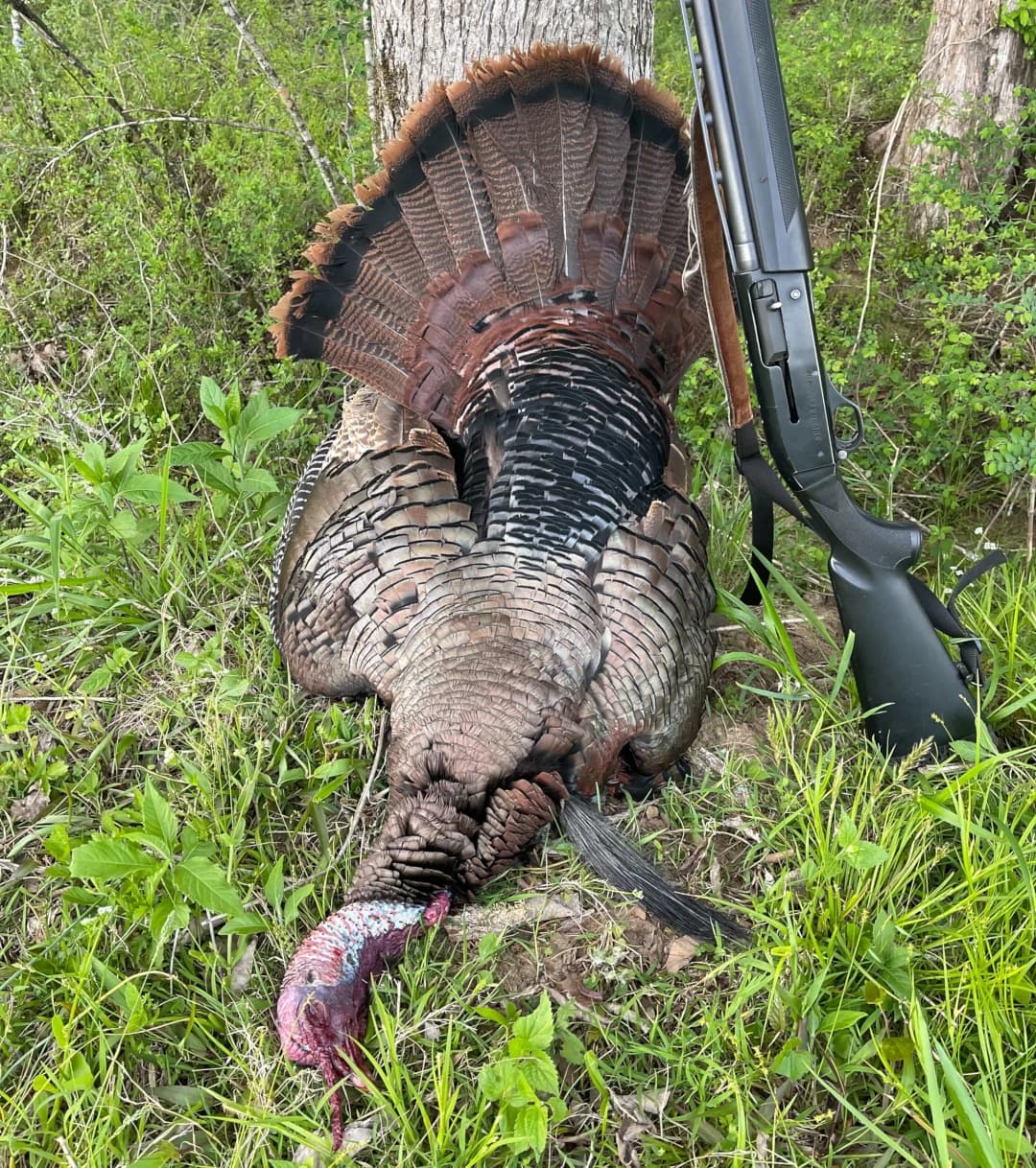
First Time Hunter Checklist: Essential Gear and Permits for your First Turkey Hunt
Spring is just around the corner, and you know what that means—the unmistakable thunderous gobble of a Tom Turkey echoing through the woods. There’s something…
First Turkey Hunt?
Spring is just around the corner, and you know what that means—the unmistakable thunderous gobble of a Tom Turkey echoing through the woods. There’s something about that sound that never loses its magic, no matter how many times you hear it. For us hunters, it marks the start of the turkey season, a thrilling experience that’s been made more accessible thanks to decades of conservation efforts by state game agencies and nonprofit organizations. Turkeys are now thriving, offering hunters more opportunities than ever before.
If you're gearing up for your first turkey hunt, there are a few key things you need to know before you head out into the woods. From essential gear to the necessary permits, this checklist will help you prepare for your turkey hunt so you can make the most of this exciting and rewarding adventure. Let’s dive into what you'll need to get started and set you up for success when you take aim at your first Tom.
What Permits do you need to go Turkey Hunting?
Before you can head out into the woods, it’s important to know what kind of permits you'll need for your first turkey hunt. The first thing you’ll need to figure out is whether you’ll be hunting on public or private land.
If you’re lucky enough to have access to private land with turkeys roaming around, most states will simply require you to have a basic big game hunting license. For example, here in Tennessee, residents can grab a combo hunt and fish license for $33, plus a supplemental big game gun license for another $33—and that covers you for turkey season. Pretty straightforward!
However, if you plan to hunt on public land, there are a few extra steps to keep in mind. Public hunting areas can be owned or managed by different agencies, and depending on who’s in charge, you might need an additional permit. A common one is a Wildlife Management Area (WMA) hunting permit, which would be required in addition to your big game hunting license. But that’s not all—if you’re eyeing a specific WMA, make sure to check if it is open all season, requires a lottery, or operates on a first-come, first-serve basis.
While a lot of this info is available online, I always prefer to give the Wildlife Management Area manager a call for the most up-to-date details. They can tell you when the WMA is open for hunting, if there’s a lottery system in place, and if there are any special regulations you should be aware of before heading out.
Essential Gear for Beginner Turkey Hunters
I have tagged along with hunters who have more money invested in gear than a semester of my college is worth. In the same breath, I have seen folks harvest turkeys with just a shotgun in hand. In an effort to prepare you for a comfortable hunt, without the extra bells and whistles, here are the essentials for getting started turkey hunting.
Camo Clothes for Turkey Hunting
This is something you should really pay attention to. When hunting deer or small game, you can get away with having sloppy camo or even wearing plaid colors. This won’t fly while turkey hunting. These birds have incredible eyesight and are constantly looking for things that don’t seem right in their woods. Once you know the area you’re hunting, try and take note of what the surrounding vegetation looks like and try to match that well with the camo outerwear you are going to buy. I have seen many turkey hunters go as far as wearing a ghillie suit to conceal themselves, but this isn’t always necessary. Just know that blending in is a huge part of this type of hunting.
Don’t Overlook Your Boots
When it comes to preparing for your turkey hunt, boots might not always be the first thing that comes to mind—but trust me, a solid pair can make or break your trip. The right boots can be the difference between trekking that extra mile to find a Tom or having to head home early because of sore, blistered, and wet feet.
For me, there are two pairs of boots that are always in my turkey hunting rotation. First up are my Danner Vital 8” Waterproof Boots. These are my go-tos for rough, challenging terrain. I pretty much use them for everything, but the 8” height gives me great ankle support for those days when I’m covering 3 or 4 miles in search of turkeys. And since they’re waterproof, they’re perfect for spring turkey season. I’m guaranteed to cross a few creeks or deal with some soggy ground, so having boots that keep my feet dry is a must.
On the flip side, I’ve spent many days hunting in the relentless swamps of North Florida—where hiking boots just won’t cut it. That’s where tall muck boots come in. My favorite is the Muck Boot Fieldblazer Classic Industrial. They’re surprisingly lightweight for a tall boot, and they’re built to handle wet, swampy conditions. I can comfortably walk miles through the muck with these on, and they’ve never let me down.
Choosing the Right Shotgun and Ammo for Turkey Hunting
When it comes to turkey hunting, almost any shotgun can do the job. You definitely don’t need to rush out and buy a brand-new gun specifically for the hunt—unless, of course, you’re looking to upgrade. If you are, though, there are a few things to keep in mind when choosing a shotgun that’ll serve you well in the turkey woods.
Most turkey hunters swear by the 12 gauge because of its extended range and power. And honestly, it’s a solid choice. But don't overlook the 20 gauge—it’s become a popular option, especially for those who are smaller in stature or looking for a more manageable gun, like for a younger hunter. There are many 20 gauges that can reach out to 40 yards and tip a turkey, no problem.
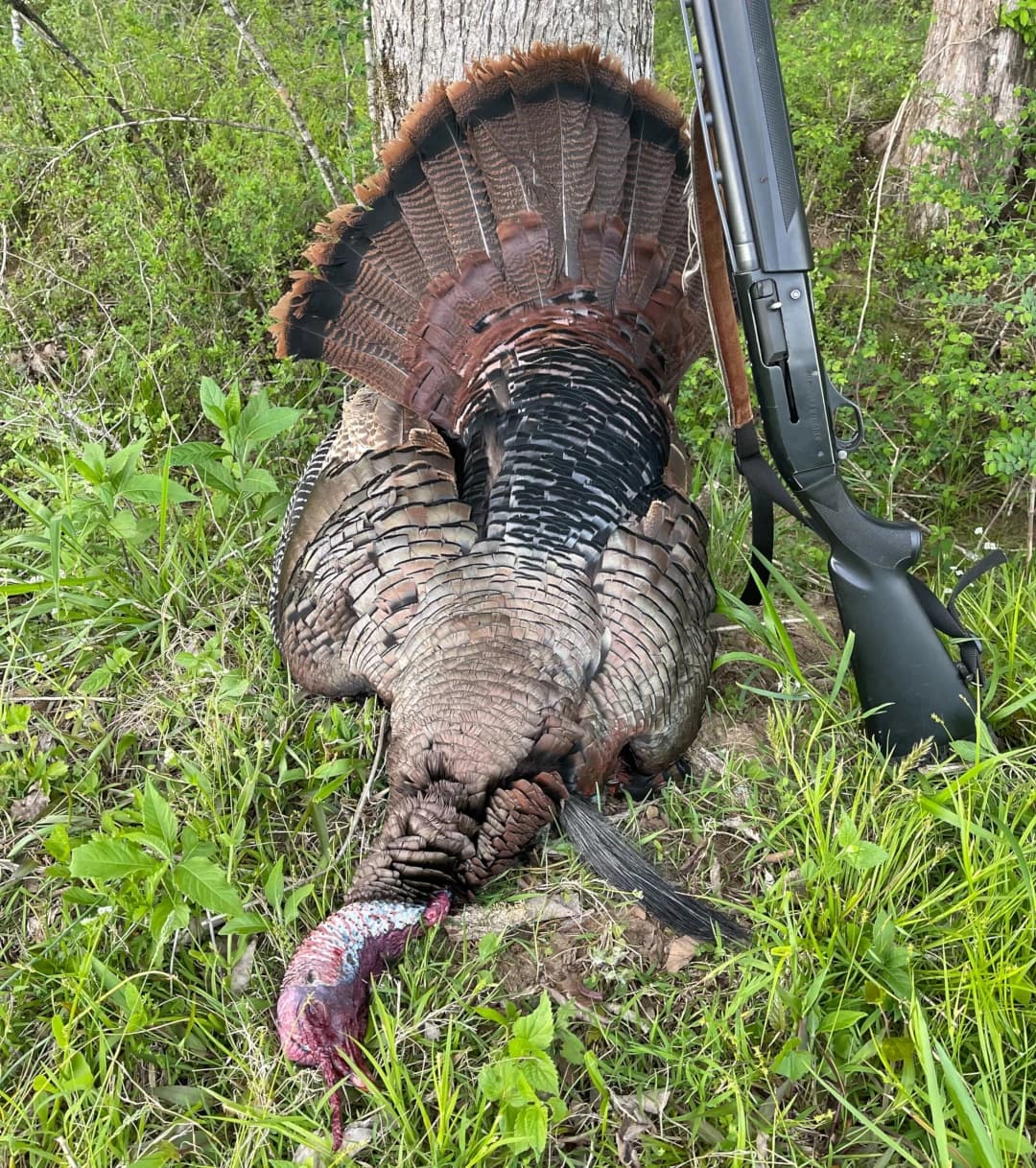
As for barrel length, many turkey hunters will tell you that shorter is better. A dedicated turkey gun might only have a 22” or 24” barrel, which works well for tight, quick shots in the woods. But if you’re looking for a versatile gun that can handle everything from deer to waterfowl to dove hunting, a shorter barrel might not cut it. For me, I’ve been using a Weatherby Element 2 for the past few seasons, and I’m absolutely hooked. It has a 28” barrel, which might be a little longer than a dedicated turkey gun, but it’s perfect for my needs. It’s comfortable to carry, shoots like a dream, and it holds up well in the swampy conditions I often find myself hunting in.
If you're dead set on getting the best turkey gun for the job, check out this article from MeatEater that dives deeper into what to look for when selecting your next turkey shotgun.
As far as ammo goes, you could spend all day going back and forth trying to decide which one is right for you. Once again, people have killed tens of thousands of turkeys with your run of the mill 2 ¾ inch #6 lead shot, but ammo makers have come a longggg way from where they used to be. Copper plated lead shot and tungsten shot have become a favorite for turkey hunters as they provide more stability in flight and penetrate deeper than lead shot. They are of course more expensive, but since turkey hunting is pretty much a one-shot game, you’re better off spending a little more money here.
A 3” Tungsten Super Shot (TSS) #9 shot or a 3.5” High Performance Lead Shot in #5 would be my recommendations for someone starting out. Here is a more in-depth guide if you want to learn about patterning your shot as well as all of the turkey ammo ins-and-outs.
Do you need a Turkey Choke?
A turkey choke is a potentially very useful tool if you expect a shot of 30 of more yards. Full chokes, extra full, or ‘turkey’ chokes can create dense shot patterns over long ranges and combined with the new and improved ammos available, they can put turkeys down at 50+ yards.
With this being said, most hunters will try and let turkeys get within 25 yards of them so that they have the best chance of hitting the mark. With this, an improved cylinder choke should do the job just fine.
A modified choke will let you poke out into the 30-40 yard range, while a full choke can reach out past 50 yards. Whatever you end up going with, make sure you take the time to pattern your shotgun and know what your limitations are.
3 Calls A Beginner Turkey Hunter Should Have
The Locator Call
One of my personal favorites is the locator call. These are usually mouth calls that mimic the sounds of other birds, like an owl or a crow, and are great for getting shy turkeys to reveal their location. I especially love using an owl imitation call early in the morning when it's still dark, and continuing until about an hour after I expect the toms to have flown down. While scientists aren’t 100% sure why male turkeys gobble in response to other birds like owls and crows, it’s a reliable way to get a “shock gobble” from a Tom.
For beginners, I recommend the Primos Hoot Flute Owl Call. It’s a simple, easy-to-use call that gets the job done—just be sure to practice before you hit the woods so you know how to control the volume without losing that authentic owl sound.
Box Calls
Box calls are probably the easiest turkey calls to use. They work by rubbing the paddles together to create that basic yelping sound. These calls are super affordable, and you can find a solid, functioning box call for under $25. Personally, I love using them once I know the turkeys have flown down and are either feeding or looking for hens. On occasion, I’ll also tie a rubber band around the box and give it a shake to imitate a Tom gobbling—this trick has gotten a response a number of times.
Slate or Pot Calls
Slate or pot calls are some of the most versatile calls you can have in your arsenal. They take a little practice to master, but they’re not as tricky to learn as a diaphragm call. With a slate call, you can produce a variety of sounds and adjust the pitch and loudness as you get more experienced, which is a huge advantage when trying to communicate with cautious turkeys.
These calls can range in price, but I recommend investing in a good one—cheaper options tend to wear out quicker and don’t produce the best sound quality.
Cherry Slate Calls
Some of the craftsmanship on slate calls is incredible, and the sounds they produce are so realistic. Cherry wood is often used for slate calls, and the laminate surface gives off a softer, raspier tone that’s perfect for luring in a Tom. One of the best I’ve used is the Walnut-Cherry Slate from ESH, which comes with a quality striker. It’s an excellent choice for those looking to add a little extra realism to their calls.
Glass Pot Calls
If you want a call that’s loud enough to be heard from hundreds of yards away, a glass pot call is your go-to. These produce a clear, sharp tone while still maintaining volume. I sometimes worry that I’m not being loud enough when I’m calling turkeys, but with a glass pot call like the Woodhaven’s Cherry Classic Series, there’s no doubt the birds will hear you.
Locator calls are also one of my favorite tools for getting shy turkeys to let you know where there at. These are usually mouth calls that sound like an owl or a crow.
Yeah, Buy the Mouth Call…
Trust me on this one—it’s worth it. Using a diaphragm (mouth) call is a ton of fun, and once you get the hang of it (and I mean once), it’s probably the most effective turkey call out there. For your first turkey season, the best place to practice is in the truck on your way to the hunt. And if you’re feeling adventurous, you can try it in the shower too—but be prepared for some seriously confused looks from your roommates or partner.
I won’t sugarcoat it—there’s a bit of a learning curve with these calls. There are dozens of different designs, and each one has its own unique sound. I’ve been using them for a few seasons, and I still consider myself a beginner. It takes plenty of YouTube videos and countless hours of practice to 1) get comfortable with it in your mouth, and 2) make a sound that even remotely resembles a turkey.
The good news? They aren’t expensive, and once you get the hang of it, you’ll be glad you bought one. Just… maybe keep the practice sessions to yourself unless your family is ready for a few *interesting *sounds around the house.
For beginners, I recommend this one from Woodhaven Calls—it’s great for learning basic yelps and raspy cuts, and it actually sounds pretty solid for how simple it is. I always keep one of these with me in the woods!
Takeaways Before Your First Turkey Hunt
Now, before you go rushing out to the woods, I intentionally left a few things off this list—like decoys. Honestly, they’re not all that crucial for a first-time turkey hunter. Keeping it simple will help you avoid feeling overwhelmed when it’s go time.
And don't get too caught up in gear. At the end of the day, none of this stuff will *make or break *your hunt. You’ll have your fair share of frustrating moments, but also plenty of moments that make it all worth it. Embrace both sides of the experience—it’s all part of the journey.
One last thing—don’t underestimate the value of a good hunting mentor. They’re worth way more than any gear. So, reach out in Facebook groups or talk to folks you know, and see if someone’s willing to take you out and show you the ropes. The best tool you’ll develop as a turkey hunter is intuition, and nothing teaches that better than real-world experience.
Written by
Cory Gurman
Cory Gurman is a land management technician at the Appalachian Conservation Institute in Tennessee. An avid hunter, fisherman, and amateur wild game chef, he enjoys writing about his experiences in a number of outdoor publications. Follow him on Instagram @cory.gurman.
Comments
No comments yet. Be the first to share your thoughts.
More in hunting
Pre-Rut Whitetail Guide: How to Hunt Bucks Right as They Go On Their Feet
A complete pre-rut whitetail guide covering scrape lines, rub lines, scent-checking behavior, rattling tactics, and how to adjust your setup as bucks shift off food and onto their feet in October.
Early Season Whitetail Guide: What Deer Are Doing Right Now (And How to Cash In Before the Rut)
A complete early season whitetail guide covering deer behavior, food source patterns, buck sighting tactics, and the best time to harvest a doe before the rut kicks in.
What to Look for When Walking Hunting Land for the First Time
On the first walk of hunting land, look past acreage. Judge food, water, cover, and neighboring properties the way deer actually use the landscape.
Best Trail Camera Deals This Week: Cellular Cameras, Feeders & Bows Worth Buying
This week's Academy Sports hot deals—cellular trail cameras, feeders, and archery gear worth buying, plus a few we'd skip.