
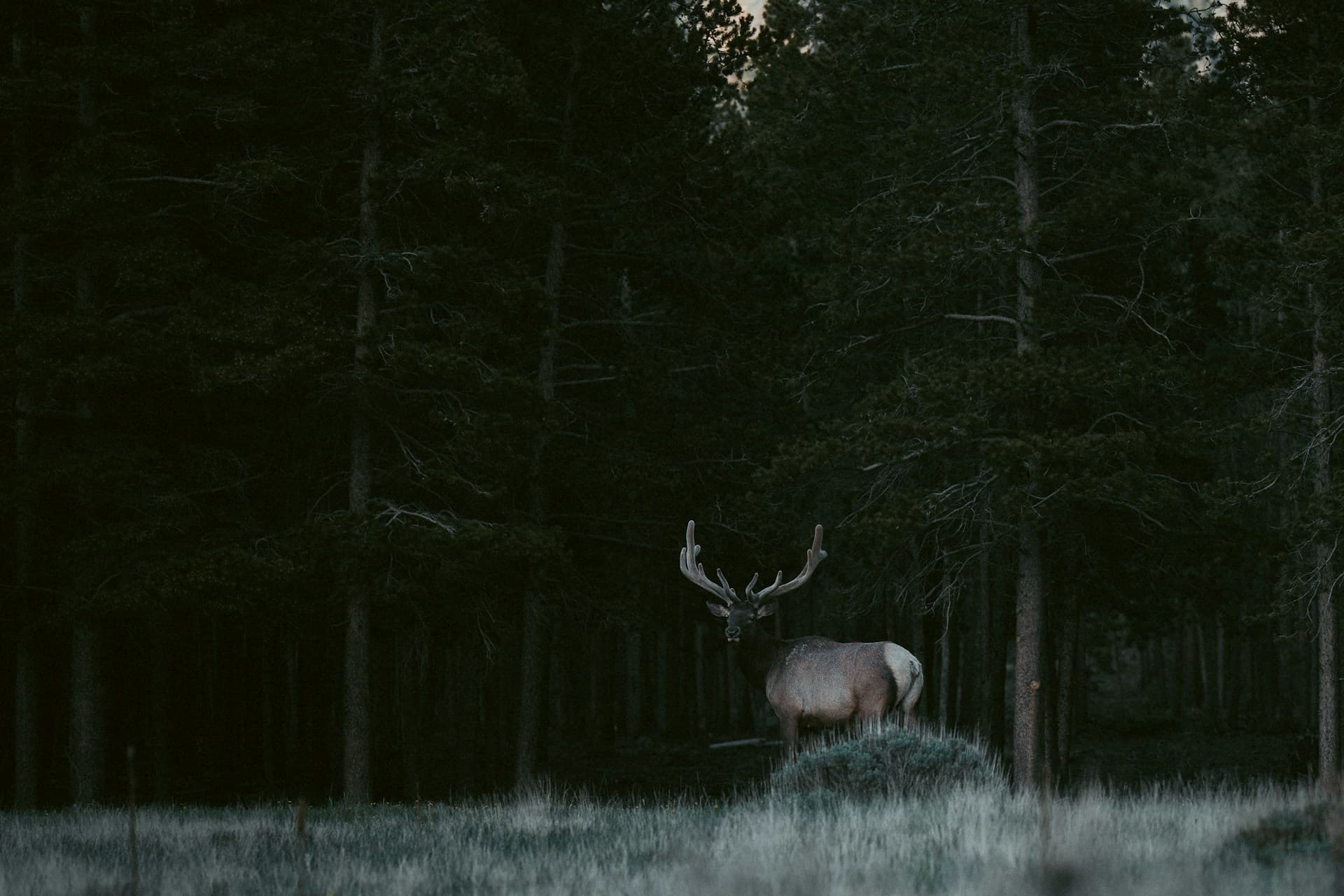
Idaho Elk Hunting 2026: New Draw System, Season Dates, Costs & Where to Hunt
Idaho elk hunting 2026—archery and rifle season dates, new nonresident draw replacing OTC tags, application deadlines, license costs, CWD zones, and top elk…
Idaho elk hunting in 2026 brings the biggest licensing change in decades: nonresident general season elk tags no longer sell OTC—they require a mandatory draw (December application for the following season). Baseline cost is $836.75 (license + tag). Seasons vary by Elk Management Zone. If you missed the December window, monitor Returned Tag Sales year-round. Always verify zone rules at idfg.idaho.gov.
- 2026 change: OTC nonresident elk tags eliminated
- First draw window (2026 tags): December 5–15, 2025
- Nonresident license + elk tag: $836.75
- Returned tags: year-round when available
Quick Facts: Idaho Elk 2026
| Season Structure | Varies by Elk Management Zone — archery generally late August–September; rifle generally October–November |
| MAJOR 2026 CHANGE | Nonresident general season elk tags moved from first-come, first-served OTC sales to a mandatory draw |
| First Application Period | December 5–15, 2025 |
| Results Announced | Early January 2026 |
| Deadline to Buy Drawn Tags | January 20, 2026 |
| Second Application Period | February 5–15, 2026 (for tags not drawn/purchased) |
| Nonresident Hunting License | $185 (nonrefundable; required before applying) |
| Nonresident Elk Tag | $651.75 |
| Nonresident Archery Permit | $81.75 |
| Application Fee (2026) | None for the 2026 nonresident draw |
| Returned Tag Sales | Year-round, when tags are returned to IDFG |
| Official Source | idfg.idaho.gov/licenses/tag/quotas/nonresident |
This is the single most important fact for any nonresident planning an Idaho elk hunt: as of 2026, you can no longer simply purchase a general season elk tag over the counter. Idaho has moved to a mandatory application and draw process for nonresident general season deer and elk tags — a complete reversal of the state's long-standing reputation as the most OTC-accessible elk destination in the West. Plan around the December application window, not the season itself.
Why Idaho for Elk — And What Just Changed
For years, Idaho was the West's go-to destination for nonresident hunters who wanted a guaranteed elk tag without years of draw applications or preference points. That changed for the 2026 season. Idaho Fish and Game has eliminated the traditional first-come, first-served OTC sale of nonresident general season deer and elk tags, replacing it with a structured application and draw process modeled more closely on neighboring Wyoming and Montana.
This is a genuinely significant shift for the hunting industry in the Northwest, and it means any nonresident relying on outdated information about "just buying a tag online" will be caught off guard. The new process requires nonresidents to purchase a nonresident hunting license first, then apply during a December window for the following year's season—meaning hunters planning a 2026 fall hunt needed to apply back in December 2025. If you're reading this for the first time in mid-2026, your primary path forward for general season tags is the Returned Tag Sale program, which makes unsold or returned tags available throughout the year.
Despite the licensing overhaul, Idaho's elk hunting itself remains excellent. The state holds extensive public land across National Forest and BLM ground, diverse terrain from river-bottom country to high alpine basins, and elk populations spread across dozens of distinct Elk Management Zones, each with its own season structure.
The New Nonresident Draw System: How It Works
This is the critical process every nonresident elk hunter needs to understand for 2026 and beyond.
Step 1: Purchase the Nonresident Hunting License
Cost: $185, nonrefundable. This must be purchased before you can apply for the drawing—even if you are not ultimately successful, this fee is not returned.
Step 2: Apply During the December Window
For the 2026 season, the application period ran December 5–15, 2025. For 2027 tags, expect a similar window in December 2026 (specifically, December 5–15, 2026, per IDFG's published schedule for future cycles).
- You may submit up to five hunt choices on your elk application
- Up to four hunters can apply together on one group application, but all members need a valid annual hunting license
- You can submit two applications total—one for elk and one for deer (Disabled American Veteran applicants follow separate rules)
Step 3: Results and Tag Purchase
- Results announced: Early January 2026
- Deadline to purchase drawn tags: January 20, 2026 (an absolute deadline—tags not purchased by this date are forfeited)
- Successful applicants in the first period are ineligible to apply in the second period
Step 4: Second Application Period (Leftover Tags)
February 5–15, 2026—any tags not drawn or not purchased in the first round become available here.
Step 5: Returned Tag Sales (Year-Round Safety Net)
Tags returned to IDFG for any reason throughout the year become available through Returned Tag Sales. This is the most realistic path for nonresidents who missed the December application window and still want an Idaho elk tag for the current season—check the Returned Tag Sale schedule regularly at idfg.idaho.gov.
Special Categories
- Nonresident Junior Mentored hunters: Only need to apply for capped elk zones; uncapped elk zone tags remain available OTC after the draw, typically in late March
- Disabled American Veterans (DAV): Separate draw allocation of 300 elk tags; for 2026, DAV elk tags are only available for uncapped elk zones (DAV hunters can still apply for capped zones through the regular Nonresident Draw)
- Former Idaho residents with lifetime licenses: Exempt from the nonresident draw; can purchase tags out of the resident quota when those become available in late June/early July
License and Tag Costs
| Item | Cost |
|---|---|
| Nonresident Hunting License (required, nonrefundable) | $185 |
| Nonresident Elk Tag | $651.75 |
| Nonresident Archery Permit | $81.75 |
| Second Elk Tag (if available after Aug. 1, residents and nonresidents) | $651.75 |
| Resident Elk Tag (for comparison) | $36.75 |
| Application Processing Fee | 3% surcharge on phone/online applications + minimal transaction fee |
A note on the price gap: Idaho's nonresident elk tag costs nearly 18 times the resident rate—among the largest resident/nonresident price disparities of any major elk state, and a direct reflection of the new draw system's intent to manage nonresident demand more deliberately than the old OTC model did.
Hunter Education: Required for hunters born after 1974. Archery hunters must also prove bowhunter education or equivalent certification.
Season Structure by Elk Management Zone
Idaho doesn't run a single statewide elk season—instead, the state is divided into dozens of distinct Elk Management Zones, each with its own season dates, weapon restrictions, and quota status (capped vs. uncapped). This zone-based system means your season dates depend entirely on which zone you draw or purchase a tag for.
General framework (verify exact dates per zone in the Idaho Big Game Seasons and Rules brochure, published each April):
- Archery: Generally late August through September in most zones
- General Rifle: Generally October through November, with specific dates varying widely by zone
- A tags vs. B tags: A tags authorize antlered elk; B tags are for antlerless animals. Some zones offer either-sex opportunities, while others restrict hunters to bulls only.
Cross-reference the 2026 Nonresident Supplement brochure with the Idaho Big Game Seasons and Rules brochure (published in April) to confirm exact season windows, hunt codes, and zone boundaries before applying or purchasing a returned tag.
CWD Surveillance and Transport Rules
CWD monitoring has expanded to additional units in Idaho. Hunters harvesting deer or elk within designated CWD surveillance zones should expect mandatory sampling requirements—this is not optional if your zone falls within an active surveillance area. Transport restrictions apply to deer, elk, and moose carcasses moved out of a CWD Management Zone, with exceptions for meat and certain other animal parts. Check current zone boundaries and transport rules at idfg.idaho.gov before your hunt.
Where to Hunt Idaho Elk
The Lolo and Selway Elk Zones (North-Central Idaho)
The Lolo and Selway zones in north-central Idaho are historically among the state's most storied elk country—vast roadless and wilderness terrain connected to the Frank Church-River of No Return Wilderness. Elk densities have fluctuated over recent decades due to predation and habitat factors, but these zones remain iconic destinations for hunters seeking genuine backcountry elk hunting.
The Pioneer and Sawtooth Zones (South-Central Idaho)
South-central Idaho's mountain zones offer strong public land access through Sawtooth National Forest and BLM ground, with a mix of timber and high-alpine habitat that holds solid elk numbers, particularly in years following good winter survival.
Panhandle Zones (Northern Idaho)
Idaho's panhandle region, bordering Montana and Washington, holds elk in dense timber country with generally good road access compared to the more remote central Idaho wilderness zones—a reasonable choice for hunters who want strong public access without the logistics of true wilderness backpack hunting.
Public land access: Idaho's elk hunting occurs predominantly on national forest and BLM public land, giving DIY hunters substantial self-guided opportunity once a tag is secured—the challenge for 2026 forward is securing that tag in the first place, not finding public access once you have it.
Rut Timing in Idaho
| Phase | Timing |
|---|---|
| Pre-rut bugling begins | Late August |
| Peak rut | Mid-to-late September |
| Post-rut | Early-to-mid October |
| General rifle seasons (varies by zone) | October–November |
Idaho's archery seasons in most zones are positioned to overlap with the September rut peak, making archery tags—where available, whether through the draw or returned tag sales—the prime opportunity for hunters specifically targeting calling and bugling bulls.
Nonresident Elk Hunting in Idaho
How to Hunt Elk in Idaho as a Nonresident
The honest answer for 2026 forward: plan a full year ahead. Idaho's shift to a mandatory draw fundamentally changes the nonresident strategy that worked for decades.
For hunters planning the 2027 season (apply now):
- Purchase your Idaho nonresident hunting license ($185, nonrefundable) when the application period opens
- Apply during the December 5–15 window using the current year's Nonresident Supplement brochure to select hunt codes by elk zone
- List up to five hunt choices; consider a group application with up to four hunters for the same draw outcome
- Watch for results in early January and purchase any drawn tag by January 20
- If unsuccessful, apply again in the February 5–15 second period for leftover tags
For hunters who missed the December window for the current season:
- Monitor the Returned Tag Sale schedule at idfg.idaho.gov throughout the year—this is now the primary path to a current-season Idaho elk tag for hunters outside the structured draw calendar
- Consider uncapped elk zones, where Junior Mentored and some other categories see OTC availability after the draw process completes, typically in late March
Disabled American Veterans: A separate DAV draw exists with its own December 5–15 application window and a dedicated allocation of 300 elk tags (uncapped zones only for 2026). DAV hunters can still apply for capped zones through the standard Nonresident Draw if they want broader zone access.
Budget summary: A baseline Idaho nonresident elk hunt now runs $836.75 (license + elk tag) before archery permit, guide, or travel costs—plus the opportunity cost of needing to apply nearly a year in advance for guaranteed zone selection.
Apply and purchase licenses through GoOutdoorsIdaho.com.
Key Resources
- IDFG Nonresident Deer and Elk Tags (official): idfg.idaho.gov/licenses/tag/quotas/nonresident
- General Season Hunts (OTC information): idfg.idaho.gov/licenses/tag/otc
- License and application portal: GoOutdoorsIdaho.com
- 2026 Big Game Seasons and Rules brochure: Published annually each April at idfg.idaho.gov
- Returned Tag Sale information: Available at idfg.idaho.gov
- CWD information: Available at idfg.idaho.gov
For more elk hunting guides by state, visit The Inside Spread State Guides. See our full Idaho hunting guide for deer, bear, and predator hunting opportunities. Planning your first out-of-state trip? Read The Adventures of Elk Hunting from Out of State for logistics and budgeting advice.
Sources
- Idaho Fish and Game. "Nonresident Deer and Elk Tags." IDFG, idfg.idaho.gov/licenses/tag/quotas/nonresident. Accessed 2 Jun. 2026.
- Idaho Fish and Game. "General Season Hunts." IDFG, idfg.idaho.gov/licenses/tag/otc. Accessed 2 Jun. 2026.
- Go Outdoors Idaho. "License Purchase." gooutdoorsidaho.com. Accessed 2 Jun. 2026.
- Wright, Taylor. "Elk at Dusk in Rocky Mountain National Park." Unsplash, unsplash.com/photos/Y8Qug73yBhY. Accessed 2 Jun. 2026.
- Wright, Taylor. "Elk at Dusk in Woodland." Unsplash, unsplash.com/photos/lcY5DjJMWaw. Accessed 2 Jun. 2026.
Official state agency
Idaho Fish and GameVerify seasons, bag limits, and license rules with the agency before you hunt.
Written by
The Inside Spread Team
The Inside Spread team covers hunting seasons and access across all 50 states. Our writers track Idaho's new nonresident draw calendar, returned tag sales, and zone-specific season research.
Comments
No comments yet. Be the first to share your thoughts.
More in state-guides

Arkansas Duck Hunting 2026: Season Dates, WMA Permits, License Costs & Complete Guide
Arkansas duck hunting 2026-27—three-segment season dates, nonresident WMA waterfowl permits, Black River and Bayou Meto access changes, and Delta license costs.
Georgia Whitetail Deer Hunting 2026: Season Dates, Extended Counties, License Costs & Nonresident Guide
Georgia whitetail deer hunting 2026-27—archery, primitive weapons, and firearms dates, 29-county extended archery, 12-deer bag, Game Check, and the nonresident guide.
Kentucky Whitetail Deer Hunting 2026: Season Dates, Zone Changes, License Costs & Nonresident Guide
Kentucky whitetail deer hunting 2026-27—archery, crossbow, and modern gun dates, the 2026 zone map, license and deer permit costs, Telecheck, and the nonresident guide.
Michigan Whitetail Deer Hunting 2026: Season Dates, License Costs, UP vs LP & Nonresident Guide
Michigan whitetail deer hunting 2026—archery, firearm, and three-day December dates, DNR license fees, Upper vs Lower Peninsula rules, baiting, and the nonresident guide.