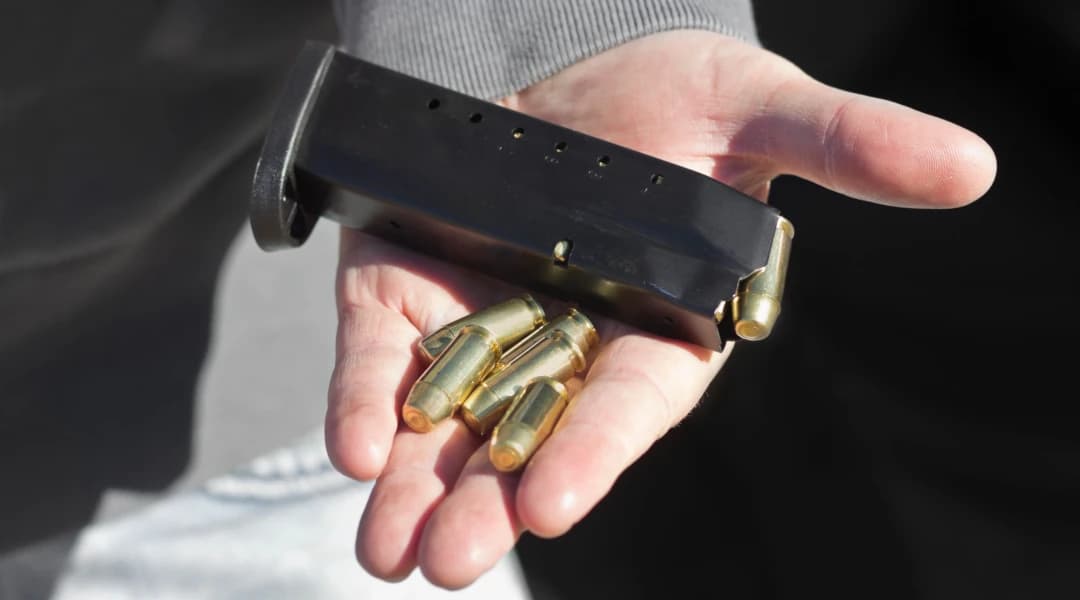

Colorado SB25-003 Goes Into Effect August 1. Here's What Every Hunter, Shooter, and Gun Owner in the State Needs to Know.
Colorado SB25-003 takes effect August 1, 2026 — permit-to-purchase, mandatory training, the 900-model list, hunter exemptions, Del Toro v. Polis, and what to…
Editor's note: The Inside Spread has been covering SB25-003 since it was signed into law in April 2025. Read our original breakdown here: Colorado SB25-003: An Update.
Twenty-five days from today, Colorado becomes the first state in the country to require a government-issued permit and a mandatory training course before a citizen can purchase a semiautomatic rifle.
August 1, 2026 is the date Senate Bill 25-003 goes into full effect. If you are a Colorado hunter who owns an AR-platform rifle for predator control, a waterfowl hunter who runs a gas-operated semiautomatic shotgun, a recreational shooter who wants to buy another modern sporting rifle, or simply a Colorado gun owner planning any future firearm purchase — this law is about to change your daily reality.
The law does not take away what you already own. It does not require registration, confiscation, or modification of existing firearms. If you own a covered firearm today, you are grandfathered completely. But if you want to buy a covered firearm on August 1 or any day after, you will navigate a multi-step government approval process that didn't exist last month. And the Department of Revenue has published a draft list of approximately 900 covered makes and models that has alarmed gun owners far beyond what the original law's language suggested.
Here is everything you need to know before the clock runs out.
What SB25-003 actually does — the plain English version
Colorado SB25-003 was signed by Governor Jared Polis on April 10, 2025 and creates a permit-to-purchase system for what the law calls "specified semiautomatic firearms" — a category defined as semiautomatic rifles or shotguns with a detachable magazine, or gas-operated semiautomatic handguns with a detachable magazine.
In its original form, the bill would have outright banned the manufacture, distribution, transfer, sale, or purchase of those firearms entirely. After significant pushback from the Congressional Sportsmen's Foundation, the National Rifle Association, the National Shooting Sports Foundation, and scores of Colorado gun owners who testified at public hearings, the Senate amended the bill substantially before passage. The outright ban became a permit-to-purchase scheme — still a major restriction, but one that preserves the ability to buy covered firearms through a government-supervised process.
Starting August 1, the process works as follows: before purchasing a covered firearm from any licensed dealer in Colorado, you must complete a multi-step approval process administered through Colorado Parks and Wildlife and your county sheriff's office. You cannot walk into a gun store and buy a covered firearm without this pre-authorization in hand. The transaction cannot proceed until you have completed every step.
The law does not apply to firearms you already own. Possession of covered firearms purchased before August 1 requires no permit, no registration, and no course. The law explicitly states that it only affects purchases and transfers occurring on or after the effective date.
Who is affected and who is not — the exemptions that matter to hunters
Before getting into the process itself, let's be specific about which firearms are and aren't covered — because this is where the most confusion exists, and where the Department of Revenue's draft guidance document created a firestorm.
Firearms that are NOT covered under SB25-003:
Bolt-action rifles are not covered regardless of magazine capacity. Lever-action and pump-action firearms are not covered. Recoil-operated semiautomatic handguns — which include the overwhelming majority of popular pistols including most Glock models, most 1911 variants, and similar platforms — are explicitly exempt because the law only covers gas-operated semiautomatic handguns. Single and double action revolvers are not covered.
For hunters specifically: most bolt-action deer and elk rifles, lever-action rifles, pump-action shotguns, and break-action shotguns and rifles are entirely outside the law's scope. If your primary hunting setup is a bolt-action .30-06, a lever-action .45-70, or a pump 12-gauge, SB25-003 does not affect your ability to buy another one.
Firearms that ARE covered:
AR-platform rifles — the most popular semiautomatic sporting rifle in America — are covered if they are semiautomatic, chamber-fired, and accept a detachable magazine. Gas-operated semiautomatic shotguns with detachable magazines are covered. Gas-operated semiautomatic pistols with detachable magazines are covered.
Most semiautomatic hunting shotguns are specifically exempt. The CPW has stated repeatedly that "most semiautomatic hunting shotguns fall outside the definition." The critical distinction is whether the shotgun uses a detachable magazine — fixed-magazine gas-operated shotguns like many commonly used duck guns are not covered.
The 900-model list that changed everything:
Here is where the law got significantly more complicated in May 2026. The Colorado Department of Revenue published a draft guidance document listing approximately 900 specific firearm makes and models that fall under the SSF definition — a list that included several firearms most gun owners assumed would be exempt. Reports indicate the draft list includes certain Ruger 10/22 variants, despite rimfire firearms of .22 caliber or smaller being explicitly exempted in the statute, as well as some bolt-action rifles and at least one pump-action shotgun.
The Department of Revenue's interpretation of the statute appears to be broader than what many legislators and the public understood when the bill passed. Several lawsuits already challenging SB25-003 are citing this interpretive overreach as an additional constitutional violation. The final official list was expected to be published in conjunction with the Firearm Safety System application launch on July 20, 2026.
If you own a firearm that might be borderline, check the CPW website at cpw.state.co.us/specified-semiautomatic-firearms and the Department of Revenue's guidance before August 1.
The step-by-step process to buy a covered firearm after August 1
If you want to purchase a specified semiautomatic firearm in Colorado on or after August 1, 2026, here is the exact sequence of steps you must complete before the transaction can occur. There are no shortcuts and no exemptions based on prior gun ownership, concealed carry permits, or general firearms experience.
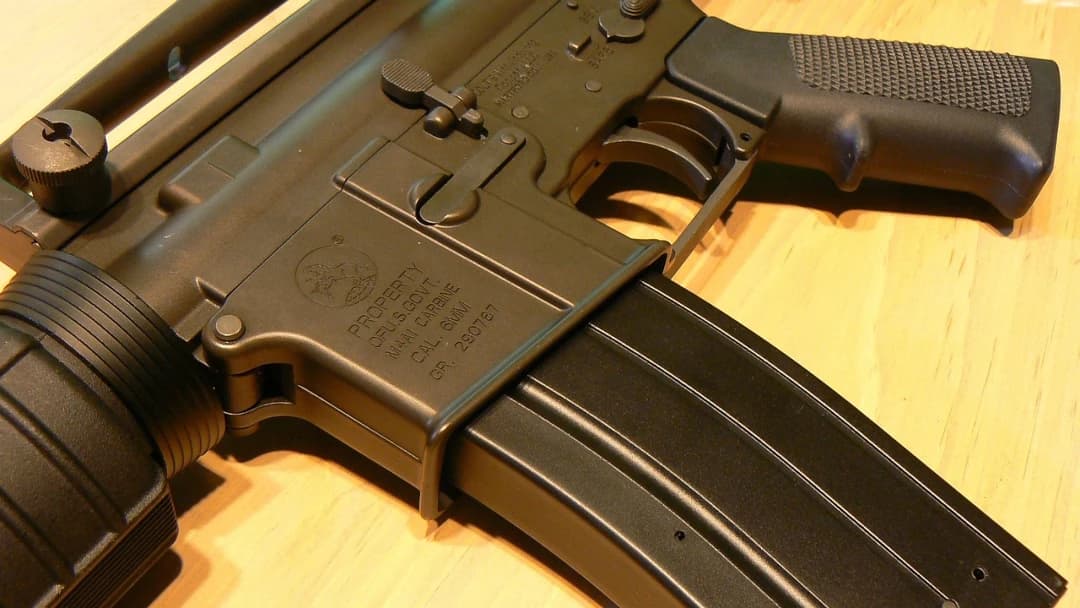
Step 1: Create a profile in the CPW Firearm Safety System
The application portal goes live July 20, 2026 at cpw.state.co.us. Create an account, which generates a user profile that the system uses to connect your hunter education status, course completion records, and eligibility card status across county sheriffs and licensed dealers. You cannot begin the process before July 20.
Step 2: Visit your county sheriff's office
Bring a valid government-issued photo ID and your CPW application confirmation. The sheriff's office will process a name-based background check, verify your identity, and collect fees. The CPW fee alone is $52.00. Individual sheriff's offices may charge additional fees at this step. Call your county sheriff's office before you go — several have indicated they may not begin processing applications until August 1 itself, and some offices have not fully communicated how they will handle the background check logistics. Build lead time into your timeline.
If your application is approved by the sheriff, you receive a firearms safety course eligibility card. This card does not authorize the purchase. It authorizes you to take the required training.
Step 3: Determine which course you need
Colorado SB25-003 created two pathways:
If you have completed a CPW-certified hunter education course: You qualify for the Basic Firearms Safety Course — a minimum of four hours of in-person instruction. This is the pathway most hunters will use. However, there is a critical nuance: your hunter education course alone does not qualify you. You still must take the Basic Course in addition to your hunter education. The system will verify your hunter education credentials against CPW's database. If you completed hunter education outside Colorado, you must bring your card to a CPW office to verify your credentials before beginning the process.
If you have not completed a CPW-certified hunter education course: You must complete the Extended Firearms Safety Course — a minimum of 12 hours of instruction delivered across at least two separate days. Colorado CCW or CHP permits do not qualify you for the Basic Course under any circumstances. Concealed carry permit holders with years of practical experience must complete the full 12-hour Extended Course unless they have hunter education credentials.
All courses must be completed in person with a CPW-verified instructor. A list of verified instructors will be available starting July 20 at the CPW Firearm Safety System website. Both courses include a final written exam requiring a minimum score of 90 percent or better. The completed course must have occurred within five years prior to the purchase transaction.
Step 4: Complete your course and update your record
Your instructor electronically enters your course completion into CPW's system. Once your record is updated, you are authorized to proceed with a purchase.
Step 5: Complete the purchase at a licensed dealer
Your FFL dealer will access CPW's database electronically to verify your eligibility before proceeding with the standard 4473 process and background check. The standard NICS background check still applies on top of the new SB25-003 process. You are undergoing two separate background checks for a single purchase.
How long does this take in total? The honest answer is that nobody fully knows yet, because the system hasn't been live. The Mountain States Legal Foundation, which filed Del Toro v. Polis, described the law as designed to "delay — and ultimately deny" Second Amendment rights through bureaucratic friction. Conservative estimates suggest the full process could take several weeks to more than a month depending on sheriff's office processing times, instructor availability, and course scheduling in your area. Rural county residents are likely to face longer waits than Front Range residents with more local instructor options.
What this means for hunters specifically — the firearms and sports affected
Let's be direct about which hunting activities in Colorado are affected by this law.
Predator hunters using AR-platform rifles chambered in .223 Remington or .22-250 for coyotes, prairie dogs, and other predators that threaten livestock and game populations — these are the most common hunting application for covered firearms. An AR-15 in .223 is the most popular coyote rifle in the country. Every future purchase of one in Colorado now goes through the SB25-003 process.
Waterfowl hunters using gas-operated semiautomatic shotguns with detachable magazines need to verify whether their specific shotgun model falls on the covered list. Most fixed-magazine gas-operated waterfowl shotguns are exempt. Magazine-fed semiautomatic shotguns warrant a check against the DOR guidance document before August 1.
Big game hunters using semiautomatic rifles — the Browning BAR, the Benelli R1, and similar gas-operated semiautomatic hunting rifles chambered in .308, .30-06, or similar calibers — need to verify their specific models. These rifles have legitimate hunting applications, particularly in dense timber where follow-up shots matter, and they fall squarely within the covered definition.
Recreational and competitive shooters who use modern sporting rifles for 3-gun competition, long-range target shooting, or general range use face the same process as hunters. There is no sporting use exemption under SB25-003.
The conservation funding concern nobody is talking about enough:
Colorado hunters contributed over $30 million through licenses and another $24 million via Pittman-Robertson federal excise tax funds in 2024, according to CPW estimates. The Congressional Sportsmen's Foundation has explicitly warned that SB25-003's permit-to-purchase requirements will have a chilling effect on hunting participation, which reduces license sales and ultimately reduces the Pittman-Robertson and Dingell-Johnson revenues that fund Colorado's wildlife management, habitat restoration, and predator control programs.
In an analysis provided to Colorado Senate Republicans during the bill's debate, legislative fiscal analysts estimated that implementation alone would cost the state $550,000 from the Wildlife Cash Fund in the first year, $1,612,101 to the Department of Public Safety, and a $4,655,352 appropriation from the General Fund — all in a year when Colorado was already facing a $1.2 billion budget shortfall. Those administrative costs come directly out of the same pool of resources that funds Colorado's elk habitat programs, mule deer restoration, wolf-livestock conflict management, and aquatic nuisance species control.
The irony is genuine and significant: a law framed as a public safety measure is being implemented by Colorado Parks and Wildlife — the agency whose budget depends on hunting participation — and is projected to reduce the participation and equipment sales that generate the excise taxes CPW depends on.
The legal fight: Del Toro v. Polis and what's happening in court
SB25-003 has been in active federal litigation since September 2025, when the Mountain States Legal Foundation filed Del Toro v. Polis on behalf of the Colorado State Shooting Association — the state's official NRA affiliate — and six individual plaintiffs.
The lawsuit argues that SB25-003 violates the Second Amendment under the framework established by the Supreme Court's 2022 decision in New York State Rifle and Pistol Association v. Bruen, which required that firearm regulations be consistent with the historical tradition of firearms regulation in the United States. The plaintiffs argue that a permit-to-purchase scheme requiring government approval, mandatory training, fees, and enrollment in a state database before exercising a constitutional right has no historical analog in American law and therefore fails the Bruen test.
The NSSF, which condemned the law as "unconstitutional on its face" when Governor Polis signed it, has indicated ongoing legal involvement. The NRA-ILA characterized the sheriff eligibility card process as a "may-issue" scheme — subject to subjective criteria — that was explicitly rejected by the Supreme Court in Bruen's invalidation of New York's may-issue concealed carry regime.
The legal landscape around SB25-003 became significantly more complicated in June 2026 when the U.S. Department of Justice filed separate lawsuits challenging Colorado's existing 15-round magazine restriction and Denver's AR-style rifle ban. The DOJ actions signal federal willingness to challenge state-level firearms restrictions that conflict with the Second Amendment as interpreted by the current Supreme Court. Legal observers are watching whether the DOJ will take a position in Del Toro v. Polis as well.
Colorado's previous firearms restrictions — including the 15-round magazine limit, the three-day waiting period, and the minimum age of 21 for purchases — have faced legal challenges and have generally survived in the Tenth Circuit. SB25-003's permit-to-purchase mechanism is a novel enough restriction that its outcome under the Bruen framework is genuinely uncertain. As of this writing, no injunction has been granted, which means the law takes effect August 1 regardless of the pending litigation.
What does that mean practically? That every provision of SB25-003 is enforceable on August 1, 2026 until and unless a court issues a temporary restraining order or preliminary injunction. Hunters and gun owners cannot rely on the pending litigation as a reason to skip the process if they intend to purchase a covered firearm after the effective date.
What you should do before August 1
If you are planning to purchase a covered semiautomatic firearm:
Buy before August 1 if the purchase is already planned and the firearm you want is in stock. Any covered firearm legally purchased and transferred before August 1 requires no permit, no course, and no eligibility card — now or ever. Keep your purchase documentation. Your 4473 receipt and dealer invoice are your evidence that the firearm was lawfully acquired before the effective date.
If you plan to purchase after August 1:
Begin the process now, before the Firearm Safety System goes live on July 20. Identify your county sheriff's contact and call them to understand their specific processing timeline and fee schedule. If you have hunter education credentials, verify they're in CPW's system. Locate CPW-verified firearms safety instructors in your area — the list becomes available July 20, but some instructors will be advertising their courses before then.
Do not assume the process will be quick. Budget several weeks minimum. Plan your purchases around that timeline rather than showing up at a dealer unprepared.
If you are a hunter who completed hunter education outside Colorado:
Visit a CPW office before August 1 to have your out-of-state hunter education credentials verified and entered into CPW's system. This is a prerequisite for the Basic Course pathway. Without this step completed, you will be treated as if you have no hunter education credentials and required to complete the 12-hour Extended Course.
Check the specific list:
The official SSF list is expected to publish alongside the July 20 system launch. Review it for your specific makes and models at cpw.state.co.us/specified-semiautomatic-firearms and through the Department of Revenue's guidance. If you have a borderline firearm or a firearm you believe should be exempt, consult a Colorado firearms attorney before making any purchase decisions.
The broader context: Colorado as a national testing ground
The Congressional Sportsmen's Foundation, which has been actively engaged on SB25-003 since before its passage, explicitly warned in their public opposition materials that "Modern sporting rifles and semi-automatic shotguns are not only important to our hunting heritage but are highly popular in the recreational shooting community which is widely credited as the source of roughly 80% of conservation funding generated through the Pittman-Robertson Act."
That warning is not hypothetical. The excise taxes collected on semiautomatic firearm sales and ammunition are among the largest contributors to the Pittman-Robertson fund nationally. A state law that adds friction to those purchases — and particularly one that creates a chilling effect on first-time buyers or lower-income buyers who may not navigate the process successfully — reduces those revenues at both the state and federal level.
Colorado has also become the clearest example nationally of the conflict between state-level firearms restrictions and the post-Bruen federal constitutional framework. The DOJ is simultaneously suing Colorado over other firearms restrictions while SB25-003 faces its own federal challenge. That tension — a state pushing the boundaries of permissible restrictions while federal courts tighten the constitutional standard for those restrictions — will likely produce significant caselaw over the next two to four years that affects gun owners and hunters in every state.
The Inside Spread will continue tracking Del Toro v. Polis and any injunction proceedings. If a court issues a temporary restraining order before August 1, we will update this article immediately.
Sources: Colorado General Assembly (leg.colorado.gov/bills/sb25-003), Colorado Parks and Wildlife (cpw.state.co.us/specified-semiautomatic-firearms), Mountain States Legal Foundation (Del Toro v. Polis), NRA-ILA, NSSF, Congressional Sportsmen's Foundation, Colorado Outdoors Online, Eastmans' Hunting Journals, CPR News, Colorado Newsline, Dirty Bird Industries, Franktown Firearms
The Inside Spread covers hunting, fishing, shooting, and conservation. Read our original SB25-003 coverage at theinsidespread.com/shooting/colorado-sb25-003-an-update.
Written by
The Inside Spread Team
The Inside Spread Team covers hunting, fishing, shooting, and conservation for readers who live outdoors—not just shop for it.
Comments
No comments yet. Be the first to share your thoughts.
More in shooting
Safes and Range-Day Guns We'd Actually Buy
Winchester and Redfield gun safes plus the Smith & Wesson M&P 22 Magnum from Academy’s spring deals—logistics, capacity reality checks, and honest caveats.
6.5 Weatherby RPM: A Long-Distance Dragster of a Hunting Cartridge
First-hand review of the 6.5 Weatherby RPM—origins, ballistics, and real-world use from a Wisconsin doe hunt.
How to Improve Rifle Accuracy: 9 Tips That Shrink Groups
Improve rifle accuracy with practical tips on zero, breathing, trigger control, rests, ammo, and practice. Real hunter lessons to shrink groups at the bench and in the field.