
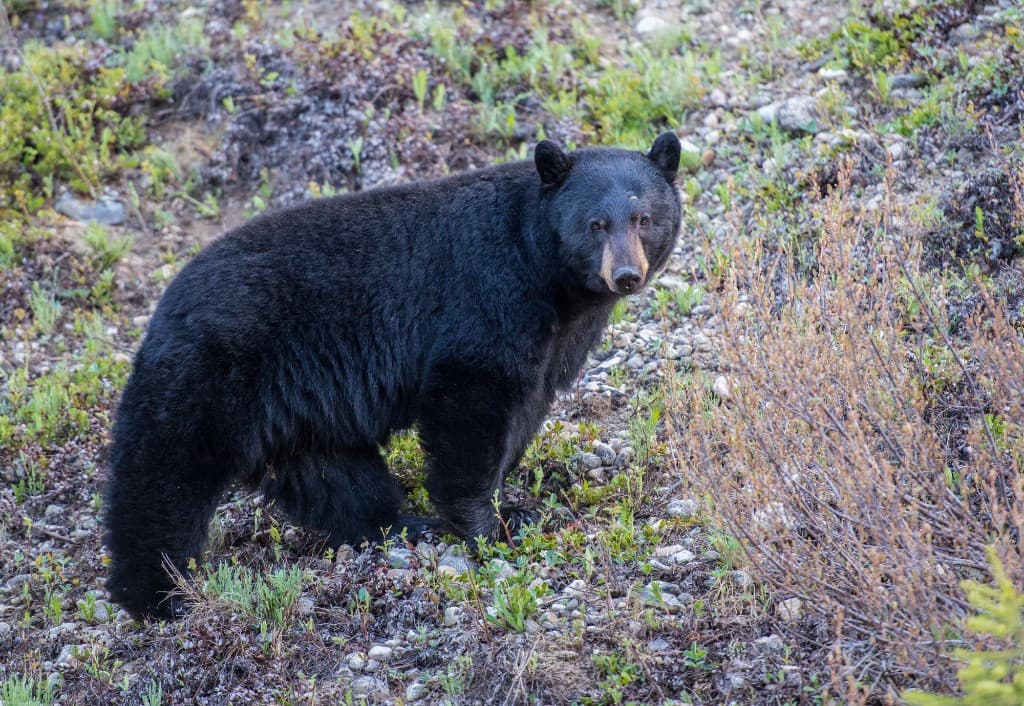
Idaho Spring Black Bear Hunting 2026: Season Dates, Controlled Hunts & General Season
Idaho spring black bear 2026—controlled hunt applications, general season dates, bear ID test requirement, and best units for spring bear in the backcountry.
Idaho offers some of the best spring black bear hunting in the Lower 48—backcountry wilderness units with healthy bear populations, a combination of controlled and general season opportunities, and accessible over-the-counter tags for most of the state. The 2026 spring season includes controlled hunts running as early as April 1 through late May and general season dates that vary by unit. A mandatory bear identification test is required before you can purchase a tag. Here's what you need to know.
- Controlled hunts: April 1 – May 22 (varies by unit)
- General season: dates vary by unit; OTC tags available
- Bear ID test: mandatory, free, one-time requirement
- Bait and hounds: rules vary by unit and year—verify the current Idaho big game booklet for your hunt
When Is Idaho Spring Bear Season 2026?
Idaho's spring bear season is split between controlled hunts and general season opportunities. Controlled hunts generally run from April 1 through May 22, depending on the unit and weapon type. General season dates overlap in many units but may open later in some regions. Season structure varies significantly by Game Management Unit, so checking the specific dates for your target area is essential.
- Controlled hunt dates: approximately April 1 – May 22 (unit-dependent)
- General season dates: vary by unit; some open as early as April 15
- Shooting hours: 30 minutes before sunrise to 30 minutes after sunset
- All dates set by Idaho Fish and Game; verify at idfg.idaho.gov
Idaho structures its bear seasons to spread pressure across units and weapon types. That means a bowhunter in the Clearwater Region may have different dates than a rifle hunter in the same unit. Check the Idaho Big Game Seasons and Rules booklet for exact dates by unit.
Controlled Hunt Applications
Idaho's controlled hunt system allocates tags for specific units, weapon types, and date ranges. For spring 2026, the application window opened January 15 and closed February 15. Results were posted by March 10. Leftover controlled hunt tags go on sale April 1 on a first-come, first-served basis—this is a legitimate second chance if you didn't draw.
- Application period: January 15 – February 15
- Draw results: posted by March 10
- Leftover tags: available April 1 at gooutdoorsidaho.com
- Preference points: Idaho does not use a preference point system for bear
Controlled hunts tend to target the highest-quality units where Idaho Fish and Game wants to manage harvest more precisely. These hunts often have lower hunter density and better success rates than general season in the same area. If you missed the draw, monitor the leftover tag list closely—popular units sell out within hours, but less-known units can sit for days.
Planning tools like the best hunting apps can help you track draw results and set reminders for leftover tag sales.
General Season Overview
For hunters who didn't draw a controlled hunt or prefer flexibility, Idaho's general season offers over-the-counter black bear tags in many units across the state. General season tags are available at gooutdoorsidaho.com and from license vendors statewide.
- OTC tags available for most general season units
- Resident tag: check current IDFG fee schedule
- Nonresident tag: check current IDFG fee schedule (significantly higher)
- One black bear per calendar year
- Some units have specific weapon restrictions during general season
General season dates vary by unit. Some units open in mid-April while others don't start until early May. The key advantage of general season is that you can buy a tag and go—no draw, no application deadline, no waiting. The trade-off is that some units see more pressure during general season, particularly those close to road systems.
Bear Identification Test Requirement
Before you can purchase any black bear tag in Idaho—controlled or general—you must pass a mandatory bear identification test. The test is free, available online at the Idaho Fish and Game website, and only needs to be passed once. It covers how to distinguish black bears from grizzly bears in the field, which is critical in units where both species overlap.
- Free online test at idfg.idaho.gov
- Must be completed before purchasing a bear tag
- Covers species identification: black bear vs. grizzly bear
- One-time requirement—you don't need to retake it each year
- Topics include body shape, facial profile, shoulder hump, ear shape, and track differences
This isn't a formality. Grizzly bears are federally protected in Idaho, and misidentification kills happen every year across the northern Rockies. The test takes about 20 minutes and uses photo and video scenarios. If you hunt in grizzly country—which includes much of central and northern Idaho—treat this as essential preparation, not a bureaucratic checkbox. Understanding scent control and animal awareness transfers directly to bear hunting, where getting close means staying undetected.
Where to Hunt Spring Bears in Idaho
Idaho's best spring bear hunting concentrates in the backcountry units of the Clearwater Region, the Salmon River corridor, and the mountains around McCall. These areas combine high bear density, early green-up on south-facing slopes, and limited road access that keeps pressure manageable.
- Clearwater Region (Units 10, 10A, 12): historically the highest bear harvest in the state; dense timber with burns and berry patches; access via logging roads and trailheads off Highway 12
- McCall Area / Unit 32A: accessible backcountry with good spring bear populations; south-facing slopes green up early, pulling bears out of timber
- Salmon River Units (20A, 21, 27): rugged, low-pressure country; spot-and-stalk opportunities on open hillsides above the river breaks
- Boise National Forest (Units 33, 34, 39): moderate access; bears feed on early-season grasses in meadows and old burns
Spring bears are most active during the first weeks after den emergence, feeding on south-facing slopes where snow melts earliest. Glassing open hillsides at dawn and dusk is the primary tactic. Bears key in on green grass, skunk cabbage, and winter-killed ungulate carcasses during this food-deficit period.
Bait and hounds: Idaho’s rules for spring bear baiting and hounds depend on unit and season and can change when regulations are updated. Do not rely on blog summaries—open the current Big Game Seasons and Rules for your unit before you plan.
The gear and equipment used for elk hunting translates well to Idaho spring bear—quality optics, layered clothing for variable mountain weather, and solid boots for steep terrain are non-negotiable. If you're looking at Idaho as part of a broader western hunting strategy, our guide to improving your elk hunting covers similar backcountry skills.
Key Regulations
Idaho allows rifles, shotguns, muzzleloaders, bows, and crossbows for spring bear. Specific weapon restrictions apply in some controlled hunt units. All hunters must comply with the bear identification test requirement before purchasing a tag.
- Legal weapons: rifles, shotguns, muzzleloaders, bows, crossbows (unit-specific restrictions may apply)
- Bag limit: one black bear per calendar year
- Mandatory check-in: all harvested bears must be checked in at an IDFG office or check station within 10 days
- Evidence of sex: must remain naturally attached to the hide until checked in
- Grizzly bears: fully protected; killing a grizzly is a federal offense
- Baiting and hounds: follow the current booklet for your unit—rules are not uniform statewide
Hunters are also required to present the skull and hide at an IDFG check station. Idaho uses harvest data from check-ins to manage unit-level populations, so compliance matters. Failure to check in a harvested bear within the required window carries penalties.
Conservation funding—including the bear tags you purchase—directly supports Idaho's wildlife management programs. Learn more about who actually funds wildlife conservation and why hunter participation matters.
Plan Your Idaho Spring Bear Hunt
Idaho's spring bear season offers a rare combination: over-the-counter access to backcountry hunting in some of the wildest country left in the Lower 48. Whether you draw a controlled hunt in the Clearwater or grab a general season tag and glass hillsides above the Salmon River, the opportunity is there.
Check the Idaho hunting guide for more on seasons, licenses, and public land across the state. Start with the bear identification test, scout your target unit, and build your plan around green-up timing and south-facing slopes. Spring bear hunting in Idaho rewards preparation—and the country alone is worth the trip.
Sources
- Idaho Department of Fish and Game. "Black Bear Hunting." IDFG, idfg.idaho.gov. Accessed 18 Mar. 2026.
- Idaho Department of Fish and Game. "Big Game Seasons and Rules 2026." IDFG, idfg.idaho.gov/rules/big-game. Accessed 18 Mar. 2026.
- Go Outdoors Idaho. "Licenses and Tags." Go Outdoors Idaho, gooutdoorsidaho.com. Accessed 18 Mar. 2026.
Official state agency
Idaho Fish and GameVerify seasons, bag limits, and license rules with the agency before you hunt.
Written by
The Inside Spread Team
The Inside Spread team includes hunters with backcountry bear hunting experience across the northern Rockies. Our writers have pursued spring black bears in Idaho's Clearwater and Salmon River drainages and hold current bear identification certifications.
Comments
No comments yet. Be the first to share your thoughts.
More in state-guides
Arkansas Duck Hunting 2026: Season Dates, WMA Permits, License Costs & Complete Guide
Arkansas duck hunting 2026-27—three-segment season dates, nonresident WMA waterfowl permits, Black River and Bayou Meto access changes, and Delta license costs.
Georgia Whitetail Deer Hunting 2026: Season Dates, Extended Counties, License Costs & Nonresident Guide
Georgia whitetail deer hunting 2026-27—archery, primitive weapons, and firearms dates, 29-county extended archery, 12-deer bag, Game Check, and the nonresident guide.
Kentucky Whitetail Deer Hunting 2026: Season Dates, Zone Changes, License Costs & Nonresident Guide
Kentucky whitetail deer hunting 2026-27—archery, crossbow, and modern gun dates, the 2026 zone map, license and deer permit costs, Telecheck, and the nonresident guide.
Michigan Whitetail Deer Hunting 2026: Season Dates, License Costs, UP vs LP & Nonresident Guide
Michigan whitetail deer hunting 2026—archery, firearm, and three-day December dates, DNR license fees, Upper vs Lower Peninsula rules, baiting, and the nonresident guide.