
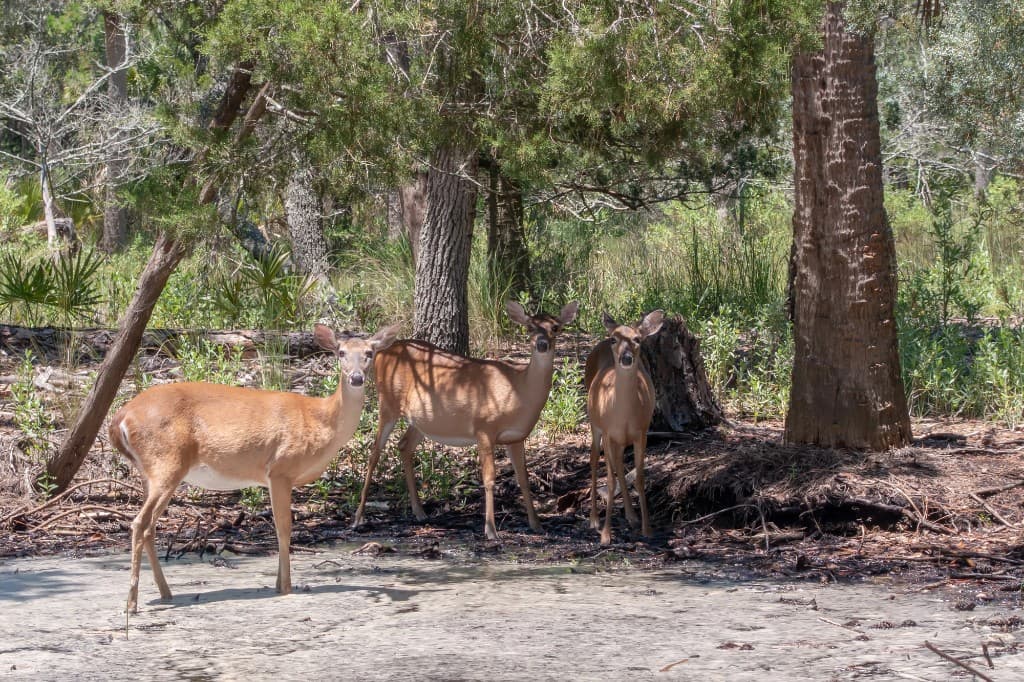
CWD kills deer and that is not in dispute. But hunters deserve real answers on spending, origins, and why ag moves prions freely while hunters get regulated.
Let's be clear up front. Chronic wasting disease is real. It is fatal in every cervid it infects. It spreads through direct contact and through soil and plants that can hold infectious prions for decades. Those are facts, not opinions, and no responsible hunter or hunter organization should wave them away.
But here is the other half of the conversation that agencies keep avoiding.
Hunters have been asked to shoulder the regulatory burden of managing a disease that:
- May have originated at a government research facility
- Possibly existed in the wild long before anyone was looking for it
- Is being managed with tens of millions of dollars of public money with, in some states, measurably poor results
- Follows the path of elk reintroduced from CWD-endemic source populations
- Spreads through organic material that agriculture moves by the millions of tons — but nobody wants to regulate hay
If you say something about any of that, you get called a CWD denier. You are not. You are a citizen asking where the money went and why the rules only apply to you.
This article is about both things. The disease is real, and the management response deserves scrutiny.
Where CWD Came From: A Government Research Facility and a Theory Nobody in Government Likes
The official history of CWD begins in 1967 at the Colorado Division of Wildlife Foothills Wildlife Research Facility in Fort Collins, Colorado. A "wasting syndrome" was observed in captive mule deer there. It was not identified as a transmissible spongiform encephalopathy (TSE), or prion disease, until 1978 [CWD Alliance Timeline].
What the official history skips is the origin theory that has circulated among researchers for decades: that CWD likely jumped from sheep to deer at that same facility.
The leading theory, documented in multiple research papers and reported in mainstream science media including a BBC documentary, is that deer at the Fort Collins facility were kept in pens that had previously housed sheep from a scrapie project. Scrapie is a prion disease in sheep, closely related to CWD. The theory holds that CWD emerged when those captive mule deer were exposed to scrapie-contaminated pens or materials [Deer Friendly / Origin Research].
When the BBC contacted Fort Collins researchers about this theory, they called it "an urban legend."
That is an extraordinary response to what is, at minimum, a reasonable scientific theory supported by documented animal-facility records and contact tracing research. The fact that a government facility has an incentive to distance itself from being the origin point of a disease that has now cost wildlife agencies hundreds of millions of dollars — and disrupted deer hunting for hundreds of thousands of hunters — is obvious. That does not mean the theory is true. It means it deserves a serious answer, not a dismissal.
What we do know: CWD was first identified at a government research facility. Wild deer were not documented with the disease until 1981, and only within a narrow radius of those same research facilities at first. The disease sat undetected in captive animals for at least 14 years before the science was even capable of confirming what it was.
Were the first wild cases near the facility — or from transported deer?
This is the specific question that ought to be at the center of every CWD origin discussion, and it is almost never asked directly.
The answer from the available record is both damning and incomplete.
Research published in the North American Wildlife and Natural Resources Conference Transactions documents that wild cervid CWD cases in the early years "were not observed until the late 1970s and then only within 31 miles — usually within a 3-mile radius — of the research facilities, even though sampling occurred outside that radius" [NAWNRC Transactions].
Read that carefully. Surveillance teams were testing deer outside that radius and finding nothing. The disease was clustering almost exclusively within walking distance of the pens where infected captive deer had been kept. That is not the pattern of a disease spreading naturally through a wild population. That is the pattern of a disease radiating outward from a point source.
By 1985, when wild mule deer cases were first confirmed in both Colorado and Wyoming, the Colorado Division of Wildlife apparently believed the research facility itself was still a contamination source — because they attempted to eliminate CWD from the Fort Collins facility by treating the soil with chlorine and removing contaminated soil [CWD Alliance Timeline]. That is not how you respond to a disease that arrived from outside. That is how you respond to a disease you believe leaked out from inside.
A second government research facility, the Wyoming Game and Fish Department's Sybille Wildlife Research Facility, was identified with CWD in captive deer in 1979. The first wild cases in Wyoming also appeared near that facility. The NAWNRC paper notes that Wyoming has only one private game farm, meaning commercial enterprise is unlikely to explain widespread wild distribution there — the Sybille facility is the most plausible origin for Wyoming's early wild cases.
Fort Collins researchers have offered their own counter-theory: that they may have captured wild deer north of Fort Collins that were already infected before being brought into the pens. There was a single scrapie flock in Kiowa County, Colorado, in 1966 — but it was 280 miles from Fort Collins, and given the 18-to-24-month incubation period of CWD, the timing does not work for that flock to have infected deer captured near Fort Collins in time for the 1967 detection.
So the honest summary is this: the geographic clustering of early wild cases around government research facilities is documented, peer-reviewed, and not seriously contested. The Fort Collins facility has called it an urban legend. The evidence does not support that dismissal. Whether the disease originated at the facility from scrapie exposure or arrived via already-infected wild deer that researchers captured is still genuinely uncertain — but in either scenario, the facility sits at the center of the outbreak pattern.
The question hunters should be asking: has any agency ever commissioned a full, independent audit of the Fort Collins and Sybille facility timelines, animal movement records, and surrounding wild deer surveillance data? If so, where are the published results? If not, why not?
And here is the question agencies never answer: Did CWD exist in wild deer before 1967? We do not know. Research cited by Deer Friendly notes that some studies suggest CWD may have been present for 10 to 20 years before its initial identification. Before the 1980s, no one was routinely testing wild deer for prion diseases. Wild deer were not tested at all in most states before the 2000s. A disease that takes up to two years to become symptomatic, kills slowly, and causes deer to look sick only in late stages — that disease could have existed and spread in wild populations for decades without anyone recognizing it.
That is not a conspiracy theory. That is a surveillance gap. And agencies should say so plainly instead of presenting the 1967 date as the absolute beginning of the disease rather than the beginning of detection.
Could This Origin Story Be Connected to Mule Deer Declines Today?
This is the question that should be haunting every wildlife manager in the West, and most of them will not answer it directly.
Here is what we know.
CWD radiated outward from Colorado and Wyoming — the states with the two government research facilities, and the states where the disease has been present the longest and at the highest prevalence in mule deer. Those are also, not coincidentally, some of the same states where mule deer populations have been below management goals for years.
A peer-reviewed USGS study that followed GPS-collared mule deer in southeastern Wyoming from 2010 to 2014 — where average annual CWD prevalence exceeded 20 percent — found that the annual population growth rate was 0.79. That means the herd was shrinking at 21 percent per year. When researchers ran the same model using only data from CWD-negative deer, the growth rate was 1.00: a stable population. The study concluded CWD was "a significant contributor to mule deer population decline" and was co-authored by USGS scientists [USGS / Data Dryad].
That is not a model or a projection. That is a field study with radio-collared animals. CWD-positive mule deer had a mean annual survival rate of 0.32 compared to 0.76 for negative deer. Positive deer were dying at more than twice the rate of healthy ones — and it was driving the whole herd downward.
Now look at the Wind River herd in central Wyoming — one of the most CWD-saturated wild deer herds on the planet. Wyoming Game and Fish data shows 74 percent of antlered bucks in the core hunt area test positive for CWD. Does are at 41 percent. A third of yearling bucks — one-year-olds — have already contracted the disease and likely will not survive to age three. A study of GPS-collared does in the herd found that only half survived their first year of monitoring. Of the ten bucks tracked, only one was still alive after 15 months [Buffalo Bulletin / WyoFile].
Researcher Paul Cross has noted that animals appear to be contracting CWD directly from the environment — not just from each other — because even as the herd's numbers have fallen, prevalence has not dropped. The prion contamination in the soil is sustaining the epidemic even as it kills the herd down.
The 2025 Western Association of Fish and Wildlife Agencies rangewide mule deer report found that of 20 reporting jurisdictions, 11 had declining populations over the past three years. The report specifically called out CWD, alongside drought and severe winters, as a contributing factor in high-prevalence areas including Saskatchewan, where a provincial CWD prevalence rate of 39 percent in mule deer coincided with a roughly 50 percent population decline over two years in the southwestern portion of the province [WAFWA 2025 Rangewide Report].
So here is the thread that runs from the origin story straight to the present crisis:
CWD was allowed — through a combination of unrecognized transmission at government facilities, delayed surveillance, inadequate live-animal movement controls, and decades of insufficient management response — to become endemic in the most important mule deer country in North America. The states where it has been longest established and least controlled now show the most severe disease burden. And peer-reviewed science has established that at high enough prevalence, CWD alone is sufficient to drive mule deer populations into decline.
That does not mean CWD is the only thing affecting mule deer. Drought, habitat fragmentation, wildfire, hard winters, predator pressure, and development are all real stressors. But it does mean that hunters watching the mule deer draws get tighter, the tags get scarcer, and the units that used to be good turn into grinds have a legitimate question to ask:
If the disease that is documented to kill mule deer populations at a 21-percent annual rate originated at or near a government research facility, spread to wild deer within a 3-mile radius before anyone was looking, and was then allowed to establish itself across the entire western mule deer range over 60 years — who is accountable for that?
The answer is not a simple one. But the question is entirely fair.
What Agencies Have Actually Spent and What They Have to Show for It
Wisconsin is the most documented example, and it is not encouraging.
Where, when, and how — and why those answers still matter
On February 28, 2002, the Wisconsin DNR announced that three white-tailed deer shot during the 2001 hunting season had tested positive for CWD. All three were killed within 3 miles of each other near Mount Horeb in Iowa and Dane counties in south-central Wisconsin. It was the first confirmed CWD case east of the Mississippi River [CWD Alliance].
How did CWD get to Mount Horeb? The published scientific answer is: we do not know for certain. The most commonly suggested hypothesis, stated directly in the peer-reviewed paper reporting the Wisconsin outbreak, is that CWD entered the free-ranging deer population through the importation of an infected captive cervid. Wisconsin had imported elk from CWD-affected herds in Colorado during the 1990s, and two separate Wisconsin captive deer farms were found CWD-positive in September and October 2002 — one in Portage County, one in Walworth County [CDC Emerging Infectious Diseases / Wisconsin CWD Report].
Here is the problem: those positive farms were approximately 80 miles away from the Mount Horeb wild deer outbreak. Investigators ultimately said the captive farms were "likely not the source" of the free-ranging cases because of that distance. But they could not definitively rule it out either, and the investigation was severely hampered by a glaring regulatory failure. Wisconsin had no requirement for permanent individual identification of captive deer. Wardens literally could not determine which animals had been exposed, where they came from, or how long they had been at each farm. In the words of a DNR official testifying before a legislative committee: "The lack of a requirement for permanent individual identification has severely hampered this investigation." One CWD-positive captive buck had only a farm tag — and hunters routinely remove those tags before CWD samples are taken [CWD Alliance / DNR DATCP Coverage].
It gets worse. Investigators also discovered that a deer had escaped from one of the CWD-positive captive farms in March 2002. That escaped deer was later shot and found to be CWD-positive. Wardens photographed captive deer and wild deer making nose-to-nose contact through farm fences. There was evidence that at least one farm operator may have deliberately attracted wild deer inside enclosures with corn, though investigators could not prove it. The Wisconsin captive deer industry at the time had 575 farms with captive white-tailed deer and 272 with captive elk — with an estimated 35,000 animals capable of direct contact with wild deer.
Despite all of this, no one was ever definitively held accountable for introducing CWD to Wisconsin. The disease was there, the probable pathway was the captive cervid industry, the investigation was unable to trace it conclusively, and Wisconsin's 700,000 deer hunters and billion-dollar deer hunting economy became the ones who absorbed the consequences.
CWD hit neighboring states at almost exactly the same time
This detail is rarely discussed but important: Wisconsin was not the only state east of the Mississippi detecting CWD in 2002. Illinois detected CWD in a wild deer in Boone County — which sits directly on the Wisconsin border in the northwest corner of the state — in November of that same year. The Illinois DNR Director noted at the time that Illinois had expanded its surveillance "following the CWD outbreak in southern Wisconsin," suggesting the Illinois case was likely connected to Wisconsin spread rather than an independent introduction [CWD Alliance / Illinois First Positive].
Minnesota detected CWD in a captive elk farm near Aitkin in August 2002 — again the same year. That investigation traced the Minnesota elk's movements back to Colorado and to connections with farms in Wisconsin, Iowa, Indiana, Montana, North Dakota, Oklahoma, and South Dakota. The three infected animals in the Minnesota investigation all spent time at a single elk operation in Sauk Centre, Minnesota, during the summer of 2000 [Southeastern Outdoors / Minnesota CWD].
In other words: in the span of a single year, CWD went from being a western disease to appearing simultaneously in Wisconsin wild deer, Illinois wild deer on the Wisconsin border, and Minnesota captive elk — all in 2002, all traceable in some form back to Colorado's long-established CWD reservoir and the live animal trade that fed it.
What Wisconsin spent and what it got
The state responded aggressively — one of the most aggressive CWD responses in the country at the time. It established CWD management zones, extended seasons, encouraged aggressive doe harvest, banned baiting and feeding in 26 counties, deployed state sharpshooters, and appealed to landowners to kill as many deer as possible.
A 2006 Wisconsin Legislative Audit Bureau report found the DNR had spent nearly $27 million over four and a half years on an ineffective strategy. The deer population in CWD zones had grown, from 26.4 deer per square mile in 2002 to 38.3. The agency had failed its own stated goals [Wisconsin News].
Wisconsin Watch reported in 2009 that after seven years and nearly $41 million in state and federal spending, the DNR had still failed to meet critical goals for reducing herd size and infection rates. Population targets had been relaxed multiple times after being missed — sometimes set at more than three times the original goal — and still not met [Wisconsin Watch].
The DNR's own CWD program director acknowledged the agency was "nowhere close" to targets that would have a meaningful effect on transmission. He also said: "We rely on hunters. There's really no other way to do it. We can't do it."
That is an honest admission. It is also the answer to why hunters are frustrated. Agencies tell hunters to shoot more deer, follow complex rules, transport nothing, test everything, and fund the management through licenses, permit fees, and excise taxes — and then report a decade of missed goals.
Wisconsin is not alone. The Wisconsin model was widely praised at the time as best practice. If the most aggressive CWD response in the country produced those results, every state should be publishing honest scorecards, not press releases.
Hunters who fund public wildlife agencies through license fees, habitat stamps, and Pittman-Robertson taxes are not wrong to ask whether that money is being spent effectively. That is not an attack on conservation. That is what accountability looks like.
The Colorado Export Chain: A Pattern Nobody Wants to Name
Here is the part of the CWD story that almost nobody puts in one place.
If you trace every major CWD expansion event outside the original Colorado/Wyoming endemic zone — every first detection in a new state, every new country, every outbreak that exploded into a regional crisis — you keep arriving at the same origin: Colorado. Either directly, or one transaction removed.
Walk through it:
Saskatchewan, Canada (1996): The largest captive elk CWD outbreak in Canadian history. Thirty-nine farms eventually infected. The Canadian federal government paid out $33 million in compensation. Traced by investigators to a single infected elk imported from a game farm in South Dakota in the 1980s. South Dakota's farms were linked to the Colorado/Wyoming endemic zone — the same origin cluster [NCBI / Saskatchewan CWD Epidemiology, Saskatchewan Government].
South Korea (2001): CWD detected in farmed cervids. Traced to elk imported from Canada. Canada got them from South Dakota. South Dakota traced to Colorado. Three links in the chain, same source [CDC Emerging Infectious Diseases / South Korea].
Wisconsin (2002): Published scientific record confirms that elk were imported to Wisconsin from CWD-affected herds in Colorado during the 1990s. That importation is the leading hypothesis for how CWD entered the state's wild deer population — which then radiated into Illinois and fueled one of the most expensive failed management campaigns in American wildlife history.
Minnesota (2002): Captive elk traced to a multi-state movement network with connections back to Colorado, South Dakota, and other states in the Colorado-linked endemic zone.
Nebraska wild deer (1999): First wild cases detected near the Colorado/Wyoming border and identified as a natural geographic spillover from the original endemic zone.
Arkansas elk (2015): Reintroduced elk sourced directly from Colorado. CWD first detected in the reintroduction zone.
In every case, the chain leads back to the same place: a disease that was allowed to become permanently entrenched in northeastern Colorado and southeastern Wyoming, centered near two government research facilities, and then distributed across North America and beyond through a live animal trade industry that was barely regulated, barely tracked, and apparently never held accountable for what it was moving.
This is not a conspiracy. It is a documented export pattern that can be assembled from publicly available government and scientific records. The fact that nobody in wildlife management has assembled it into a single public accountability narrative — naming Colorado as the reservoir, naming the live animal trade as the distribution mechanism, naming the facilities as the origin cluster — is itself worth asking about.
Hunters are not wrong when they sense that the story they are being told is incomplete. They are correct. The complete story runs from a Fort Collins research pen in 1967 to Saskatchewan farms in the 1980s to South Dakota game operations to a Wisconsin elk import in the 1990s to a Mount Horeb deer field in 2001 to an Arkansas Newton County elk in 2015.
That is a single thread. It has never been officially pulled end to end.
The Elk Reintroduction Pattern
CWD follows elk. More specifically, CWD tends to appear in areas where elk have been reintroduced from western source herds where the disease was already established.
Arkansas is the clearest example. Elk were reintroduced in Arkansas beginning in 1981, with 112 elk sourced from Colorado and Nebraska and released near the Buffalo National River in Newton County. The herd grew. Hunting seasons were established in 1998. Testing was conducted. And for more than 200 elk and 7,000 white-tailed deer tested, all results were negative.
Then, in October 2015, a 2.5-year-old female elk harvested in Newton County tested positive for CWD — the first confirmed case in Arkansas. Four months later, a white-tailed deer from the same county tested positive [University of Arkansas Extension].
Newton County is where the reintroduced elk live. Colorado, where those elk came from, was already a CWD-endemic state. As of 2026, nearly half of all Arkansas CWD positives have been detected in Newton County. Arkansas has now reported nearly 2,000 positives in deer since 2016, almost all in the northwest part of the state, adjacent to the original elk reintroduction area [Yahoo News / Missouri CWD Update].
This does not mean elk reintroductions cause CWD everywhere. Missouri reintroduced elk from Kentucky starting in 2012, and as of the latest reports, no CWD positives have been detected in Missouri's elk herd. That matters.
But it does raise a question that has not been adequately answered: when state agencies reintroduce elk from established herds in CWD-positive states, what is the full disease-testing protocol? What is the liability if the source herd produces a CWD-positive animal years after introduction? And who is accountable when that reintroduced population becomes the first point of detection in a state that previously had no confirmed CWD?
Hunters are right to ask. This is public wildlife managed with public money.
The Organic Material Problem Agencies Do Not Want to Touch
This is the most underreported and, frankly, the most damaging gap in CWD policy.
Agencies have established a clear scientific consensus that CWD prions persist in the environment. Infected animals shed prions in urine, feces, saliva, blood, and antler velvet. Those prions bind to soil. They persist for years — in some documented cases, for more than a decade. They are taken up into plants through root systems and accumulate in above-ground tissue [MDPI State of the Science, National Academies CWD Review].
University of Minnesota researchers demonstrated in a 2022 study that alfalfa, barley, and other crops can accumulate sufficient CWD prions from contaminated soil to cause prion disease in mice that ate those plants. The researcher involved noted the obvious implication: "Plants are obviously moved in the case of agriculture across the continents, the world, and so that brings up the concern that these plants may be able to take prions to new places or expose animals or humans when they're in a place where perhaps chronic wasting disease isn't thought to occur." A bale of hay cut from a CWD-contaminated field and stored for a season remains infectious [CIDRAP / University of Minnesota].
Norway, which has CWD in reindeer, took this seriously enough to ban the import of hay and straw from CWD-positive areas outside the European Economic Area in 2018, specifically to prevent prion movement through agricultural products [CIDRAP].
In the United States, there is no equivalent policy.
Every day across the country, truckloads of hay, alfalfa, and feed grains move across state lines from states where CWD is endemic. Poultry litter and livestock manure — collected from animals that may have been fed contaminated grain — is spread on fields. Soil attached to farm equipment moves with the equipment. The same scientific consensus that says hunter carcass movement is a risk for CWD spread also says prions persist in soil and plant material. But the policy apparatus has not been applied there.
This is not an attack on agriculture or farmers. Most of them are not aware of the issue, and it has not been explained to them. The argument here is about policy consistency. If the science supports restricting hunter carcass transport across state lines — and it does — then the same agencies have to answer why the agricultural pathway for prion movement is essentially unregulated.
Hunters who ask about this are called conspiracy theorists. But the underlying science is published in peer-reviewed journals and acted on by Norway. The question is legitimate. The silence from agencies is not good enough.
EHD Kills More Deer Right Now Than CWD Does
This is a comparison agencies and hunting organizations dance around, but it matters.
Epizootic hemorrhagic disease (EHD), caused by midges carrying EHD and bluetongue viruses, kills more white-tailed deer annually than all other infectious diseases combined. Mortality in severe outbreaks can reach 25 to 90 percent in affected areas. Deer can be dead within hours to days of infection. When a bad EHD outbreak hits, hunters and landowners see the piles of dead deer. It is visible, fast, and devastating in the short term.
North American Whitetail describes EHD plainly: "The number one killer of whitetails today, bar none, is Hemorrhagic Disease; and CWD is one of the rarest mortality agents to date." That is not a fringe claim — it is backed by state mortality data and acknowledged by conservation organizations including the National Deer Association and the Missouri Department of Conservation [North American Whitetail, Missouri MDC].
So why does CWD receive orders of magnitude more regulatory attention, more public spending, and more hunting disruption than EHD?
The honest answer has multiple parts. CWD is incurable, permanent, and always fatal in individuals. It does not fade after a bad season and come back years later — it compounds. It has the potential to eventually become the dominant mortality factor in a deer population if prevalence climbs high enough. A West Virginia study in Hampshire County found that in the core CWD area, the disease had become the primary cause of death among GPS-collared deer, surpassing all other causes. That is a real-world look at what high prevalence means over time.
EHD, by contrast, produces herd immunity. Deer populations in areas with long EHD exposure develop partial resistance. Populations recover after outbreaks.
The NDA argues that the difference in urgency is correct: EHD is a recurring crisis with recovery, and CWD is a slow, permanent one without it. That is a defensible position.
But hunters watching EHD kill 40 percent of a local herd with no regulatory response, and then watching a new CWD rule take effect because of two confirmed positives 200 miles away, are not wrong to notice the inconsistency. They deserve a plain explanation of why one disease triggers emergency management and the other gets monitoring.
Testing Transparency: What Tests Are Used and Why It Matters
The controversy around testing is not paranoia. It is documented.
Petersen's Hunting reported on a Tennessee case where a state whistleblower, former head deer biologist James Kelly, alleged that the Tennessee Wildlife Resources Agency had changed CWD testing protocols without notifying the public. The agency had initially required suspect positive ELISA results to be confirmed with IHC before announcing a new case. According to Kelly's lawsuit, the agency stopped requiring IHC confirmation and began publicly reporting ELISA positives as confirmed CWD detections. Kelly alleged some of those positives were lab errors. He was fired. His whistleblower case raised the question: if a state announced CWD based on unconfirmed tests, and triggered emergency regulations in neighboring states as a result, what accountability exists [Petersen's Hunting]?
The Association of Fish and Wildlife Agencies' own best management practices say suspect positive ELISA and Western blot results should generally be confirmed with IHC, described as "the gold standard test," before a new detection is publicly announced in areas where CWD has not previously been confirmed [AFWA BMPs].
If agencies do not follow their own published standards, hunters should ask why. If emergency regulations are triggered by a detection later found to be a lab error, someone owes the hunting community an explanation and a refund of the regulatory costs imposed.
This is not about denying that CWD exists. It is about making sure the tests that define where CWD "is" meet the standards the agencies themselves set.
What the Science Confirms About Prion Spread
Here is what the research actually says, separate from the policy arguments.
CWD prions are shed by infected deer in urine, feces, saliva, blood, antler velvet, and through decomposing carcasses. Prions can be detected in deer as early as three to nine months after infection, long before symptoms appear [CDC Emerging Infectious Diseases / Prion Shedding Study].
Once in the environment, prions bind to soil and clay minerals. The binding can actually increase infectivity in some soil types. They are taken up into plant tissue. They can survive in the environment for more than a decade. Scrapie, a related prion disease in sheep, survived in contaminated pastures for at least 16 years. CWD prions introduced to deer pens produced infections in naïve deer introduced at least two years later [National Academies Review, MDPI State of the Science].
Prions travel. They are carried in carcasses eaten by predators and scavengers. They are carried in water. Laboratory research has shown that infectious prions move through sandy soils and appear in leachate — meaning they can migrate with water movement through the landscape.
All of this supports the case that carcass transport restrictions are justified. It also supports the case that organic agricultural material movement from CWD-endemic areas deserves the same scrutiny.
What Agencies Should Actually Be Doing
Hunters fund wildlife management. They deserve specifics, not slogans.
Here is what a credible, accountable CWD program looks like:
- Published annual scorecards showing how management spending in each zone has affected prevalence rates year over year.
- Transparent testing protocols with public acknowledgment of which test is used, when confirmation testing is required, and what a "not detected" result actually means.
- Honest statements about what management can and cannot do. Wisconsin's DNR eventually acknowledged it could not eradicate CWD and shifted to monitoring and prevalence management. That honesty was years late, but it was more useful than pretending the $41 million program was succeeding.
- Serious policy discussion about agricultural prion pathways. Agencies cannot simultaneously say prions persist in soil and plants and then impose all compliance costs on hunters while leaving agricultural transport unregulated.
- Full accountability for elk reintroduction protocols. If elk are reintroduced from CWD-endemic source states, what is the testing window? What is the follow-up monitoring commitment? Who bears the regulatory cost if CWD follows the reintroduced herd?
- A plain-language answer to the origin question. The Fort Collins origin theory has enough scientific documentation that it deserves a formal response, not a "that's an urban legend" dismissal from the facility involved.
What the Disease Actually Is and Why It Still Matters
None of the above changes the basic biology.
CWD is a fatal prion disease. As of the latest data, it has been detected in 36 U.S. states, five Canadian provinces, South Korea, Norway, Finland, and Sweden [CDC, USGS].
In some states, prevalence in wild deer is now above 25 or 33 percent in core areas — not a rare event or a curiosity. In one West Virginia study area, CWD surpassed all other causes as the primary source of deer mortality. The National Academies of Science's 2024 review found that in the most extreme examples, cases have been recorded across virtually entire states.
There is no vaccine. There is no cure. Prions survive in soil long after infected animals die. CWD does not go away on its own.
Human infection has never been confirmed. A 2024 study using human brain tissue found no CWD propagation even after direct, prolonged exposure — supporting a strong species barrier [CDC Emerging Infectious Diseases]. That is genuinely reassuring. It does not mean hunters should ignore their state's testing recommendations in CWD areas.
Final Take
Hunters are not wrong to be frustrated. They have watched:
- Tens of millions of their public dollars spent with admitted near-zero measurable results in some of the most aggressive programs in history
- Regulations imposed based on test results that may not have followed agency's own confirmation standards
- Elk sourced from CWD-endemic states reintroduced into CWD-free states — followed, in some cases, by the first CWD detections in those states
- Agricultural movement of contaminated organic material escape the same scrutiny that is applied to a hunter transporting a carcass across a state line
- A disease that possibly originated at a government research facility meet with institutional defensiveness instead of honest accountability
And through all of that, they have been told to just trust the agency.
CWD is real and it is a threat to wild cervids. That is not in dispute here. But real threats deserve real accountability. Real spending demands real results reporting. And real science on prion pathways demands consistent policy — not rules that land entirely on hunters while other prion-transport vectors get a pass.
The question is not whether CWD is a problem. It is whether the institutions managing it are being honest with the people paying for it.
Sources
- CDC. "About Chronic Wasting Disease." cdc.gov.
- CDC. "Chronic Wasting Disease in Animals." cdc.gov.
- CDC Emerging Infectious Diseases. "Lack of Transmission of Chronic Wasting Disease Prions to Human Cerebral Organoids." cdc.gov.
- CDC Emerging Infectious Diseases. "Temporal Characterization of Prion Shedding in White-Tailed Deer." cdc.gov.
- U.S. Geological Survey. "Expanding Distribution of Chronic Wasting Disease." usgs.gov.
- National Academies of Sciences, Engineering, and Medicine. "State of Knowledge Regarding CWD Transmission, Spread, and Management." nationalacademies.org.
- MDPI Pathogens. "Chronic Wasting Disease: State of the Science." mdpi.com.
- CIDRAP / University of Minnesota. "Plants can take up CWD-causing prions from soil." cidrap.umn.edu.
- Wisconsin Watch. "DNR continues to miss own goals for managing CWD." wisconsinwatch.org.
- Wiscnews / Legislative Audit Bureau. "Audit: CWD efforts ineffective." wiscnews.com.
- Petersen's Hunting. "Chronic Wasting Disease Management: A Lightning Rod of Controversy." petersenshunting.com.
- Association of Fish and Wildlife Agencies. "CWD Best Management Practices." fishwildlife.org.
- National Deer Association. "NDA's Recommended Practices for Deer Hunters in CWD Zones." deerassociation.com.
- North American Whitetail. "EHD vs. CWD: Which Deer Disease is Actually Deadlier?" northamericanwhitetail.com.
- University of Arkansas Extension. "Chronic Wasting Disease in Deer and Elk in Arkansas." uaex.uada.edu.
- Deer Friendly / Origin Research. "Possible Origins of Chronic Wasting Disease." deerfriendly.com.
- CWD Alliance. "CWD Timeline." cwd-info.org.

Written by
Kenny Flermoen
Kenny Flermoen is the owner and CEO of The Inside Spread. Growing up in the Upper Midwest he spent most of his childhood outside—rain, snow, or shine. He writes about hunting, fishing, and conservation with a focus on public-land access, habitat, and the decisions that shape the future of America's outdoor heritage.
Comments
No comments yet. Be the first to share your thoughts.
More in conservation
BREAKING: The Forest Service Just Moved to Kill the Roadless Rule for Good. 58 Million Acres of the Best Hunting and Fishing Left in America Are on the Table.
The Forest Service proposed rescinding the 2001 Roadless Rule, putting 58 million acres of backcountry hunting and fishing habitat at risk. Comment by Sept. 21.

IP28 Is Dead — For Now. Oregon's Hunting and Fishing Ban Fell 13,000 Signatures Short. Here's What Happens Next.
Oregon IP28 failed to qualify for the November 2026 ballot after falling about 13,000 valid signatures short. Here is what happened—and why hunters say the fight is not over.
The History of Hunting in America, Part 2: Hunting and Conservation Efforts and Success
How hunters turned crisis into recovery—fair chase, the Lacey Act, Duck Stamp, Pittman-Robertson, and the species comebacks that prove regulated hunting funds conservation.
Pittman-Robertson, Licenses, and the Funding Cliff Nobody Wants to Talk About
Pittman-Robertson wildlife funding fell nearly 15% from FY2024 to FY2026. Here is how licenses and excise taxes fund state conservation—and how to strengthen the system without erasing hunters and anglers.