
Washington’s Wildlife Commission Meltdown: What Hunters See and What the Law Still Says
The Washington Fish and Wildlife Commission did not trip by accident. Hunters across the state—and anyone who cares about lawful wildlife governance—are…
Let's be clear up front. Wildlife belongs to the public. In Washington that is not poetry; it is the structure of the system. State law directs the Fish and Wildlife Commission and the department to preserve and protect wildlife and, in the same breath, to maximize public recreational hunting and fishing opportunity without impairing the resource [RCW 77.04.012 summarized in].
That mandate is dual. Conservation is non-negotiable. So is lawful opportunity.
But here is the other half of the conversation that too many institutional voices keep soft-pedaling.
Washington hunters have spent roughly six years watching a governor-appointed commission behave—in outcome after outcome—like the opportunity half of the statute is optional. Spring bear got kneecapped on split votes. Wolf politics turned into a governor’s appeal over the commission’s head. An independent review called the commission polarized and dysfunctional. Sportsmen’s groups triggered and fed an investigation into commissioner conduct. Federal retaliation suits flew. And in 2026, litigation over the Game Management Plan became the next beachhead in the fight over whether “maximize opportunity” still means anything when anti-hunting litigants want it gone.
If you call that out, somebody will hand you a civics lecture about balance and values.
You are not wrong to be angry anyway. You are a license-buying public who was told the rules are science and statute—then watched procedure and appointment math eat seasons.
This article is about both things: what the record shows, and what The Inside Spread believes it means for hunters now and for other states later.
The mandate is not a suggestion
Read the Ruckelshaus Center’s final report to the legislature (December 2024). It quotes the department’s mandate plain: preserve, protect, perpetuate, and—expressly—attempt to maximize public recreational hunting and fishing opportunity for all citizens [Ruckelshaus Center Final Report].
That is the yardstick.
When a commission majority keeps producing 5-4 outcomes that remove or restrict traditional opportunity—while critics say commissioners ignored or overrode biological staff—you do not need a sociology degree to understand why hunters talk about betrayal.
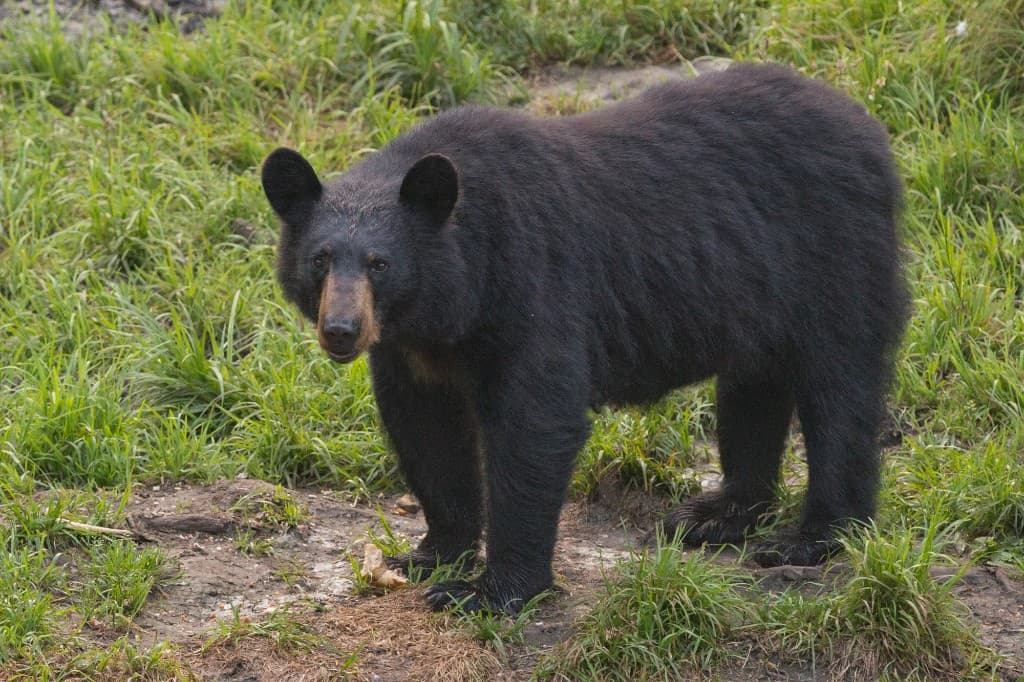
Spring bear: the vote that burned trust
March 2022: the commission voted 5-4 not to establish a 2022 spring black bear permit season—the department spelled it out publicly [WDFW news release].
Regional reporting documented tens of thousands of public comments and the sharp split between opportunity and precaution framings [OPB].
New appointees entering the fray were consequential in contemporaneous reporting on the controversy [Spokesman-Review — new commissioners angle, Spokesman — 5–4 rejection].
November 2022: the commission permanently rejected recreational spring bear. Outdoors outlets covered it as continuity, not reopening [Spokesman-Review].
Our opinion, straight: that sequence did not read like dispassionate biology triage to the people who fund the system. It read like appointment leverage meeting anti-hunting advocacy at the five-vote line.
Wolf policy: when the commission dug in, the governor overrode
July 2022: the commission took no-action on codified wolf-livestock deterrence rules—leaving the 2011 plan and 2017 protocol in place [WDFW].
Later, after the commission denied a 2023 NGO petition, then-Gov. Inslee granted an appeal and directed WDFW into rulemaking anyway; WDFW’s own statement noted similar petitions had been rejected multiple times since 2014 [WDFW statement].
Our read: regardless of your personal wolf politics, that pattern teaches hunters a lesson they hate learning—your commission’s “no” is not always the last word when executive power wants a different outcome.
July 2024: cougar framework and wolf listing—split decisions, same temperature
The commission approved cougar season changes with a statewide cap framework and rejected staff’s push to reclassify wolves from state endangered to sensitive—wolves stayed endangered at state level while federal status remains a split map by geography [WDFW release, WDFW wolf status page].
Hunters who wanted downlisting read it as another brick on the scale against stable, predictable management. Wolf advocates read it as holding the line. Everyone felt the same heat: this commission governs by knife-edge politics, not broad social buy-in.
Commissioner eligibility: the Supreme Court said the quiet part out loud
October 2024: U.S. Sportsmen’s Alliance Foundation v. Smith—a 5-4 Washington Supreme Court decision holding that a Jefferson County planning commission seat counted as a separate “office” barred while serving on the Fish and Wildlife Commission under RCW 77.04.040 [Justia opinion summary].
That is not “corruption” by itself. It is a flashing light that eligibility and conflicts around this board were serious enough to reach the state’s highest court—while hunters were still living with the policy consequences of the same era’s votes.
The Ruckelshaus report: even the state paid for someone to say “this is broken”
December 2024: the William D. Ruckelshaus Center delivered the legislatively ordered organizational review. Interviewees described a commission seen as dysfunctional, politically polarized, and caught in conflict—and the report explored governance options up to structural overhaul [Final PDF, WDFW acknowledgment].
When the body tasked with setting season policy is described in a formal state-commissioned report as dysfunctional, hunters are not “overreacting.” They are reacting to written evidence.
Sportsmen’s Alliance, Gov. Ferguson, and the “lawless commission” fight
In February 2026, Sportsmen’s Alliance published a full-throated piece demanding action from Gov. Bob Ferguson—alleging collusion between multiple commissioners and anti-hunting organizations, claiming disregard for department biologists, describing a petition to remove commissioners, and noting WDFW Director Kelly Susewind had sought an independent investigation that Ferguson authorized; the article also references an internal memo—reported by Washington State Standard—about commissioners posing “serious risks” to the department on conflict-of-interest and favoritism grounds, and recounts disputes over transparency rules such as use of government-issued hardware for commission business [Sportsmen’s Alliance — Feb. 26, 2026].
The Inside Spread editorial view: hunters and outdoorsmen are right to treat this cluster as existential. Not because every paragraph in advocacy copy is adjudicated yet—but because the institutions are fighting in public, records fights dragged, seasons already changed under narrow votes, and the same governance rot that weaponizes openness laws against citizens will eventually chew up every user group indiscriminately.
We are not a courtroom. The Inside Spread does not try cases. We do treat seriously what is already in the public record: Sportsmen’s Alliance’s petition and evidence dump, reporting on an independent investigation Gov. Ferguson authorized after WDFW Director Susewind asked for it, extensions to that investigation, the internal memo characterizing certain commissioners’ conduct as a “serious risk” to the department (as summarized in Washington State Standard and echoed by Sportsmen’s Alliance), and the ongoing fight over public records and commission procedure [Sportsmen’s Alliance — Feb. 26, 2026, Spokesman — Apr. 15, 2026]. Full, timely investigations and public findings are what accountability looks like—whether that ends in removal, reform, or a clear rebuttal. Sportsmen’s Alliance and others allege conduct that would be criminal if proved; that demands law enforcement and oversight bodies to run it to ground, not bloggers or comment sections.
Stance right now: serious allegations are on the table with an investigation ordered and litigation and executive sessions still unfolding. Hunters are entitled to ask why outcomes are not yet public and what happens next.
We do not call concerned hunters crazy for reading the pattern as hostile to their future.
April 2026: retaliation filings and closed-door gravity
Commissioner Smith, Washington Wildlife First, and Claire Davis sued in federal court alleging retaliation by agency leadership—including claims built around memo circulation and reputational harm; defendants declined or were unable to comment in early reporting [Spokesman/WA State Standard]. Follow-up reporting noted repetitive executive sessions as litigation hovered [Spokesman-Review — Apr. 15, 2026].
Translation for hunters: whether you sympathize with any individual litigant, the cockpit is on fire. A commission cannot feel legitimate when the oversight relationship between board and director is lawyered into trench warfare.
A fairness note many Washington sportsmen raise—without pretending we can rule on anyone’s motive: Commissioner Smith accuses agency leadership of using memos and the machinery of investigation to damage reputations and silence critics [Spokesman/WA State Standard]. Her side has also aired those claims in federal court while allies have publicly demanded the director’s removal and framed leadership as rogue. Critics read that pairing as uncomfortably symmetrical: reputational and career pressure routed through lawsuits, investigators, headlines, and removal talk—the very toolbox she says was misused against her. Who violated what is for the courts and whatever investigations run their course—we will watch and report how that turns out.
The Inside Spread is 100% on the hunters’ side: lawful seasons, lawful opportunity under the statute, and no double standard for insiders. We still want commissioners and agency leadership held to the same light—hunters are not stupid when they spot the inversion and demand the same scrutiny of commissioners that commissioners demand of agency staff.
Game Management Plan litigation: the next mandate war
Sportsmen’s Alliance Foundation moved to intervene in litigation targeting Washington’s commission-approved Game Management Plan, arguing hunters need representation and citing the statutory duty to maximize recreational hunting [Sportsmen’s Alliance — May 1, 2026].
Our opinion: Anti-hunting strategists learned long ago that killing hunting in court beats losing banner headlines in public comment. If the GMP becomes a choke point, hunters who think “they only hate spring bear” are asleep at the wheel.
Why other states should care
Commission structures differ, but governors appoint everywhere authority is vested in boards.
If Washington proves you can grind opportunity through narrow majorities, records friction, executive override, internal memos, and serial litigation, you have exported a playbook.
Colorado-draw fights, predator politics in the Northern Rockies, marine monument headlines—different venues, same lesson: who holds the pen on appointments holds the future of opportunity.
What hunters should demand next
Not performative unity. Structural fixes hunters can verify:
- Appointments that demonstrably include practicing sportsmen and women with skin in the game—not only credentialed critics of hunting culture.
- Written standards for when commissioners may depart from staff biological recommendations—public reasons, not vibes.
- Fast, complete compliance with public records and open-meeting law—if government delays until statutes of limitations erode, that is not transparency; it is avoidance.
- Conclusive closure on investigations: release findings or explain why not, on a timeline the public can respect.
- Defense of the mandate in court with the same energy agencies spend on press releases.
Final take
Washington’s commission story is not a polite disagreement about one bear season.
It is a stress test of whether statutory hunting opportunity survives when a governor’s appointment strategy and a narrow voting bloc meet organized anti-hunting lawfare and a polarized agency environment.
The law still says maximize opportunity without trashing the resource [Ruckelshaus-quoted mandate].
The record says trust is shredded, votes are split, investigations and lawsuits multiply, and outdoorsmen are told to keep paying for licenses while the rulebook gets rewritten around them.
The Inside Spread stands with hunters and lawful wildlife governance: restore the mandate, clean up the commission, or admit you are building a state where opportunity dies by procedure.
Because if Washington gets away with it, other capitols will try.
Sources
- Washington Department of Fish and Wildlife. “Commission decides on spring black bear rule-making, commercial shellfish rules, and land transactions, elects Chair.” Mar. 19, 2022. wdfw.wa.gov.
- Oregon Public Broadcasting. “Washington’s spring black bear hunt won’t happen in 2022.” Mar. 21, 2022. opb.org.
- The Spokesman-Review. “New fish and wildlife commissioners seek high bar for spring bear hunt.” Mar. 17, 2022. spokesman.com.
- The Spokesman-Review. “On 5-4 vote, Washington Fish and Wildlife Commission rejects season that would have issued 644 permits.” Mar. 20, 2022. spokesman.com.
- The Spokesman-Review. “Washington wildlife commission strikes down recreational spring bear hunt.” Nov. 18, 2022. spokesman.com.
- Washington Department of Fish and Wildlife. “Commission votes for no action on wolf livestock deterrence rule making.” July 8, 2022. wdfw.wa.gov.
- Washington Department of Fish and Wildlife. “WDFW response to Governor Inslee granting an appeal ... wolf-livestock regulations.” Jan. 12, 2024. wdfw.wa.gov.
- Washington Department of Fish and Wildlife. “Washington Fish and Wildlife Commission issues cougar and wolf decisions.” July 19, 2024. wdfw.wa.gov.
- Washington Department of Fish and Wildlife. “Washington Fish and Wildlife Commission retains gray wolf status ... as endangered.” July 19, 2024. wdfw.wa.gov.
- Washington Supreme Court. U.S. Sportsmen's Alliance Foundation v. Smith, No. 102358-8. Oct. 17, 2024. law.justia.com.
- William D. Ruckelshaus Center. Washington Department of Fish and Wildlife Organizational Review — Final Report. Dec. 19, 2024. wdfw.wa.gov PDF.
- Washington Department of Fish and Wildlife. “WDFW statement on Ruckleshaus Center's Organizational Review.” Dec. 27, 2024. wdfw.wa.gov.
- Sportsmen’s Alliance. “Washington Wildlife Crisis: Why Gov. Ferguson Must Act Against Lawless Commission Members.” Feb. 26, 2026. sportsmensalliance.org.
- The Spokesman-Review / Washington State Standard. “WA Fish and Wildlife commissioner accuses agency director of retaliation.” Apr. 3, 2026. spokesman.com.
- The Spokesman-Review. “WA Fish and Wildlife Commission meets this week.” Apr. 15, 2026. spokesman.com.
- Sportsmen’s Alliance Foundation. “Defending the Mandate: Sportsmen’s Alliance Intervenes to Protect Washington Hunters in Lawsuit.” May 1, 2026. sportsmensalliance.org.

Written by
Kenny Flermoen
Kenny Flermoen is the owner and CEO of The Inside Spread. Growing up in the Upper Midwest he spent most of his childhood outside—rain, snow, or shine. He writes about hunting, fishing, and conservation with a focus on public-land access, habitat, and the decisions that shape the future of America's outdoor heritage.
Comments
No comments yet. Be the first to share your thoughts.
More in conservation
BREAKING: The Forest Service Just Moved to Kill the Roadless Rule for Good. 58 Million Acres of the Best Hunting and Fishing Left in America Are on the Table.
The Forest Service proposed rescinding the 2001 Roadless Rule, putting 58 million acres of backcountry hunting and fishing habitat at risk. Comment by Sept. 21.

IP28 Is Dead — For Now. Oregon's Hunting and Fishing Ban Fell 13,000 Signatures Short. Here's What Happens Next.
Oregon IP28 failed to qualify for the November 2026 ballot after falling about 13,000 valid signatures short. Here is what happened—and why hunters say the fight is not over.
The History of Hunting in America, Part 2: Hunting and Conservation Efforts and Success
How hunters turned crisis into recovery—fair chase, the Lacey Act, Duck Stamp, Pittman-Robertson, and the species comebacks that prove regulated hunting funds conservation.
Pittman-Robertson, Licenses, and the Funding Cliff Nobody Wants to Talk About
Pittman-Robertson wildlife funding fell nearly 15% from FY2024 to FY2026. Here is how licenses and excise taxes fund state conservation—and how to strengthen the system without erasing hunters and anglers.