
The History of Hunting in America: From Survival to Tradition in 2025
> Looking for Part 2? Continue the series with The History of Hunting in America, Part 2: Hunting and Conservation Efforts and Success—fair chase, the Lacey…
Looking for Part 2? Continue the series with The History of Hunting in America, Part 2: Hunting and Conservation Efforts and Success—fair chase, the Lacey Act, Duck Stamp, Pittman-Robertson, and the recoveries that proved hunters fund conservation.
As we stand in April 2025, looking back fills me with pride for where we’ve been—from Native stewardship to the traditions we hold dear today—but also a bit of unease about where we’re headed. At The Inside Spread, we’re exploring this rich past to see how it lights the way for hunters and anglers like us in 2025.
This first part of our 3-part series on the philosophy of hunting in America dives into its roots—pre-colonial survival, colonial grit, the wild 19th-century swing, and the rise of a proud sporting tradition. Each era tells a story of folks living off the land, some driven by need, others by market greed, and many many heroes who turned it around for the better. It’s a tale of highs and lows, leading us to today’s crossroads, where costs and rules threaten the traditions we love.
Pre-Colonial Era: Survival and Stewardship
Way before anyone dreamed of cities or highways, hunting was life itself for Native American tribes—and what a life it was! The history of hunting in America kicks off with these incredible people, who turned survival into an art form across this vast, wild continent.
Take the Lakota and Cheyenne on the Great Plains—those bison hunts were pure teamwork, a dance of strategy and respect. They’d guide herds to cliffs in a "buffalo jump," harvesting what they needed with a method so smart it’s been traced back 5,700 years at places like Head-Smashed-In Buffalo Jump in Alberta, where bones stack up like a monument to their skill (Head-Smashed-In Buffalo Jump World Heritage Site). Every bit of that bison—meat, hide, bones—fed their sustainable way of living, a model I can’t get enough of.
In the Eastern Woodlands, the Iroquois were just as inspiring, tracking deer and bear with bows made from hickory, taking maybe 10-20 deer per year per hunter, according to Arthur C. Parker’s 1922 (The Archaeological History of New York). These weren’t random kills—each hunt was a quiet, personal connection to the land, with hides for clothes and antlers for tools, all wrapped in ceremonies thanking the animals’ spirits.
Out on the Pacific Northwest coast, the Makah took to the seas in cedar canoes, harpooning gray whales that tipped the scales at 60,000 pounds—enough meat and oil to sustain villages for months, a tradition going back 1,500 years, as digs at Ozette Village show (Burke Museum: Makah Whaling Tradition).
Down in the Southwest, the Ancestral Puebloans wove yucca nets to snag rabbits by the dozen, a clever trick preserved at Mesa Verde (National Park Service: Mesa Verde).
I’m in awe of how balanced they kept it. The Nez Perce, for instance, fished salmon with such care—taking only what they needed—that the runs stayed strong, a lesson in living right by the land (Nez Perce Tribe: Traditional Resource Use). Sure, tough winters hit sometimes, but their stewardship kept this place thriving. When settlers showed up, they found a paradise of game thanks to these folks—a legacy of sustainability we could learn from in 2025.
Colonial Period: Market Hunting and Resource Strain
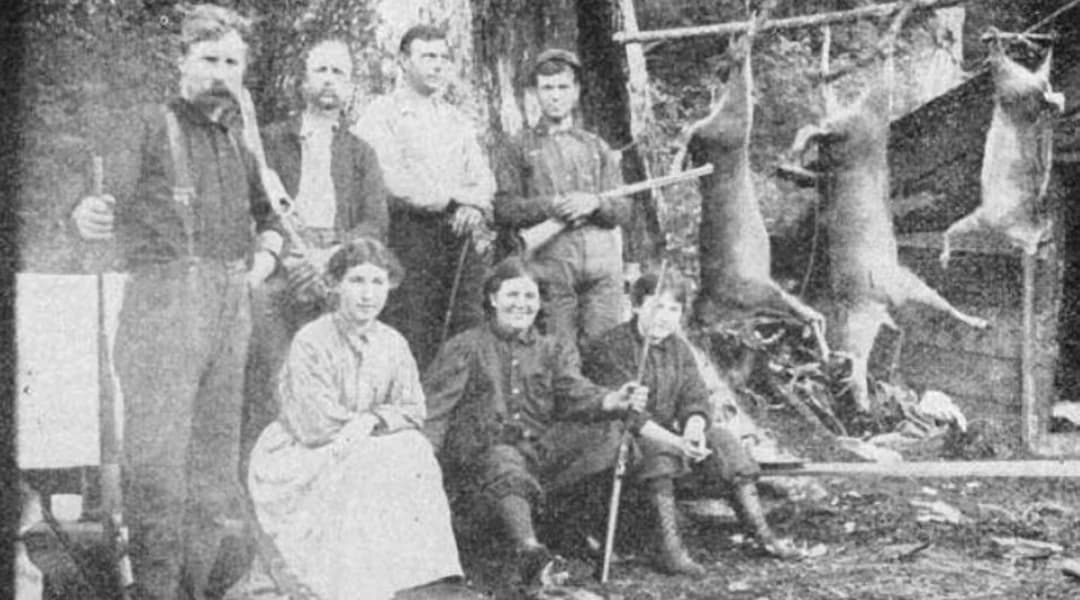
Then came the Europeans, and hunting took a turn—not necessarily because of the people, but the market madness they got swept into. Those early settlers weren’t villains; they were scrappy, low-class folks trying to survive or scrape by in a new world. The history of hunting in America shifted hard in the 17th century, with flintlocks giving them an edge over Native bows, turning hunting into a hustle.
The fur trade kicked it off—beaver pelts flew to Europe, 20,000-40,000 a year by the mid-1700s, all for fancy hats, until Massachusetts had to ban exports in 1650 to save the last beavers (Massachusetts Historical Society: Colonial Records, via Eric Jay Dolin’s Fur, Fortune, and Empire). I believe in needing to make a living, but that demand? It was unsustainable.
Deer got caught up too—Virginia shipped out 30,000 hides a year by 1700 (Virginia Magazine of History and Biography, Vol. 24, 1916)—and I respect the grit of those hunters feeding towns or trading with Natives who became pals, sharing tricks and trails. But the market’s hunger left carcasses rotting, a waste that bugs me when I think of how every deer I take feeds my family. Maryland even let folks pay debts with 200 pounds of deer hides in 1641—talk about a deer-driven economy (Maryland State Archives: Proceedings of the Council of Maryland, 1636-1667).
The passenger pigeon took a hit too—sold for a penny each in Philly by the 1700s, a bird so plentiful it got chewed up by that relentless demand (Smithsonian Magazine: The Passenger Pigeon).
Some settlers bonded with tribes, trading and learning, but others clashed—wars like the Pequot in 1637 flared over hunting grounds. It’s a mixed bag—survival drove them, not malice, but the market’s appetite set us up for trouble. That colonial hustle showed hunting’s power and its pitfalls, a lesson still ringing in 2025.
19th Century Shift: Exploitation and Awakening
The 19th century was a wild ride for hunting—exploitation hit a fever pitch, and I’m still amazed at how it turned around. America’s push west unleashed a hunting frenzy I can’t wrap my head around—not the hunters’ fault, but that market demand was a beast. Bison went from 30 million in 1800 to under 1,000 by 1890, all for railroad meat and hides—Buffalo Bill Cody took down 4,282 in 18 months (Buffalo Bill Center of the West). Trains turned it into a game, with folks blasting bison from cars, shipping 1.5 million hides from Kansas in 1872 alone (Kansas Historical Society: Bison Hunting on the Plains). It’s frustrating to see that waste when I think of a good hunt’s bounty.
Passenger pigeons—3-5 billion strong—got hammered too, with 7.5 million netted in Michigan in 1878 (The Passenger Pigeon, W.B. Mershon, 1907). Markets ate them up—Chicago saw 1.8 million in 1871 (Chicago Tribune Historical Archives)—until Martha, the last one, died in 1914 (Cincinnati Zoo: Martha). But here’s where I get hopeful: hunters like Theodore Roosevelt saw the mess—his 1887 Montana trip showed him bones, not game (Theodore Roosevelt Association). Audubon called it out too, lamenting 1,200 pigeons wasted in a day (Audubon Society: Ornithological Biography). Those guys, and clubs like New York’s in 1844, kicked off game laws—New York banned market waterfowl hunting in 1879 (New York State Archives: Game Laws). That’s the spark we needed.
Cultural Evolution: Hunting Becomes Tradition
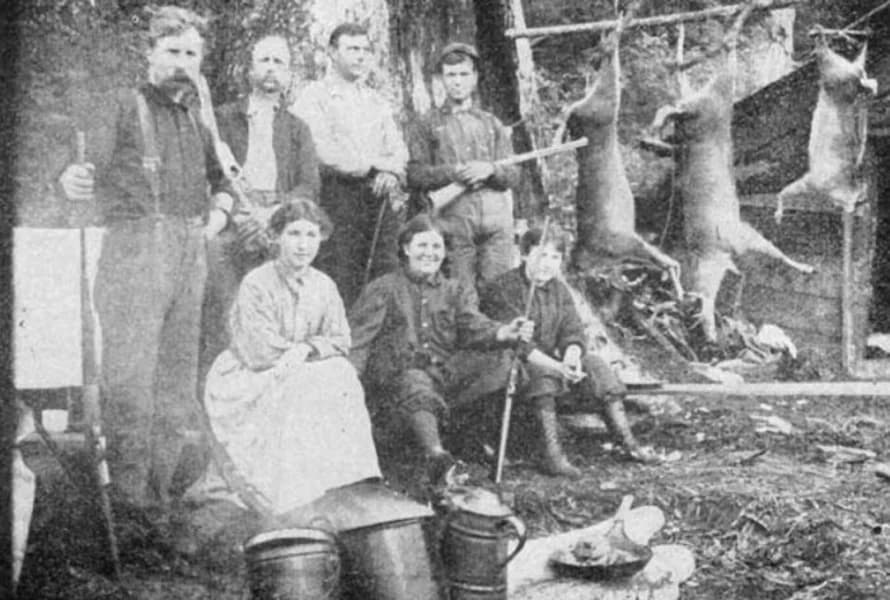
By the late 19th and early 20th centuries, hunting blossomed into something I absolutely cherish—a tradition that’s all about family, skill, and living close to the land. This is where hunting found its soul, turning from chaos into a celebration of the outdoors I can’t get enough of. The Boone and Crockett Club, launched by Theodore Roosevelt in 1887, lit the way with "fair chase"—making every hunt about respect and mastery, not just meat (Boone and Crockett Club: Our History). I’m so grateful for those visionaries who saw hunting’s heart and gave us a code to live by. In Michigan, deer camps became pure magic—15,000 hunters hit the Upper Peninsula in 1901, shutting down towns for opening day (Detroit Free Press Historical Archives) That combo tag we love today? It’s a nod to those days (Michigan Hunting License FAQ).
Down South, squirrel hunts were a blast—Georgia’s 1880 Macon event saw 200 folks bag 1,200 in a day, all grins and good times (Macon Telegraph Historical Records). In Pennsylvania, folks held "coon hunts" with 300 hunters chasing raccoons by lantern light in 1890, a tradition so lively it drew crowds from three counties (Pennsylvania Historical Society: Rural Traditions). Out West, Montana’s elk camps took off—by 1905, outfitters guided 500 hunters a season into the Rockies, chasing bulls with bugles that still echo in my dreams (Montana Historical Society: Early Outfitting Records). This wasn’t just hunting—it was community, a sustainable bond with nature I’d fight to keep.
Art and words sealed it—Norman Rockwell’s "Hunter with Dog" (1925) paints the hunter I want to be, rugged and true. Field & Stream, born in 1895, sharing tales and tips that made hunting a craft (Field & Stream: About Us). Regulations locked it in—New York’s 1864 $0.50 license kicked off conservation cash, while Missouri’s 1909 deer season drew 10,000 hunters, proving rules could boost the thrill. Plott Hounds ran beside us, turning hunts into partnerships (American Kennel Club: Plott Hound History). This is hunting at its best—ethical, joyful, and sustainable—a tradition I’ll always cheer for.
2025 Context: Reflecting on the Past
Here we are in April 2025, and the history of hunting in America fills me with pride—and a bit of worry. Hunting’s past—Native balance, colonial hustle, 19th-century wake-up, and those golden traditions—shows what we’re made of. But today? Laws like Colorado’s SB25-003 could nix my rifles, a regulatory echo of old access fights (The Inside Spread: SB25-003 Update). Costs are climbing too—Utah’s $630 deer tag stings (Utah DWR), and Michigan’s forestland shrunk 60% since 1980 (MDNR: Forest Management Report 2020.). Hunters are down to about 4.5% from 15% in 1996, threatening conservation bucks.
Yet, tradition holds—Texas mentored thousands kids in 2024 (Texas Parks & Wildlife) shows we’re still fighting for it. I’m weary of these rules and prices pushing folks out, but I’m hopeful too—our roots run deep. As I plan my 2025 hunts, I’m carrying that history forward, ready to keep it alive.
Part 2 is here: Hunting and Conservation Efforts and Success—how fair chase, federal wildlife law, the Duck Stamp, and Pittman-Robertson turned hunters into the engine of America’s greatest wildlife recoveries.

Written by
Kenny Flermoen
Kenny Flermoen is the owner and CEO of The Inside Spread. Growing up in the Upper Midwest he spent most of his childhood outside rain, snow, or shine. This is where he cut his teeth as a white tail hunter. Since then he has been on several hunting adventures for Elk, Turkey, and Coues deer. The Inside Spread is the place for sharing his adventures with friends, family, and acquaintances across the world and promoting his mission to connect hunters from all walks of life, allowing them to share their experiences, tips, and tricks. We believe that by fostering this sense of community, we can help hunters of all levels improve their skills and enjoy their hunting experiences.
Comments
No comments yet. Be the first to share your thoughts.
More in conservation

NOAA Closed the Commercial Atlantic Bluefin General Category Through November 30
NMFS closed the Atlantic bluefin General category from Oct. 17 through Nov. 30, 2026. It reopens Dec. 1. Recreational angling quota is separate.
BREAKING: The Forest Service Just Moved to Kill the Roadless Rule for Good. 58 Million Acres of the Best Hunting and Fishing Left in America Are on the Table.
The Forest Service proposed rescinding the 2001 Roadless Rule, putting 58 million acres of backcountry hunting and fishing habitat at risk. Comment by Sept. 21.
IP28 Is Dead — For Now. Oregon's Hunting and Fishing Ban Fell 13,000 Signatures Short. Here's What Happens Next.
Oregon IP28 failed to qualify for the November 2026 ballot after falling about 13,000 valid signatures short. Here is what happened—and why hunters say the fight is not over.
The History of Hunting in America, Part 2: Hunting and Conservation Efforts and Success
How hunters turned crisis into recovery—fair chase, the Lacey Act, Duck Stamp, Pittman-Robertson, and the species comebacks that prove regulated hunting funds conservation.