
From Devastation to Conservation | The Inside Spread
March 4, 2025
**100 years of Devastation
Imagine a world without your favorite game animals. No turkeys, pheasant, grouse, or partridge. The larger species of Bison, Elk, and Moose are completely gone. The few game and wildlife animals that remain are endangered. Whitetail number only a few hundred in the entire state. Bear population has fallen to only few as a handful. Bobcat numbers are dangerously low and Lynx have dropped to virtually non-existent numbers. Some of you living or hunting in today’s Michigan, where deer populations have exploded in recent years, may be surprised to know that this was the landscape of the entire state and much of the Mid-West just over one hundred years ago.
Only a couple decades before the devastation began Alixis de Tocqueville wrote as he left Detroit, "In a few years these impenetrable forests will have fallen. The noise of civilization and of industry will break the silence of Saginaw,” (Dwyer). In the 1850’s logging began to remove the old growth forests, being pushed by growing industry on the East Coast and rebuilding after the Civil War.
The landscape was quickly transformed from huge old growth trees and a variety of thriving wildlife that included Moose, Lynx, Cougars, Black Bear, Elk, Pine Martins, Whitetail Deer, Wolves, and so much more. The two main factors of this environmental crisis came about as commercial hunting caused many animal species to begin to fall, and in less than sixty years the natural resources of old growth forests were stripped away in the American Industrial age of the mid and late 1800’s. Sadly, in this time far too little was known about the long-term effects of such devastation.
Out of devastation, conservation would be born and a growing effort to replant forest and work to rebuild wildlife and natural areas would begin. The success for the forests and wildlife of Michigan would rise like a Phoenix from the ashes and wasteland. It would change, but conservation is the reason life returned. While some species would never recover others would slowly begin to grow and even thrive as the story of Michigan Wildlife Conservation over Devastation unfolds.
**Devastation Led to Michigan Wildlife Conservation
The landscape of an entire state has changed in the past 100 years when it comes to outdoor life. The state of Michigan has changed from the scorched land left from server deforestation and commercial hunting to farm fields dominating the landscape in the 1940’s. Today many of Northern Michigan’s farmlands are giving way to growing hardwoods, and evergreens. The property where I grew up is just one example of the changing landscape as nature is reclaiming the land.
The photo above of our family farm in the early 1950’s shows the open fields surrounded by small standings of trees around the swamps. Today most of the fields to the west of the house is covered in small pine trees, the field on the hill has full grown pine trees reaching high into the sky, and the trees in the back now have crept far out into the field. Farming continued at least in some small fashion until around 2000. In the past 24 years the fields nearest the house have been growing with scrub brushes and trees. What isn’t shown in the photo is how the east side of the eighty acres has grown even more as trees have grown to cover nearly all of two small fields and part of a third. Michigan Farmland Recovery is growing. Our family farm story isn’t unique but is a growing part of Michigan Farmland Recovery throughout the state. Most of Northern Michigan is hilly and not conducive to large scale farming done in today’s economy, and the natural recovery of the land continues to expand.
The devastation of many species in the 1800’s was complete, as Al Stewert of the Michigan DNR points out “We went from having a lot of turkeys to zero by the turn of the century” (Ramirez, 2000). The elk population was completely devastated by 1875 (About Elk), and by the 1890’s the moose population was only a few scattered animals left in the Upper Peninsula, (History of Moose, 2023) and they were completely killed off in the Lower Peninsula. Commercial hunting in the early part of the 1800’s depleted numbers and no one truly knows just how high the numbers were before deer, turkey, moose, elk, and more were hunted for sale in the eastern part of the country.
Michigan wildlife conservation, like most of the nation, was in its fledgling years in the 1800’s. Most people believed that natural resources were unending or able to remain sustainable for hundreds of years. However, the burned over and depleted landscape was revealing a new truth. The need to develop protected woodlands, grasslands, and management of animal populations alongside communities and farmlands became a growing concern. Long term effects of Michigan wildlife conservation would take time to become successful.
1887 was the biggest turning point for Michigan wildlife conservation efforts, and the fight to retain wildlife and forest land. The rapid growth of the forestry industry from the 1850’s was showing extreme impact and the Department of Agriculture in Michigan along with others officially formed the first Independent Forestry Commission in 1887 (Moore, 2005). Their goal was to see how the impact of deforestation and burning was impacting the environment. These early days would lead to better land management, but it would take nearly fifty years to really create a Statewide forestry program that would be concerned with growing forest throughout the state in mass number.
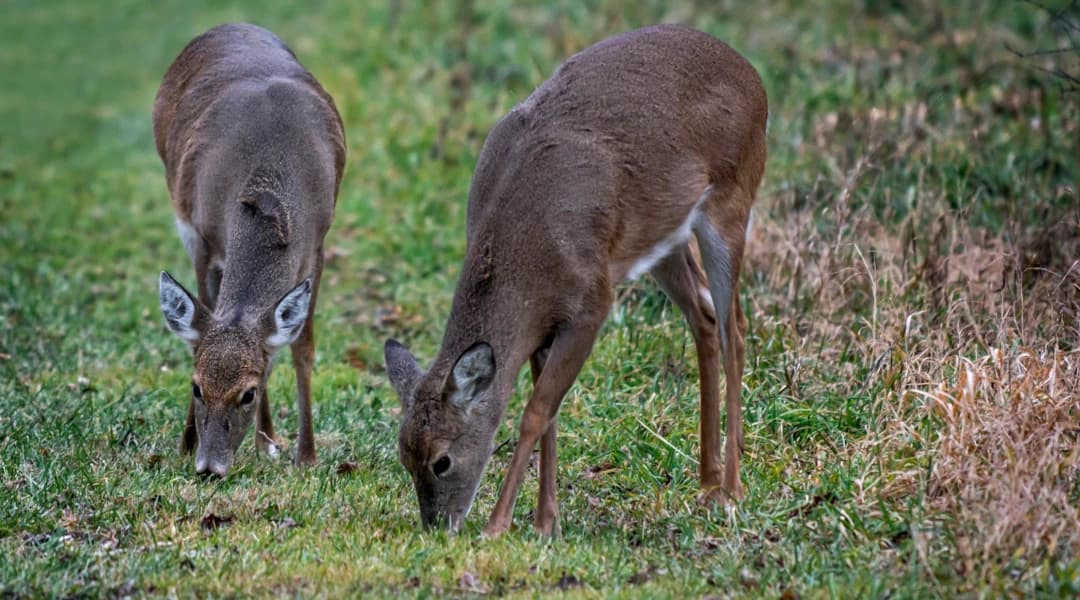
The first game warden in Michigan was appointed in 1887 as well. The effort grew from the formation of the Michigan Sportsman Association (MSA) in 1875 in Detroit to slow the dwindling numbers of Northern Michigan whitetail (Lounsbury, 2023). Regulations would grow and in the 1920’s the first “Buck only” rules were set to try to bring back the Michigan deer population. The “Buck only” rules would remain a big part of the Michigan deer population comeback through the 1970’s.
Reforestation in Michigan would be a continued effort from the early part of the Twentieth Century, through the Great Depression, and into the 1950’s. The Civilian Conservation Corps (CCC) Planted thousands of acres during the Depression and World War II. Both my wife and I had relatives that served in the CCC. Northern Michigan Schools, such as those my parents attended, were actively involved planting groves and areas throughout Northern Michigan throughout the 1950’s. Many of the state and National Forest were planted during those works.
Michigan Wildlife Conservation efforts and success has been the tandem of Forestry and Sportsman working together to create healthy forests for wildlife. Over the past 100 years regulations have changed from time to time, but the goal of maintaining healthy wildlife and environmental numbers continues to be the goal. Efforts have seen the Northern Lower Peninsula having a small Elk herd and allowing a few hunters each year to harvest. While Moose will never be able to return to the Lower Peninsula, due to Whitetail nematodes that kill Moose, efforts continue to reintroduce them to a healthy number in the Upper Peninsula.
There are many other species like turkey and wolves that have been reintroduced over the years with great success. Bear population growth has become strong enough to allow more licenses to be issued in recent years. Most recently in the Northern Woods Cougars have been spotted wandering around the woods and fields. It may be some time before officials recognize the existence of the big cats, as it would cause a lot of economic care, some biologists have been studying the slow growing numbers for nearly twenty years.
Michigan Whitetail numbers have grown since being dangerously low shortly after 1900. Today Michigan Whitetail numbers have exploded in recent years to more than two million. To curb rising numbers insurance companies and others petitioned successfully to expand Michigan Deer hunting. This year in many areas of the Northern Lower Peninsula hunters could take multiple deer in archery and riffle season. The riffle season was expanded into the normal muzzle loading season and beyond normal dates. The goal was to have more does taken and to curb the rising number of deer. Many say that the Michigan deer population explosion is a result of less hunters, but one might argue that as nature takes back land the herds have more woodland to live on. The more we learn about conservation the more important protecting natural resources and keeping numbers of game in check is demonstrated.
**We Must do our Part in Conservation
Trees provide a multitude of good things to the world around us. Most of us learn in school that trees and other plants help to provide the very air we breathe. They also help to cool us on a hot summer day, when we take a break from working outdoors. However, we may take for granted the importance of trees in so many ways.
Some of us may understand the advantage of air quality, but what are the benefits to planting trees on our own land or the land that we are hunting? Trees and tree lines provide birds with the needed nesting places and food sources needed to live and thrive. Experts point out that “most upland birds survive on the edge of forests and don’t need a lot of timber to survive,” (Fitzpatrick 2019). I remember living in the heart of Indiana farm country early in my married life, and my wife and I couldn’t understand why the farmers of that area were set on removing every tree in the area just to add an acre more farmland. I grew up farming, so I am a full supporter of farmers, but leaving rows of trees helps the wildlife and the land greatly. Birds, deer, and other wildlife need the trees for shelter, raising their young, and food.
Birds are not the only animals that benefit from allowing stands of trees to remain, or planting stands on hunting land. According to Whitetail Chestnuts website, “the highest concentration of nutrients can be found in fruits and nuts” (2024) for Whitetail. Planting trees that allow food sources will benefit the deer population by providing good quality food for a sustainable future of hunting.
Trees are also essential to protecting the soil. Many of us may remember reading and seeing pictures of the American Dust Bowls of the 1920’s and 1930’s. The topsoil plowed blew away when drought hit. Leaving rows of trees between fields and planting stands of trees helps to protect the topsoil from blowing away or eroding away in rainstorms. The U.S. EPA points out that trees help to absorb rainwater in both the roots and leaves, which helps to disperse the water, while also providing roots to help hold the soil in place (EPA 2015).
Planting trees may not be the quick return that some seek when planting alfalfa or certain grain plots; however, trees are a long-term investment in the future of the entire environment where we hunt. They help sustain essential layers of soil, food sources for a wide range of wildlife and game animals and contribute to the air quality of the plant. Sustainability matters when we are looking at what to plant and adding trees will benefit our lives and the lives of the future hunters and outdoor enthusiasts we are raising. It may be the start of winter, but many conservation agencies, water protection agencies, and natural resource agencies in many states will be starting to take orders for trees to be planted for conservation. Check with local agencies to see who sells them or where to buy the best trees for the natural environment of your local area. You can leave a lasting impact on your land and the world you’ve enjoyed.
Blessing on the journey and take time to get out there,
***Sources:
About Elk in Michigan. (n.d.). Www.michigan.gov. https://www.michigan.gov/dnr/things-to-do/hunting/elk/about-elk-in-michigan
Bernet, R. (2023, July 25). How Much CO2 Does A Tree Absorb? One Tree Planted. https://onetreeplanted.org/blogs/stories/how-much-co2-does-tree-absorb
Dwyer, D. (2018, October 17). From wilderness to wasteland: How the destruction of Michigan’s forests shaped our state. Michigan Public. https://www.michiganpublic.org/environment-science/2018-10-17/from-wilderness-to-wasteland-how-the-destruction-of-michigans-forests-shaped-our-state
Fitzpatrick , B. (2019, February 19). Building Better Bird Habitat | Secrets to Upland Bird Hunting Success. Www.mossyoak.com. https://www.mossyoak.com/our-obsession/blogs/small-game/building-better-bird-habitat-secrets-to-upland-bird-hunting-success. Originally published in Gamekeeper’s: Farming for Wildlife Magazine.
History of Moose in Michigan. (2023). Michigan.gov. https://www.michigan.gov/dnr/education/michigan-species/mammals/moose/history-of-moose-in-michigan?__scribleNoAutoLoadToolbar=true
*Lounsbury, T. (2023, December 13). The History Of Deer Hunting In Michigan. Wild Game Dynasty. *https://wildgamedynasty.com/the-history-of-deer-hunting-in-michigan/
Moore, M. (2025). State Forest History. Mtu.edu. https://mff.forest.mtu.edu/TreeBasics/History/MooreState.htm?
Ramirez, C. (2022). NWTF Michigan. NWTF Michigan; NWTF Michigan, originally published in the Detroit News. https://www.minwtf.org/wild-turkeys-carve-out-place-in-michigan
US EPA. (2015, August 19). Soak Up the Rain: Trees Help Reduce Runoff | US EPA. US EPA. https://www.epa.gov/soakuptherain/soak-rain-trees-help-reduce-runoff
Why Should I Plant Trees? (2024). Whitetail Hill Chestnuts. https://whitetailhillchestnuts.com/pages/why-should-i-plant-trees

Written by
Dan Shipton
Contributing writer at The Inside Spread. Passionate about sharing hunting knowledge and conservation efforts.
Comments
No comments yet. Be the first to share your thoughts.
More in conservation
NOAA Closed the Commercial Atlantic Bluefin General Category Through November 30
NMFS closed the Atlantic bluefin General category from Oct. 17 through Nov. 30, 2026. It reopens Dec. 1. Recreational angling quota is separate.
BREAKING: The Forest Service Just Moved to Kill the Roadless Rule for Good. 58 Million Acres of the Best Hunting and Fishing Left in America Are on the Table.
The Forest Service proposed rescinding the 2001 Roadless Rule, putting 58 million acres of backcountry hunting and fishing habitat at risk. Comment by Sept. 21.
IP28 Is Dead — For Now. Oregon's Hunting and Fishing Ban Fell 13,000 Signatures Short. Here's What Happens Next.
Oregon IP28 failed to qualify for the November 2026 ballot after falling about 13,000 valid signatures short. Here is what happened—and why hunters say the fight is not over.
The History of Hunting in America, Part 2: Hunting and Conservation Efforts and Success
How hunters turned crisis into recovery—fair chase, the Lacey Act, Duck Stamp, Pittman-Robertson, and the species comebacks that prove regulated hunting funds conservation.