
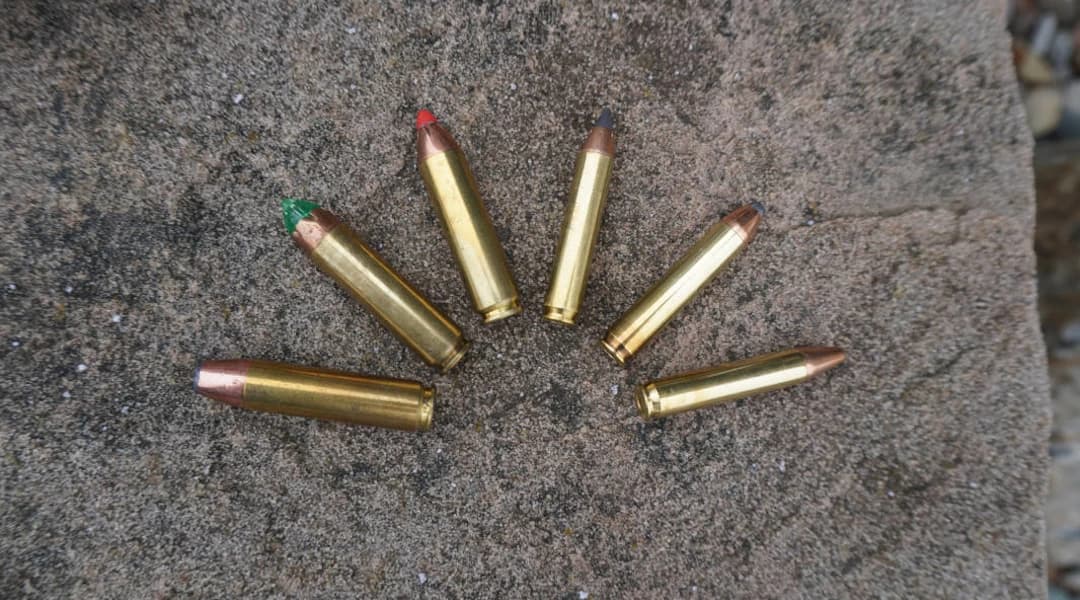
What straight wall cartridges are, why Midwest deer states allow them, and when to choose .350 Legend, .450 Bushmaster, .360 Buckhammer, or .400 Legend.
Straight wall cartridges—rounds like .350 Legend, .450 Bushmaster, .360 Buckhammer, and .400 Legend—gave Midwest deer hunters a rifle option where shotgun-only rules once dominated. They use a mostly straight case (no classic bottleneck), shoot slower than magnum bottlenecks, and stay legal only within each state’s case-length and firearm rules.
Quick pick: which straight wall should you buy?
| Cartridge | Recoil | Typical comfort range | Best for | Watch-outs |
|---|---|---|---|---|
| .350 Legend | Low | Out to ~200–250 yd | Youth, new rifle hunters, small properties, AR platforms | Energy is milder—shot placement still rules |
| .400 Legend | Moderate | ~150–200 yd | Hunters who want more punch than .350 without .450 thump | Newer ammo/rifle selection than .350/.450 |
| .450 Bushmaster | High | ~100–200 yd | Close timber, hunters who want heavy bullets | Recoil, ammo cost, flinch risk |
| .45-70 Govt | High | Brush / moderate distance | Lever-gun traditionalists | Often illegal where case-length caps apply (e.g. MI) |
Buyer checklist before you spend money:
- Confirm your state case-length and firearm rules (single-shot only in some places).
- Match ammo availability at your local shops—popular beats exotic on opening weekend.
- Zero with the same hunting load you will carry.
- Practice enough that recoil does not create a flinch before November.
It’s safe to say that firearms manufacturers stumbled into a profitable niche with the popularity of straight-wall cartridges. Boxes of .350 Legend, .450 Bushmaster, .360 Buckhammer, and .400 Legend are now some of the most common cartridges on store shelves in the Midwest. Given their specifications, many Western and Southern hunters may have scratched their heads in confusion. However, for hunters in places like Michigan, Indiana, Ohio, Iowa, and Illinois, they are a revolution.
This resurgence in popularity was the result of an interesting domino effect. It involves declining hunter numbers and tweaks to antiquated hunting laws. The result was the creation of an entirely new regional market for a specific type of firearm.
What is a Straight Wall Cartridge?
In simple terms, a straight-wall cartridge has a case with straight sides. There is no bottleneck to build extra pressure and velocity. Some offerings have a subtle taper, but it’s not usually noticeable to the naked eye. In terms of performance, these are generally slower rounds. The case length can vary between 1.5-2 inches. These are short action rounds that usually lend themselves well to an AR platform.
Depending on the round, they tend to have a muzzle velocity of 2,000-2,400 feet per second. Their muzzle energy is usually somewhere in the 1,000-2,400-foot pound range. This is where a lot of confusion arises because they’re highly comparable to classic bottleneck rounds, such as the .30-30 or 35 Winchester. More on that later.
The concept of these rounds is nothing new. For example, the now-iconic .45-70 Government was introduced in 1873. It remains a highly popular brush round to this day. However, most of the options decreased in popularity as firearms manufacturers developed flatter-shooting, faster rounds. These rounds might have remained in obscurity if not for some major regulatory changes that are a sign of the times.
Why are Straight Wall Cartridges Suddenly Popular?
When the Midwest's hunting regulations were developed, its dense population was taken into consideration. There were concerns about the far-reaching effects of centerfire rifle bullets in places where there are few hills for natural backstops. Thus, lawmakers compromised by making most of these states open to shotguns or muzzleloaders only. The thinking was that it was safer because the projectiles wouldn’t travel as far.
However, decades later, state wildlife agencies are faced with a considerable problem – declining hunter numbers. These agencies needed something to slow the decline and bring new hunters into the fold. The solution was straight walls. The cartridges offered better accuracy at longer distances than shotguns and muzzleloaders. They are also significantly easier to clean and maintain.
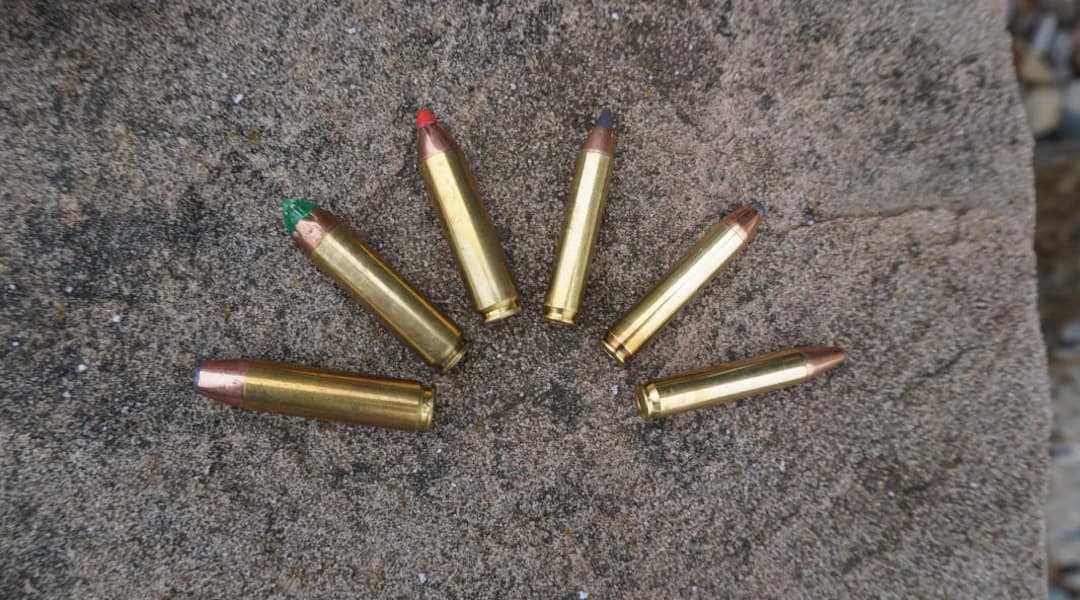
The change struck a chord with hunters, and soon, almost every state that was previously shotgun-only had straight-wall rules. Some are more restrictive than others. Illinois, for example, only allows hunters to use single shot rifles. We’ll take the baby steps in the right direction over not allowing them at all. Pay close attention to the regulations regarding case length. A case in point is Michigan, which has a 1.80-inch case length limit. That makes the .450 Bushmaster and .350 Legend legal but leaves out the classic .45-70 Govt, which has a case length of over two inches.
Popular Straight Wall Cartridge Rounds
While there’s a plethora of popular straight-walled cartridges out there, most hunters in the Midwest are sticking to the .450 Bushmaster, .350 Legend, .360 Buckhammer, .400 Legend, or .45-70 Government. There are more traditional options, such as a .357 Magnum, a .44 Magnum, or even a .444 Marlin. However, the former four cartridges seem to have taken over as the most popular. Each has its pros and cons that will vary based on each hunter’s preferences.
.450 Bushmaster
It is also sometimes called a “Thumper” round, which is fitting because it will thump both game and your shoulder. This was the round many Michigan hunters, including myself, started out using when straight walls became legal. Using the .284 Winchester as a parent case, it isn’t a speedy round, topping out at around 2,200 feet per second with Hornady’s 250-grain FTX Polymer tips. However, what it lacks in speed makes up for in energy. For example, Federal Premium’s 300-grain hollow points deliver about 2,450-foot pounds of energy at the muzzle and around 1,550 pounds at 100 yards. Most of the time, it’s going to knock a deer flat in its tracks.
The biggest downside to the .450 is the recoil. I’ve heard from other hunters that single shots manage it a bit better. My experience with a Savage Model 110 was not a pleasant one, even with a heavy muzzle brake. I liken the recoil to that of my Remington 870, 12-gauge pump with three-inch magnum slugs. It’s a shoulder beater. However, that’s to be expected with bullet weights of 250 grains or more. I only shot one deer with the .450 using Hornady polymer tips. It killed the deer, but I wasn’t super impressed with the blood trail. It’s also an expensive round at $45-$60 a box.
The .450 Bushmaster is well suited for smaller properties where the hunter doesn’t want the deer to run far. The polymer tips fly a lot flatter than the hollow points. Most hunters will find it most comfortable at ranges of 200 yards or less. I felt most confident with it at 100 yards. I wouldn’t recommend this one for a young hunter who’s just starting out. That’s simply because that recoil is rough, especially with shorter, 16-inch barrels in guns like the Ruger American Rifle.
.350 Legend
As the .450 Bushmaster exploded in popularity across the Midwest, Winchester recognized a genuine market for this type of rifle. The response was the .350 Legend, which was introduced in 2019 to solve some of the pain points of the .450. The .350 isn’t much faster than the .450. It peaks at around 2,200-2,300 feet per second. This round often receives comparisons to the .223 due to its similar length and bullet size. It also shoots much flatter than the .450, consistently reaching out to ranges of around 250 yards. The energy varies from 1,750 to 1,800 feet per second at the muzzle.
I’ve harvested two deer with a Winchester XPR chambered in .350 Legend. The first buck, a non-typical 9-pointer, I shot with a 180-grain Winchester Power Point at 100 yards. He dropped in his tracks and was dead within 30 seconds. However, I did notice that the wound bled minimally. Upon scouring online reviews, I found that this is a common issue.
After two years of using Power Points, I found them to be a little too inconsistent on paper. Thus, I made a switch to 150-grain, polymer tip, Winchester deer season XPs in 2024. I ended up shooting tighter groups on paper and then harvested a decent Michigan 7-pointer with a perfect shot through the lungs at 65 yards using the XPs. The buck ran about 70 yards before expiring, but it left a solid blood trail that was easy to follow.
The most significant upside to the .350 Legend is its minimal recoil. I compare it to a single shot .410 with slugs. It’s surprisingly pleasant, and it makes the .350 youngster-friendly for that first-ever hunt. Additionally, the .350 Legend is more affordable, priced at around $40 per box. I’ve often stocked up whenever I find a sale at $30. In 2024, I sighted my gun using 145-grain Winchester full metal jackets before fine-tuning things with the more expensive polymer tips. This method worked flawlessly. The great thing about the FMJs is they only cost about $20 per box, making this a more affordable option for range fun when the season is over.
.400 Legend
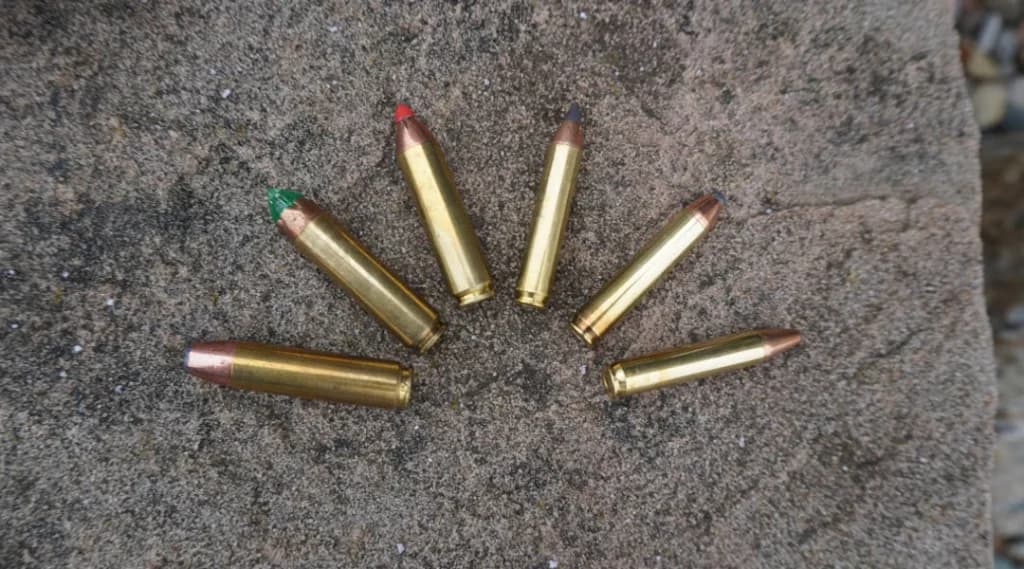
Winchester was not content to sit on its laurels with the .350 Legend. There have been some criticisms levied at the cartridge, mainly on the power side. The solution was to develop an additional straight wall that sits comfortably between the .350 Legend and the .450 Bushmaster. Thus, the .400 Legend was born. Winchester’s goal was to deliver energy closer to the 450 while dialing down that nasty recoil. It’s a smart business decision. Many hunters like myself sold their .450s for .350s after realizing the advantages of the smaller cartridge.
However, the .400 Legend allows hunters to use larger, 215-grain bullets that still achieve a velocity of 2,250 feet per second and deliver 2,416 foot-pounds of energy. Winchester’s ballistics charts indicate a trajectory of zero at 150 yards, with a roughly five-inch drop at 200 yards. That’s not bad at all for a bullet over 200 grains!
This round will fill a sweet spot for hunters who want a better trajectory than the 450 and more bite than the 350 can deliver. It has a little more kick than the 350, so it’s not our top choice for youth hunters. However, it’s still much more manageable than the 450. Expect to pay around $30-$35 per box for this ammo, which makes it surprisingly cost-effective when compared to other straight-walled ammunition.
The Future of Straight Walls
I have already mentioned it, but my opinion is that many state wildlife agencies will eventually sunset straight-wall rules. It will likely be a last resort for wildlife agencies in dire need of additional funding from license sales. Truthfully, I pine for the day that I can take my 3,200 feet per second, 6.5 Weatherby RPM out in southern Michigan and effortlessly reach 200 yards across the largest fields with zero concerns about bullet drop. However, until that day comes, the .350 Legend will be my go-to for firearms deer season. Straight walls have already effectively increased my range by at least 50 yards in most scenarios.
In truth, it makes me wonder why the wildlife agencies waited so long to legalize these rounds. I can recall multiple hunting scenarios from the past that would have had a different outcome had I had a rifle in hand instead of a shotgun. Until state wildlife agencies change their rules or these rounds cease being profitable for manufacturers, we can probably expect to see more innovations and new releases.
Straight wall FAQ
What are straight wall cartridges?
Straight wall cartridges use a case with mostly straight sides instead of a bottleneck. Popular deer options include .350 Legend, .450 Bushmaster, .360 Buckhammer, and .400 Legend—often legal where shotgun-only rules used to apply.
.350 Legend or .450 Bushmaster for deer?
Choose .350 Legend if you want milder recoil, cheaper practice ammo, and easier accuracy. Choose .450 Bushmaster if you want heavier bullets and accept more kick. Many hunters who started on .450 later switched to .350 for comfort.
Do I need to check case length?
Yes. States like Michigan publish case-length caps that can legalize modern Legends/Bushmasters while excluding longer classics such as .45-70. Read your current season synopsis before you buy.

Written by
Travis Smola
Travis Smola grew up hunting and fishing in rural southwest Michigan. He started writing in traditional newsprint journalism before deciding outdoor topics were more fun. Travis has interviewed famous outdoor figures like Remi Warren, Bill Dance, and Kevin VanDam. Over the last decade, he's shared boats and blinds with dozens of pro anglers, hunters, and outdoor influencers. When he isn't hunting or fishing, he's probably out geocaching or camping in his homemade van conversion. He has a strong desire to try homesteading and farming in the future. His bylines have appeared in Field & Stream, Outdoor Life, Great Days Outdoors, Knife Informer, Gear Junkie, and Wide Open Spaces.
Comments
No comments yet. Be the first to share your thoughts.
More in shooting

Colorado SB25-003 Goes Into Effect August 1. Here's What Every Hunter, Shooter, and Gun Owner in the State Needs to Know.
Colorado SB25-003 takes effect August 1, 2026 — permit-to-purchase, mandatory training, the 900-model list, hunter exemptions, Del Toro v. Polis, and what to do before the deadline.
Safes and Range-Day Guns We'd Actually Buy
Winchester and Redfield gun safes plus the Smith & Wesson M&P 22 Magnum from Academy’s spring deals—logistics, capacity reality checks, and honest caveats.
6.5 Weatherby RPM: A Long-Distance Dragster of a Hunting Cartridge
First-hand review of the 6.5 Weatherby RPM—origins, ballistics, and real-world use from a Wisconsin doe hunt.
How to Improve Rifle Accuracy: 9 Tips That Shrink Groups
Improve rifle accuracy with practical tips on zero, breathing, trigger control, rests, ammo, and practice. Real hunter lessons to shrink groups at the bench and in the field.