
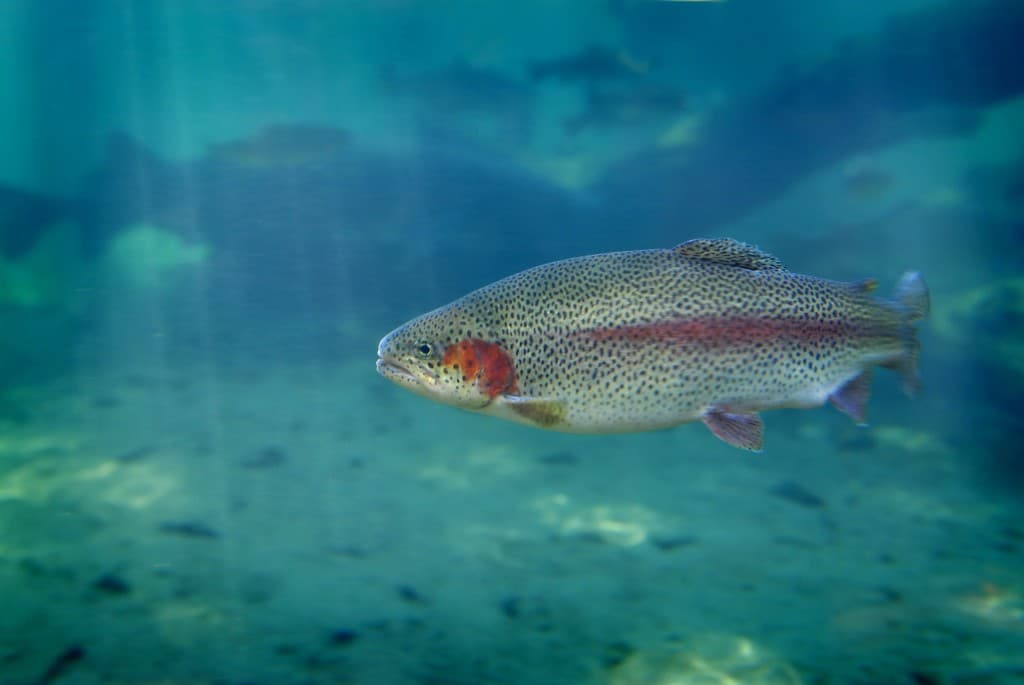
Colorado Rainbow Trout Fishing 2026: Waters, Limits, and How to Catch Them
Colorado rainbow trout in 2026—where they live, CPW bag limits and special regulations, stocking and wild populations, and tactics for tailwaters, reservoirs,…
2026 seasons & limits
Verify rules with Colorado fish & wildlife
- Confirm open seasons, daily bag, and possession limits for each species and water you fish.
- Check length and slot rules—many lakes, rivers, and bays have special tables beyond statewide defaults.
- Review 2026 summaries and any emergency orders (closures, health notices, gear rules) before you go.
The Inside Spread orients you for trip planning only. Conservation officers enforce the official published regulations—not articles or forum posts.
Rainbow trout are the backbone of Colorado’s cold-water identity. From famous tailwaters to alpine lakes and suburban ponds, Colorado Parks and Wildlife (CPW) uses rainbows in put-grow-and-take programs, wild-trout management, and destination fisheries labeled as gold-medal or quality waters. This guide sits alongside our full Colorado fishing overview for 2026; here we focus on rainbow trout in Colorado—history, where they show up, what managers say about abundance, 2026 regulations, and how to fish for them in typical Colorado scenarios.
Short history and management overview
Rainbow trout (Oncorhynchus mykiss) are not historically native across most of Colorado in the way cutthroat trout are tied to the state’s native-fish story. Instead, rainbows—often including hatchery strains—became the workhorse of cold-water management: easy to rear, adaptable to reservoirs and rivers, and popular with anglers. CPW and its predecessors built a network of hatcheries and stocking schedules that still support family fishing close to cities while biologists protect wild-trout fisheries and special regulations on high-value waters. Today you will find rainbows as stocked catchables, self-sustaining wild fish in select streams, and large lake-run or tailwater fish that behave more like athletes than typical stockers.
Main locations in Colorado
- South Platte River corridor — Multiple famous tailwater reaches and tributaries; regulations vary by section.
- Arkansas River basin — From high-country freestone water through the Royal Gorge–region tailwater-style fishing below reservoirs.
- Western Slope and mountain drainages — Reservoirs such as Blue Mesa and high-country lakes and streams on Forest Service and BLM land.
- Front Range stillwaters — Urban and suburban lakes that receive stocking and often have family-friendly access.
- Gold-medal and “quality” labeled waters — CPW highlights top fisheries; rules may restrict bait, harvest, or gear.
Always pair a map with the exact water name in the regulations—two ramps on the same reservoir can still fall under the same statutory water body, but river miles are often split into reaches with different rules.
Population and trends
CPW publishes creel surveys, management plans, and stocking summaries for many waters. Rainbow trout abundance is not one statewide number; it is a patchwork of wild recruitment, stocking pounds, and carryover fish from year to year. In general terms, rainbows are common in Colorado’s cold-water portfolio, but the quality of the experience—size, numbers, and wild vs stocked origin—depends on the water. If CPW’s public data for a specific lake or stream are thin, treat population talk as local and year-to-year, not a guarantee.
2026 regulations and bag limits
This article is not the law. CPW’s official fishing regulations and the Colorado Fishing Brochure control seasons, bag and possession limits, size limits, bait restrictions, and gear rules.
For rainbow trout, expect to see:
- Water-specific tables that may group trout with other salmonids or treat “trout” as a combined category.
- Special regulations on famous stretches: catch-and-release, flies and lures only, or slot limits.
- Gold-medal and other labels that signal quality fishing but do not replace reading the fine print for that water.
Before you keep a fish, confirm which regulation section applies to your GPS pin, how CPW measures fish if a length rule exists, and whether possession limits differ from the daily bag when traveling or storing fish.
How to fish for rainbow trout in Colorado (strategies and tactics)
- Match the season to the water — High-country streams may fish best after runoff settles; tailwaters can produce through winter on midge and small-nymph programs when access is safe.
- Tailwater finesse — Light tippets, drag-free drifts, and accurate mending often beat flashy gear on pressured sections of the South Platte and similar fisheries.
- Stillwater basics — Search with leeches, balanced leeches, chironomid-style presentations, or small jigs under indicators where regulations allow; follow thermoclines and wind lanes on large reservoirs.
- Stream fishing — Wading safely at higher flows, reading seams and pocket water, and downsizing when spooky fish refuse big flies or lures.
- Avoid common mistakes — Fishing special-regulation water with bait because a “nearby” stretch allowed it; ignoring private land along river corridors; and forgetting that ice safety and spring runoff change access and wading risk.
More Colorado species guides (2026)
Sources
- Colorado Parks and Wildlife. "Fishing." CPW, cpw.state.co.us/thingstodo/Pages/Fishing.aspx. Accessed 11 Apr. 2026.
- Colorado Parks and Wildlife. "CPW Quality Waters." CPW, cpw.state.co.us/fishing/quality-waters. Accessed 11 Apr. 2026.
- U.S. Fish and Wildlife Service. "Fish and Aquatic Species." USFWS, fws.gov/library/categories/fish-and-aquatic-species. Accessed 11 Apr. 2026.
- U.S. Geological Survey. "Nonindigenous Aquatic Species Database." USGS, nas.er.usgs.gov. Accessed 11 Apr. 2026.
Official state agency
Colorado Parks and Wildlife — FishingVerify season openings, daily bag, possession, and length or slot rules for each water and species you target—plus any 2026 rule changes or emergency orders—before you fish.
Written by
The Inside Spread Team
The Inside Spread team covers fishing regulations and access across all 50 states. We tie every guide to official agency sources so you can verify seasons, bag limits, and license rules before you launch.
Comments
No comments yet. Be the first to share your thoughts.
More in state-guides
Arkansas Duck Hunting 2026: Season Dates, WMA Permits, License Costs & Complete Guide
Arkansas duck hunting 2026-27—three-segment season dates, nonresident WMA waterfowl permits, Black River and Bayou Meto access changes, and Delta license costs.
Georgia Whitetail Deer Hunting 2026: Season Dates, Extended Counties, License Costs & Nonresident Guide
Georgia whitetail deer hunting 2026-27—archery, primitive weapons, and firearms dates, 29-county extended archery, 12-deer bag, Game Check, and the nonresident guide.
Kentucky Whitetail Deer Hunting 2026: Season Dates, Zone Changes, License Costs & Nonresident Guide
Kentucky whitetail deer hunting 2026-27—archery, crossbow, and modern gun dates, the 2026 zone map, license and deer permit costs, Telecheck, and the nonresident guide.
Michigan Whitetail Deer Hunting 2026: Season Dates, License Costs, UP vs LP & Nonresident Guide
Michigan whitetail deer hunting 2026—archery, firearm, and three-day December dates, DNR license fees, Upper vs Lower Peninsula rules, baiting, and the nonresident guide.