
The History of Hunting in America, Part 2: Hunting and Conservation Efforts and Success
How hunters turned crisis into recovery—fair chase, the Lacey Act, Duck Stamp, Pittman-Robertson, and the species comebacks that prove regulated hunting funds…
In The History of Hunting in America: From Survival to Tradition — Part 1, we walked from Indigenous stewardship through colonial markets, 19th-century excess, and the rise of fair-chase tradition. That story ended on a cliff: the game was nearly gone, and a handful of hunters refused to accept emptiness as the future.
This is Part 2 of that three-part philosophy series—hunting and conservation efforts and success. It is the chapter where hunting stopped being only a way to take from the land and became one of the primary ways America restored it.
I am proud of this history. Not because every hunter always got it right—we did not—but because enough of us looked at vanishing herds and empty skies and chose restraint, law, science, and self-taxation over denial. That choice built the wildlife abundance many Americans now take for granted.
From crisis to conscience: the conservation turn
By the late 1800s, the continent had learned a brutal lesson. Passenger pigeons were headed for extinction. Bison herds that once blackened the plains had been reduced to scattered survivors. Whitetails were gone or nearly gone across much of the East. Wild turkeys had disappeared from large parts of their historic range. Market demand had no seasons and no conscience.
The awakening did not come first from people who never hunted. It came from sportsmen who had seen the bones, the empty valleys, and the silence where flocks used to roar. Theodore Roosevelt’s Montana experiences, George Bird Grinnell’s writing, Audubon’s earlier warnings, and early game clubs all pointed the same direction: if hunting was going to survive as a tradition, wildlife had to survive as a public trust.
That is the philosophical hinge of this series. Hunting without stewardship becomes extraction. Hunting with stewardship becomes conservation.
Fair chase and the Boone and Crockett Club
In 1887, Roosevelt and fellow sportsmen founded the Boone and Crockett Club. The Club’s lasting gift was not a score chart. It was a code: fair chase—the idea that the hunter owes the animal a fair opportunity, that skill and restraint matter more than a guaranteed kill, and that wildlife and wild country deserve protection.
Fair chase was cultural before it was bureaucratic. It taught hunters to police themselves—to reject waste, to support seasons and limits, and to treat game as something greater than a commodity. That ethic made later laws politically possible. You do not pass a Lacey Act or a Duck Stamp in a culture that still celebrates market slaughter as normal.
I still feel that code when I set up for a turkey or glass for elk. The animal is not a product. The hunt is not a transaction. Fair chase is respect made practical.
Cutting off the market: the Lacey Act of 1900
Protection needed teeth. In 1900, Congress passed the Lacey Act—the first major federal wildlife law—sponsored by Iowa Congressman John Lacey, himself an outdoorsman. The Act made it a federal offense to ship wildlife taken illegally under state law across state lines.
That sounds technical. It was decisive.
Market hunting thrived on interstate commerce—carcasses and feathers moving to city restaurants and fashion houses. If you could not legally move illegally killed game across borders, the business model collapsed. States finally had federal backup for their game laws. Within years, open commercial slaughter lost the economic engine that had driven it.
The Lacey Act did not create habitat or restore herds by itself. It stopped the bleeding. Every recovery that followed depended on that first hard stop against wildlife as wholesale merchandise.
Birds without borders: the Migratory Bird Treaty Act
Waterfowl and songbirds do not check state lines. By the 1910s, sportsmen and scientists understood that ducks and geese needed continental rules, not a patchwork of open seasons.
The Migratory Bird Treaty Act of 1918 implemented a treaty with Great Britain (for Canada) and gave the federal government authority to protect and regulate migratory birds. Later conventions expanded that framework to Mexico, Japan, and Russia. In Missouri v. Holland (1920), the Supreme Court upheld the Act, confirming that migratory wildlife could be managed as an international trust.
For duck hunters, the MBTA was not the end of hunting. It was the beginning of durable seasons, bag limits, and federal frameworks. Hunters accepted rules because the alternative was empty marshes. That bargain—regulated opportunity in exchange for lasting populations—still defines modern waterfowl hunting.
The Duck Stamp: hunters buying habitat on purpose
Laws stop illegal killing. Habitat keeps birds alive.
In the Dust Bowl years, prairie wetlands dried up and waterfowl crashed. Jay Norwood “Ding” Darling—Pulitzer-winning cartoonist, duck hunter, and chief of the Bureau of Biological Survey—pushed a simple idea: require waterfowl hunters to buy a stamp, and put nearly every penny into wetland acquisition.
President Franklin D. Roosevelt signed the Migratory Bird Hunting Stamp Act on March 16, 1934. Darling designed the first Federal Duck Stamp. Hunters age 16 and older still buy one each season. About 98 cents of every dollar goes to the Migratory Bird Conservation Fund.
According to the U.S. Fish and Wildlife Service, Duck Stamp sales have raised more than $1.3 billion and helped conserve more than 6 million acres of wetlands. Those acres benefit ducks first—and also flood control, water quality, and countless non-game species that never appear on a hunting license.
I love that detail. Nobody forced a birdwatcher to buy the first stamps. Waterfowl hunters looked at vanishing marshes and paid to save them. That is conservation as character, not as slogan.
Pittman-Robertson and Dingell-Johnson: the funding engine
Three years after the Duck Stamp, Congress passed the Federal Aid in Wildlife Restoration Act of 1937—better known as the Pittman-Robertson Act. It redirected an existing federal excise tax on firearms and ammunition into a dedicated Wildlife Restoration Fund for the states. Archery equipment was later included. Manufacturers pay the tax; hunters and shooters generate the sales; states use the money for habitat, research, restoration, hunter education, and related work—generally with up to a 75 percent federal share on approved projects.
The quiet genius was the eligibility rule: to receive Pittman-Robertson money, states had to stop diverting hunting license revenue away from their fish and wildlife agencies. Licenses became a protected conservation match, not a piggy bank for unrelated spending.
In 1950, the Dingell-Johnson Sport Fish Restoration Act applied the same user-pay model to fishing tackle and related revenues, funding fisheries management, hatcheries, aquatic habitat, and boating access.
I have written about these mechanisms in detail elsewhere—especially in The Truth About Who Funds Wildlife Conservation, in 250 Years of America, and Hunters and Anglers Built the Greatest Wildlife Conservation System on Earth, and in the recent follow-up Pittman-Robertson, Licenses, and the Funding Cliff Nobody Wants to Talk About. The short version for this history is simple:
- Hunters and anglers asked to be taxed for wildlife.
- License dollars were locked to agency work.
- State biologists finally had predictable money for long-term restoration.
The U.S. Fish and Wildlife Service reports that Wildlife and Sport Fish Restoration programs have distributed more than $31 billion through annual apportionments since 1937 (broader historical accounting of the two acts and associated programs can exceed that figure depending on what is included). Those dollars hired the people who trapped and relocated turkeys, managed deer herds, bought wetlands, built ranges, and taught hunter education.
Regulated hunting did not merely coexist with conservation. In North America, it became one of conservation’s main engines.
The North American Model: principles with a track record
Scholars later named what hunters, agencies, and lawmakers had been building for decades. The North American Model of Wildlife Conservation—formally articulated around 2001 and endorsed by the Association of Fish and Wildlife Agencies—rests on seven interdependent principles:
- Wildlife is a public trust resource held for all citizens.
- Commercial markets for most wild game are eliminated.
- Wildlife is allocated by democratic law, not private privilege.
- Wildlife may be killed only for legitimate purposes.
- Wildlife is an international resource requiring cooperation.
- Science is the basis for wildlife policy.
- Hunting and fishing are democratic opportunities available to citizens under the law.
These are not museum plaques. They explain why American hunting looks different from aristocratic European sport, why bag limits are public policy instead of private whim, and why a whitetail in a suburban creek bottom is still a public animal managed by a state agency.
When I buy a license, I am not only buying a chance to hunt. I am participating in a public-trust system that treats wildlife as belonging to all of us—and asks those who use it most directly to help pay for its care.
Species recoveries: proof the system works
Philosophy matters. Results matter more. Here is what the conservation turn produced.
White-tailed deer
Around 1890, the U.S. Biological Survey estimated only about 300,000 whitetails nationwide. Many eastern and midwestern states reported herds at or near zero. Seasons closed. Restocking began. Market hunting ended. After Pittman-Robertson, states could fund scientific deer management at scale.
Today, white-tailed deer number roughly 30 to 35 million. In many places, regulated hunting is now the primary tool keeping populations in balance with habitat, agriculture, and public safety. That reversal—from scarcity to abundance—is one of the clearest conservation success stories on Earth.
Wild turkey
By the early 20th century, wild turkeys were gone from large parts of their range; national estimates for the low point are often cited around 30,000 to 200,000 birds. Restoration used trap-and-transfer (including cannon-netting techniques refined in the 1950s), state management, and hunter-backed organizations such as the National Wild Turkey Federation, founded in 1973.
Today, wild turkeys number about 7 million and occur in 49 states. When I hear a gobble on a spring morning, I am hearing a recovery paid for by licenses, excise taxes, volunteers, and decades of stubborn fieldwork.
Waterfowl and wood ducks
Duck Stamp wetlands, MBTA frameworks, and coordinated flyway management rebuilt waterfowl opportunity after the Dust Bowl collapse. Wood ducks, nearly wiped out by market hunting and loss of nesting cavities, recovered through hunting closures, nest-box programs, and habitat protection. Limited seasons returned as populations rebounded—an example of hunters accepting temporary restraint so future seasons could exist.
Elk, pronghorn, and other big game
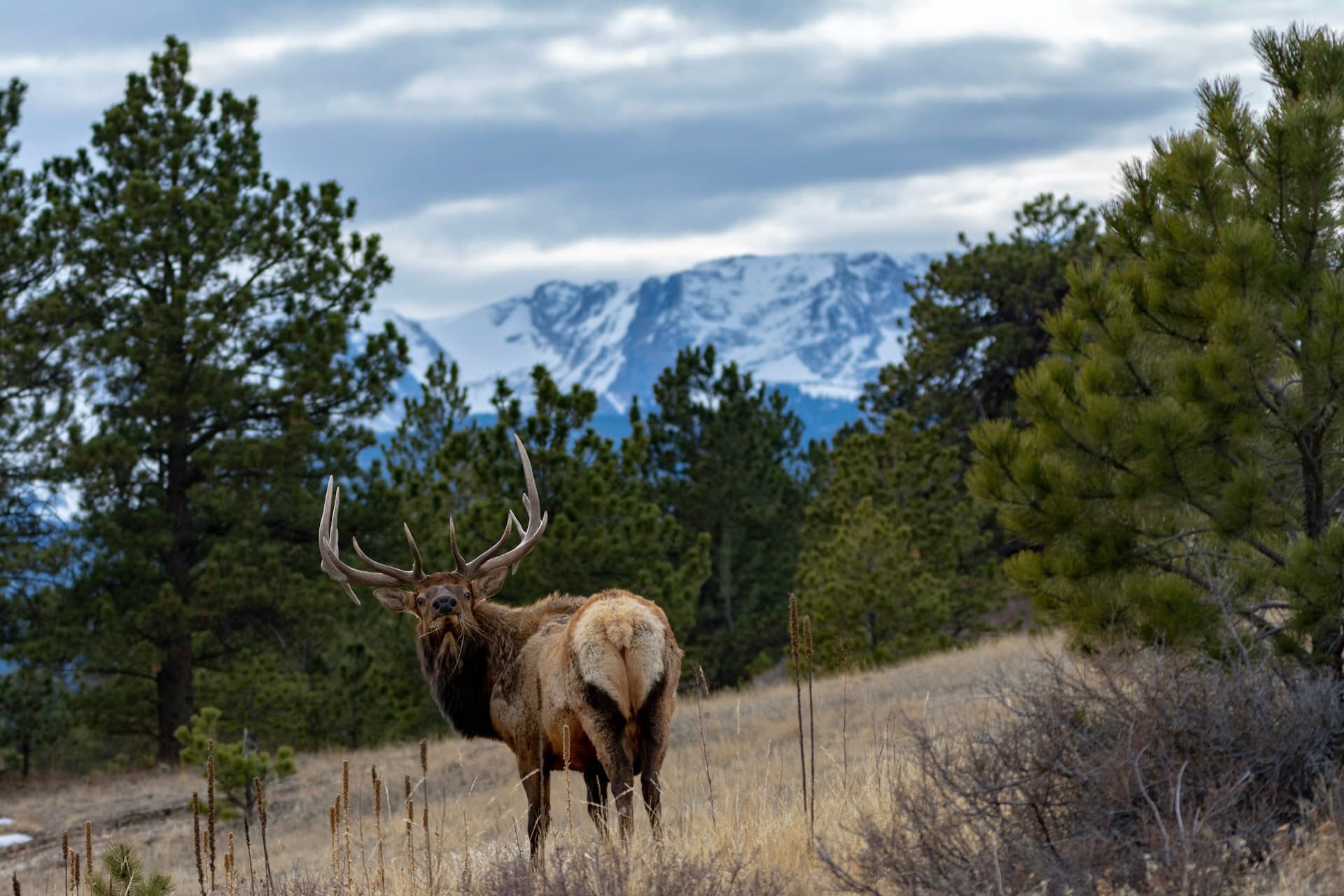
Western elk and pronghorn followed similar arcs: commercial pressure and habitat loss drove catastrophic declines; protection, transplants, habitat work, and hunter funding brought them back across much of their range. Organizations such as the Rocky Mountain Elk Foundation later amplified that work with private hunter dollars for habitat and access. The bull elk bugling in a September basin is not an accident of nostalgia. It is managed abundance.
Bison and bald eagles
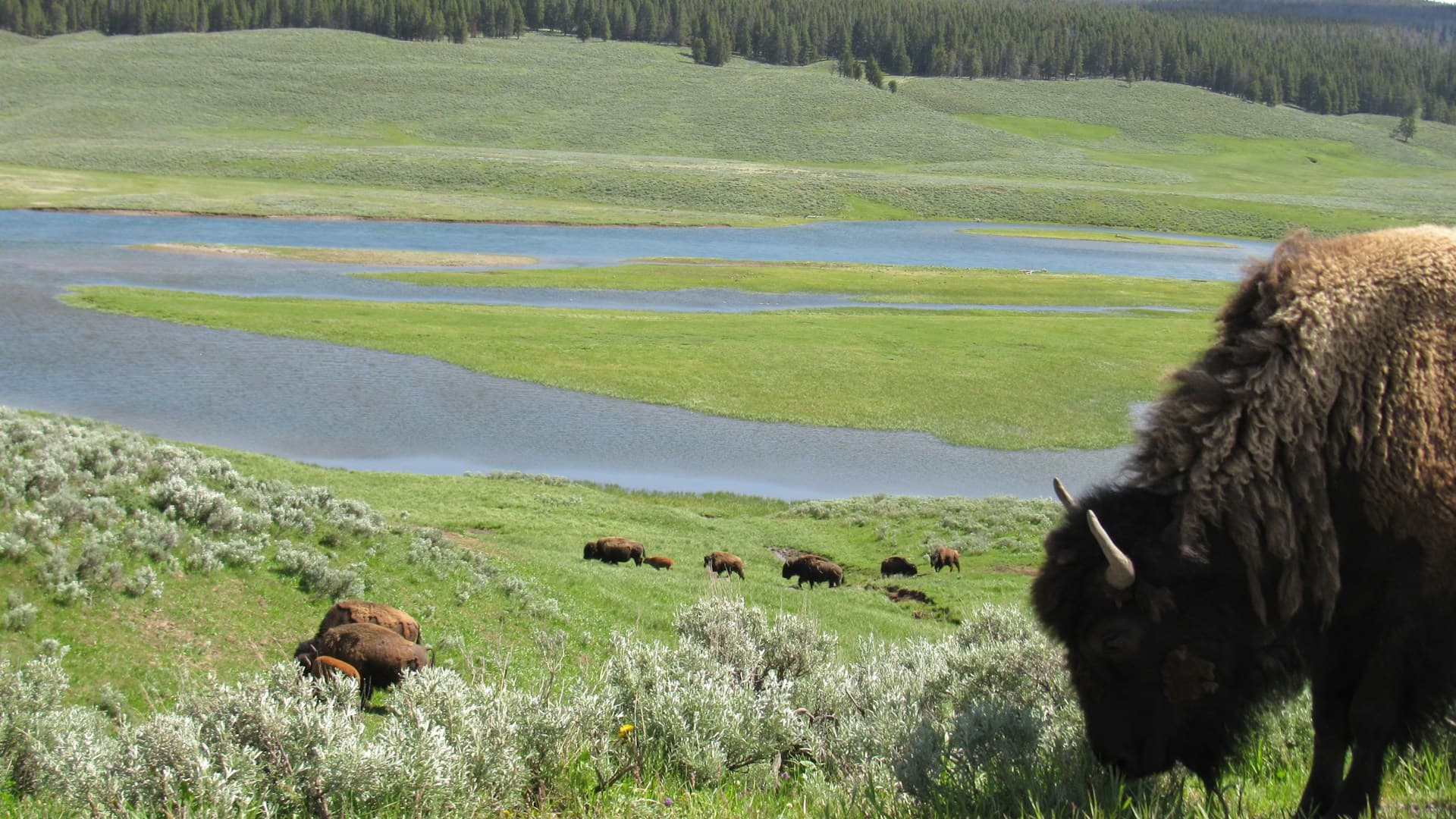
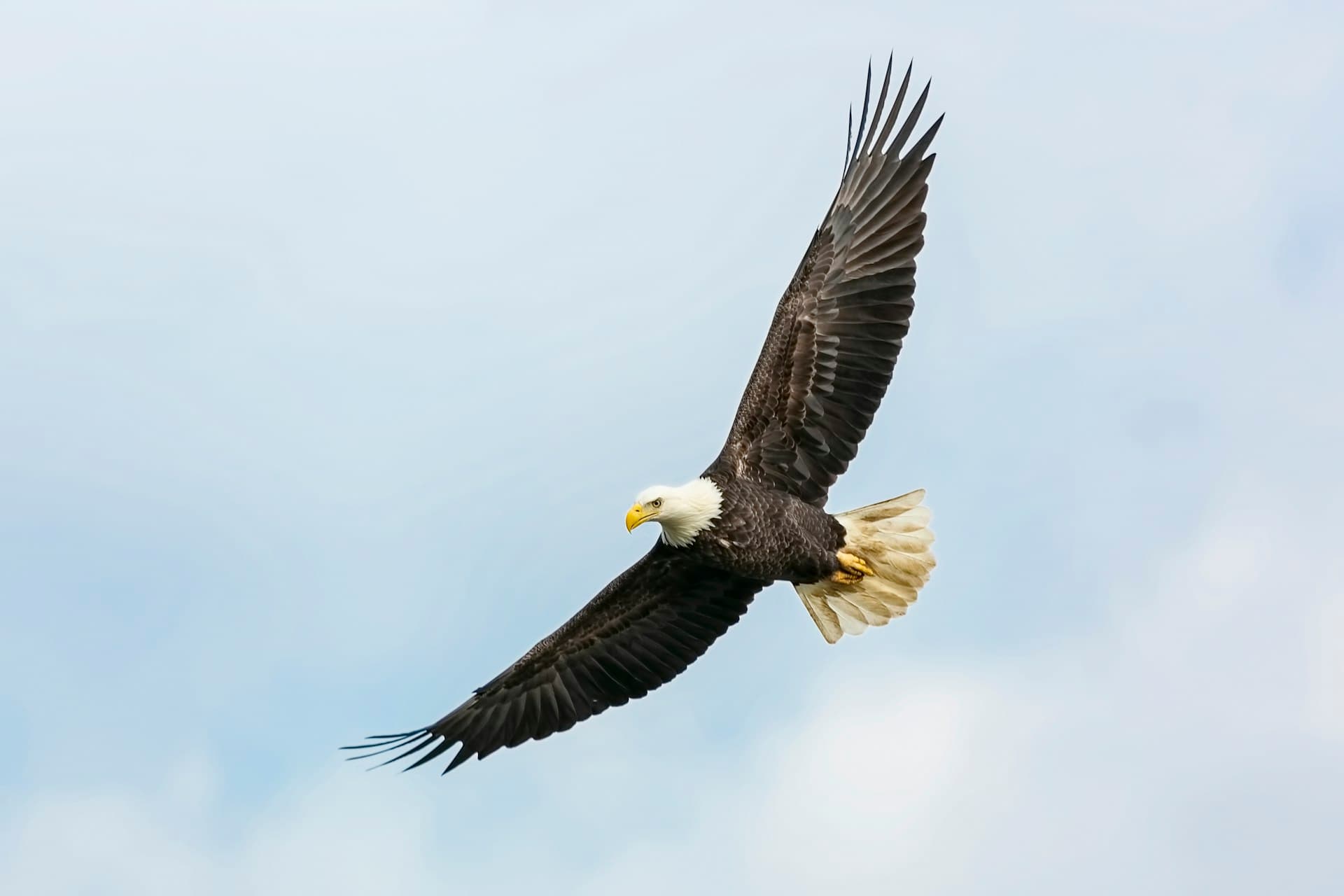
Bison fell from tens of millions to fewer than 1,000 by around 1900. Conservation herds, public land protection, and long cooperation among agencies and private stewards rebuilt a continental population now measured in the hundreds of thousands, with tens of thousands in conservation-oriented public herds. Bald eagles crashed to 417 nesting pairs in the lower 48 by 1963 under habitat loss, shooting, and DDT; with pesticide bans, Endangered Species Act protections, and the broader habitat network, they rebounded to tens of thousands of nesting pairs and were removed from the endangered list in 2007.
Not every recovery was funded only by hunters. DDT policy and endangered-species law mattered enormously for eagles. The honest point is still this: the refuge system, wetland base, state agency capacity, and political constituency that made recovery possible were built in large part by the hunting and angling conservation tradition.
Conservation organizations: hunters still doing the work
Law and taxes built the skeleton. Hunter-funded nonprofits put meat on the bones:
- Ducks Unlimited has conserved tens of millions of acres of wetlands and associated habitat across North America over its history, with recent years alone delivering on the order of a million acres of conservation delivery in peak reporting years.
- National Wild Turkey Federation continues habitat work, research support, and hunter recruitment tied directly to turkey country.
- Rocky Mountain Elk Foundation has surpassed millions of acres of lifetime conservation and access work funded largely by elk hunters and partners.
These groups are not side charities. They are how the hunting community keeps showing up between license renewals—banquets, workdays, easements, burns, and checkbooks.
What success taught us
Looking back from 2026, the conservation turn teaches a few hard, hopeful truths:
- Markets without limits destroy wildlife; democratic laws with teeth can stop that destruction.
- Ethics (fair chase) and institutions (Lacey, MBTA, Duck Stamp, Pittman-Robertson) need each other.
- Hunters and anglers did not wait to be rescued by someone else’s funding model. They built their own.
- Abundance is not permanent. It is maintained—by habitat, science, participation, and political will.
That last point is why I keep writing. The system works only as long as people understand it, join it, and defend it. Declining participation, rising costs, access fights, and funding volatility are not abstract policy topics. They are threats to the very engine that restored the deer, turkey, ducks, and elk we chase today. That is why the funding-cliff conversation in Pittman-Robertson, Licenses, and the Funding Cliff Nobody Wants to Talk About belongs in the same philosophical project as this history.
Looking ahead to Part 3
Part 2 is the success story—the chapter where hunting became a conservation engine and the land answered with wildlife.
Part 3 will face the pressure building on that success: public access and landlocked parcels, climbing license and tag costs, thickening regulations, disease and ballot fights, and the participation decline that quietly strains the user-pay model. Tradition survives only if the next generation can afford to enter it, find a place to hunt, and believe the rules still serve wildlife and fair chase—not just bureaucracy.
Stay tuned for Part 3—hunting tradition under modern pressure, and what it will take to keep this inheritance alive.
Until then, if Part 1 was the roots and Part 2 is the recovery, remember what the recovery cost: hunters willing to limit themselves, tax themselves, and fight for wild things they loved enough to save.
Sources
- U.S. Fish and Wildlife Service. History of the U.S. Fish and Wildlife Service; Lacey Act; Migratory Bird Treaty Act; Federal Duck Stamp; Wildlife and Sport Fish Restoration Program. fws.gov.
- Boone and Crockett Club. History of the Boone and Crockett Club and fair chase. boone-crockett.org.
- Association of Fish and Wildlife Agencies. North American Model of Wildlife Conservation. fishwildlife.org.
- U.S. Fish and Wildlife Service. Federal Duck Stamp Program—about and conservation accomplishments. fws.gov/program/federal-duck-stamp.
- National Wild Turkey Federation. Wild turkey restoration history and conservation programs. nwtf.org.
- Rocky Mountain Elk Foundation. Habitat and access conservation reporting. rmef.org.
- Ducks Unlimited. Wetland conservation and habitat delivery. ducks.org.
- The Wildlife Society / AFWA technical literature. North American Model principles and historical development (Geist, Organ, Mahoney, and subsequent reviews).
- The Inside Spread. Related essays: Who Funds Wildlife Conservation; America 250 conservation history; Pittman-Robertson funding cliff; History of Hunting Part 1.
The Inside Spread covers hunting, fishing, shooting, and conservation. We donate 10% of profits to wildlife conservation. Learn more at theinsidespread.com/conservation.

Written by
Kenny Flermoen
Kenny Flermoen is the owner and CEO of The Inside Spread. Growing up in the Upper Midwest he spent most of his childhood outside—rain, snow, or shine. He writes about hunting, fishing, and conservation with a focus on public-land access, habitat, and the decisions that shape the future of America's outdoor heritage.
Comments
No comments yet. Be the first to share your thoughts.
More in conservation
BREAKING: The Forest Service Just Moved to Kill the Roadless Rule for Good. 58 Million Acres of the Best Hunting and Fishing Left in America Are on the Table.
The Forest Service proposed rescinding the 2001 Roadless Rule, putting 58 million acres of backcountry hunting and fishing habitat at risk. Comment by Sept. 21.

IP28 Is Dead — For Now. Oregon's Hunting and Fishing Ban Fell 13,000 Signatures Short. Here's What Happens Next.
Oregon IP28 failed to qualify for the November 2026 ballot after falling about 13,000 valid signatures short. Here is what happened—and why hunters say the fight is not over.
Pittman-Robertson, Licenses, and the Funding Cliff Nobody Wants to Talk About
Pittman-Robertson wildlife funding fell nearly 15% from FY2024 to FY2026. Here is how licenses and excise taxes fund state conservation—and how to strengthen the system without erasing hunters and anglers.
250 Years of America, and Hunters and Anglers Built the Greatest Wildlife Conservation System on Earth. Here's the Proof.
On America's 250th birthday—a history of the North American Model, Pittman-Robertson, the Duck Stamp, and five species comebacks funded by hunters and anglers who chose to pay to save what they loved.