
Pittman-Robertson, Licenses, and the Funding Cliff Nobody Wants to Talk About
Pittman-Robertson wildlife funding fell nearly 15% from FY2024 to FY2026. Here is how licenses and excise taxes fund state conservation—and how to strengthen…
This is Part 2 of a two-part series on who pays for wildlife conservation. Start with Part 1: The Truth About Who Funds Wildlife Conservation—the hunter and angler funding record that this essay builds on.
America's wildlife conservation system is not falling off a cliff tomorrow. But one of its strongest funding pillars is moving in the wrong direction.
Final federal Pittman-Robertson Wildlife Restoration apportionments fell from $989.5 million in fiscal year 2024 to $914.4 million in 2025 and $842.4 million in 2026. That is a decline of nearly 15 percent in two years. Sport Fish Restoration softened the national impact by rising over that period, and the U.S. Fish and Wildlife Service still distributed more than $1.2 billion across both programs for fiscal year 2026. This is not collapse.
It is a warning.
The American system asks a relatively small group of hunters, anglers, recreational shooters, boaters, manufacturers, and license buyers to supply much of the dedicated money used by state fish and wildlife agencies. That arrangement has restored species, protected habitat, trained generations of hunters, built access, and funded scientific management for nearly a century. It may be the most successful user-pay, public-benefit system ever created.
It is also unusually exposed to firearm and ammunition sales, license participation, political support for hunting and fishing, and the ability of states to keep raising fees without pricing out the next generation.
The funding cliff is not one bad federal table. It is what happens when a narrow financial base is expected to carry a public trust that belongs to everyone.
Start with the receipts: the decline is real
The cleanest evidence comes directly from the U.S. Fish and Wildlife Service's final apportionment tables:
| Fiscal year | Wildlife Restoration apportionment | Change from prior year |
|---|---|---|
| 2024 | $989,531,728 | — |
| 2025 | $914,392,695 | -7.6% |
| 2026 | $842,403,264 | -7.9% |
Those totals include basic Wildlife Restoration, hunter education, and enhanced hunter education funds. From 2024 through 2026, the combined decline was approximately $147.1 million, or 14.9 percent.
That does not mean Pittman-Robertson has failed. The Service says Wildlife and Sport Fish Restoration programs have distributed more than $31 billion through annual apportionments since 1937, while its broader historical accounting of the two acts and associated programs exceeds that amount depending on which funds and inflation treatment are counted. Fiscal year 2026 still sent substantial money to every eligible state and territory.
But state agencies cannot staff a chronic wasting disease lab, plan a prescribed-burn program, acquire a migration corridor, or maintain a shooting range by assuming every market peak will last forever. Their work is long-term. A large part of their revenue is not.
Congressional Research Service has said the vulnerability plainly: because Pittman-Robertson is entirely reliant on excise taxes from firearms, ammunition, and archery equipment, funding fluctuates with spending patterns in those markets.
That is the first edge of the cliff.
How the American conservation funding system actually works
The system is often reduced to a slogan—hunters pay for wildlife—but the machinery matters.
Pittman-Robertson
Manufacturers and importers pay federal excise taxes of 11 percent on long guns, ammunition, and archery equipment and 10 percent on pistols and revolvers. Those receipts enter the Wildlife Restoration Fund. The U.S. Fish and Wildlife Service then apportions funding to states using a statutory formula tied to land area and certified paid hunting license holders, with minimum and maximum shares.
States do not simply receive a blank check. They submit eligible projects, and the federal program generally reimburses up to 75 percent of approved costs. States or eligible partners must supply the remaining 25 percent from non-federal sources.
That match turns a state conservation dollar into as much as four dollars of work. It also means a state can leave federal money unused if it cannot produce the match.
Hunting and fishing licenses
License revenue is more than a fee for permission to hunt or fish. Federal law and regulation protect it from being casually swept into unrelated state spending. A state that diverts license revenue outside the control and administration of its fish and wildlife agency can be declared in diversion and lose eligibility until the money and lost interest are replaced.
License dollars commonly pay the non-federal match that unlocks Pittman-Robertson and Dingell-Johnson grants. They also support biologists, conservation officers, habitat crews, hatcheries, access programs, information systems, and education within the boundaries of state and federal law.
Dingell-Johnson and Wallop-Breaux
Sport Fish Restoration applies a similar model to fishing tackle, boating-related taxes, and motorboat and small-engine fuel. Its distribution formula relies on both state area and paid fishing license holders. Final Sport Fish Restoration apportionments reached approximately $442.9 million in fiscal year 2026, helping lift the combined wildlife and fisheries distribution above $1.2 billion even as Wildlife Restoration declined.
The exact funding mix varies sharply by state. A nationwide survey of fiscal year 2019 dedicated revenue found that hunting, fishing, and trapping licenses averaged 42.5 percent, Pittman-Robertson grants averaged 18 percent, and Dingell-Johnson grants averaged 8.4 percent. Together, those three sources represented an average of 69 percent of dedicated state-agency revenue.
That 69-percent figure is more useful than inflated claims that every state agency gets three-quarters of its entire budget from hunters. Some do depend far more heavily on sporting revenue; others have broader taxes, general funds, or agency structures. The national average still makes the central point: licenses and sporting excise taxes are not symbolic. They are load-bearing.
The philosophy underneath the accounting
I have written about these numbers before, but the numbers are not the deepest part of the argument.
This essay is Part 2 of that funding series. In Part 1, The Truth About Who Funds Wildlife Conservation, I defended the factual record: hunters and anglers did not merely benefit from conservation. They built dedicated financial mechanisms, purchased licenses, accepted excise taxes, formed organizations, volunteered labor, and created a political constituency for wildlife.
In 250 Years of America, and Hunters and Anglers Built the Greatest Wildlife Conservation System on Earth, I went deeper into the philosophy: wildlife belongs to the people, government manages it in trust, and citizens who love a public resource have obligations alongside their rights.
And in The History of Hunting in America (Part 2), I traced hunting from Indigenous subsistence through market exploitation, fair chase, and the conservation laws that made recovery possible. This funding series carries that philosophical project forward because funding is where tradition becomes institution. A value that nobody will finance is only a sentiment.
The idea connecting these essays is simple:
Wildlife belongs to everyone, but belonging creates responsibility.
Hunters and anglers have acted on that responsibility in a uniquely organized way. We accepted limits on ourselves. We bought licenses. Our industries supported dedicated taxes. We funded animals we would never hunt and wetlands we might never visit. That record should not be erased because some firearm buyers are recreational shooters or because general taxpayers also support parks, federal lands, and endangered species.
But public ownership carries a second truth that hunters should not fear: if wildlife belongs to everyone, its financial future cannot rest indefinitely on hunters alone.
The uncomfortable argument about who pays Pittman-Robertson
Critics correctly point out that not every taxed firearm or box of ammunition is purchased for hunting. Target shooters, collectors, and citizens buying firearms for personal defense also generate Pittman-Robertson revenue. In some years, they may generate most of it.
We should acknowledge that without surrendering the larger history.
Federal excise-tax collections do not attach a survey of buyer intent to every transaction. Estimates that assign a precise percentage to hunters or non-hunters depend on market research and assumptions about firearm use. A rifle may be used for deer season, range practice, and home defense. Ammunition purchased for practice may support hunting proficiency even when the box is fired at paper. Categories overlap.
The honest conclusion is:
- Hunters are not the only contributors to Pittman-Robertson.
- Recreational shooters and other firearm owners make an enormous contribution.
- The firearms, ammunition, and archery industries remain central to the system.
- Hunting licenses create a separate, direct, and legally protected revenue stream.
- Hunters and sporting organizations supplied the political architecture that made dedicated restoration funding possible.
None of those statements cancels another.
The more important question is not who gets to claim every dollar. It is whether a public wildlife system should become more dependent on cyclical gun and ammunition sales at the same time agencies are being asked to manage more species, more disease, more development pressure, and more public recreation.
Why the problem is larger than declining hunter numbers
The 2022 National Survey of Fishing, Hunting, and Wildlife-Associated Recreation estimated that 14.4 million Americans age 16 and older hunted, 39.9 million fished, and 148 million watched wildlife. Because the survey methodology changed, those figures should not be used for a simple apples-to-apples trend line against every previous national survey.
They still reveal the political geometry: hunters are a small minority managing an outsized share of the financial responsibility for a resource enjoyed by a much larger public.
Recruitment, retention, and reactivation matter. Every lost hunter can mean a lost license buyer, a smaller volunteer base, fewer mentors, weaker rural political support, and less equipment spending. Yet even a perfect recruitment campaign would not solve the whole problem.
State wildlife agencies now manage responsibilities that were barely imagined in 1937:
- Chronic wasting disease surveillance and response
- Wildlife-livestock conflict and predator compensation
- Invasive species and emerging pathogens
- Urban wildlife conflict
- Wildlife crossings and fragmented migration corridors
- Climate-driven habitat changes, drought, and catastrophic fire
- More intensive public access and recreation demands
- Thousands of nongame species with no license constituency
The Association of Fish and Wildlife Agencies says State Wildlife Action Plans identify more than 12,000 Species of Greatest Conservation Need. Agencies receive, on average, less than $1 million annually to implement those plans, while a national analysis estimated approximately $1.3 billion per year would be required.
That is the second edge of the cliff: even if traditional funding remains stable, the mission is growing faster than the base.
What a funding decline looks like on the ground
An apportionment reduction does not produce one dramatic national closure. It appears in a hundred quieter decisions:
- A vacant biologist position stays vacant.
- A habitat burn is delayed another season.
- A wildlife management area road or boat ramp goes unrepaired.
- A research collaring project samples fewer animals.
- A shooting range reduces hours.
- A land acquisition loses to development while partners assemble a match.
- A nongame species receives monitoring but no intervention.
- License fees rise again because lawmakers will not appropriate broader public money.
The federal matching structure magnifies the stakes. If a state lacks one dollar of non-federal match, it may be unable to unlock three federal dollars for an eligible project. The shortfall is not merely the missing state dollar. It is the project that never reaches full scale.
Wisconsin offered a visible example in 2025. Its wildlife restoration apportionment remained historically substantial, yet the state projected its fish and wildlife account could run $16 million into the red in fiscal year 2026 and began debating license increases and other funding options. Strong federal aid and state-level fiscal stress can exist at the same time.
That is why national totals alone can hide the problem.
Raising license prices cannot be the only answer
License increases are sometimes necessary. Inflation affects trucks, fuel, land, technology, salaries, hatchery operations, laboratory testing, and construction just as it affects every household. A deer tag frozen at an old price loses purchasing power each year.
But fee increases have limits.
If agencies repeatedly ask the same shrinking or aging customer base to cover broader public responsibilities, they can create a destructive cycle:
- Costs rise.
- License prices rise.
- Some casual, young, or lower-income participants leave.
- The remaining participants carry more of the burden.
- Agencies raise fees again.
Nonresident hunters already see this dynamic in premium draw states, where tags can cost hundreds or thousands of dollars. Those prices may maximize short-term revenue from scarce opportunities, but they also reshape hunting into something less democratic—closer to the European model in which access followed wealth and land ownership.
That cuts directly against the philosophy of public wildlife and broad participation.
A stronger system does not require erasing the old one
The false choice is that we must either defend hunter funding exactly as it exists or replace it with general taxes and hand control to people hostile to hunting.
There is a better approach: protect the user-pay foundation, then add durable public-benefit funding around it.
1. Preserve Pittman-Robertson, Dingell-Johnson, and protected license revenue
These programs work because the money is dedicated, formula-driven, difficult to divert, and connected to people who care whether agencies succeed. Any new funding should supplement—not supplant—licenses and excise taxes.
That protection matters. Broad appropriations can disappear with a budget vote. Dedicated conservation money creates continuity across election cycles.
2. Use existing sales taxes more intelligently
Georgia, Texas, and Virginia have dedicated portions of existing sales-tax revenue from outdoor goods to conservation-related purposes. Georgia's Outdoor Stewardship Program directs existing sporting-goods sales-tax revenue toward parks, trails, land protection, wildlife management areas, and clean water without increasing the tax rate.
This approach recognizes that hikers, campers, paddlers, birders, and other outdoor users benefit from habitat and access. It also avoids some of the administrative and affordability problems of creating a new federal excise tax product by product.
3. Learn from broad conservation sales taxes
Missouri voters approved a permanent one-eighth-of-one-percent conservation sales tax in 1976. The revenue is constitutionally dedicated to the Missouri Department of Conservation for fish, forest, and wildlife work. Arkansas later adopted its own one-eighth-percent sales tax shared among game and fish, parks, heritage, and outdoor-beautification programs.
Broad taxes are not politically easy, and they should come with auditing and legal safeguards. But they align the payer base with the public-benefit principle: everyone contributes a small amount because everyone owns the resource and receives some benefit from healthy land, water, and wildlife.
4. Finish the federal nongame conversation
The Recovering America's Wildlife Act has repeatedly attracted bipartisan support because it targets proactive work on species before they require more expensive Endangered Species Act intervention. Different versions have proposed more than $1 billion annually for states, territories, and tribes.
As of July 2026, it still has not become law. The recurring obstacle is not whether proactive conservation is valuable. It is how to pay for it without adding an unacceptable deficit cost or creating a funding source Congress can easily abandon.
A durable version should add money to the current system, preserve state match and accountability, respect state wildlife plans, and avoid using new funds as an excuse to raid sporting revenue.
5. Give wildlife watchers a voluntary on-ramp
Federal Duck Stamps already offer a model. Waterfowl hunters must buy them, but birders, photographers, and refuge visitors can buy them voluntarily, knowing nearly all proceeds support habitat.
States could make nongame wildlife stamps more visible and useful—bundled with recognition, access benefits where appropriate, or transparent project reporting. Voluntary stamps will not close a billion-dollar gap, but they can build a broader culture of financial participation.
6. Make every dollar traceable
People support systems they can see.
Every state agency should publish a plain-language dashboard showing:
- License revenue by source
- Federal apportionments and required match
- Major projects funded
- Acres acquired, restored, or treated
- Species monitoring and recovery outcomes
- Administrative costs
- Funds carried forward or left unmatched
Hunters deserve proof that fee increases produce habitat and access. Non-hunters deserve proof that broader public money serves public wildlife. Transparency is how a larger funding coalition earns legitimacy.
Should hikers and birders pay a Pittman-Robertson-style tax?
The so-called backpack tax sounds fair in one sentence: outdoor recreation affects habitat, so outdoor gear should support conservation just as guns, ammunition, bows, boats, and fishing tackle do.
The details are harder.
Is a rain jacket outdoor equipment if someone wears it to work? Are binoculars taxed when purchased for astronomy? Do children's boots carry the same rate as a $600 ultralight tent? Would the tax discourage lower-income families from getting outside? Can thousands of retailers administer it without excessive cost? The Outdoor Industry Association has opposed the concept partly on affordability and administrative grounds.
Those objections deserve an answer, not ridicule. Hunters know better than anyone that equipment costs can become a barrier.
My view is that the principle is sound but the mechanism is not sacred. Outdoor users should contribute more directly to habitat and wildlife. That could happen through an excise tax, dedication of existing sales taxes, broad conservation taxes, stamps, access fees, or a combination. The best design is the one that is dedicated, transparent, affordable, difficult to divert, and capable of surviving political cycles.
What hunters should demand—and what we should accept
Hunters should demand recognition. Not applause, but an honest account of who built the system and who continues to finance it. The answer cannot be rewritten into “everyone pays equally” when licenses and sporting excise taxes plainly create a distinctive contribution.
We should also accept that more funding may bring more voices into the room.
That is not necessarily a threat. Wildlife is already held in trust for the entire public. The defense of hunting has never rested on buying private ownership of deer, elk, ducks, or public agencies. It rests on regulated use, scientific sustainability, cultural legitimacy, and our demonstrated willingness to conserve what we pursue.
If broader funding helps recover nongame species, keeps access open, prevents habitat fragmentation, and makes state agencies less vulnerable to market crashes, hunters benefit too.
The condition should be reciprocity: new contributors must respect the lawful role of hunting and fishing in conservation just as hunters must respect the public's interest in species they do not pursue.
That is a coalition worth building.
The cliff is fiscal—but it is also cultural
The deepest danger is not that Pittman-Robertson drops in one year. It has risen and fallen before. Firearm and ammunition markets will rise again, and the fund may rise with them.
The danger is that America treats a 1937 solution as if it automatically answers a 2026 mission.
We are asking licenses and equipment taxes to fund wildlife management while habitat costs rise, species decline, public use expands, and hunters represent a small share of the population. We are asking state agencies to remain scientifically capable while their political constituencies fragment. We are asking young hunters to inherit a tradition whose entry price climbs every year.
Pittman-Robertson is not the problem. It is the proof that dedicated funding works.
The lesson is not to dismantle what hunters, shooters, anglers, boaters, manufacturers, and conservationists built. The lesson is to extend its ethic:
If wildlife belongs to all of us, more of us must help pay for it.
Hunters should remain at the center of that story because we earned that place through sacrifice, money, restraint, and results. But leadership does not mean carrying the entire load until the foundation cracks. Leadership means showing the country how to build the next layer before the cliff arrives.
Missed Part 1? Read The Truth About Who Funds Wildlife Conservation for the hunter and angler funding case this essay builds on.
Sources
- U.S. Fish and Wildlife Service: FY2024 Wildlife Restoration final apportionments
- U.S. Fish and Wildlife Service: FY2025 Wildlife Restoration final apportionments
- U.S. Fish and Wildlife Service: FY2026 Wildlife Restoration final apportionments
- U.S. Fish and Wildlife Service: FY2026 Sport Fish Restoration final apportionments
- U.S. Fish and Wildlife Service: Apportionments and Licenses Data
- Congressional Research Service: Pittman-Robertson Wildlife Restoration Act
- 50 CFR Part 80: Wildlife and Sport Fish Restoration Program
- Association of Fish and Wildlife Agencies: American System of Conservation Funding
- Analysis of dedicated revenue scale and diversity among U.S. state fish and wildlife agencies
- U.S. Fish and Wildlife Service: 2022 National Survey of Fishing, Hunting, and Wildlife-Associated Recreation
- Association of Fish and Wildlife Agencies: State Wildlife Action Plans
- Georgia Outdoor Stewardship Program
- Missouri Department of Natural Resources: Parks, Soils and Water Sales Tax
- Recovering America's Wildlife Act legislation

Written by
Kenny Flermoen
Kenny Flermoen is the owner and CEO of The Inside Spread. Growing up in the Upper Midwest he spent most of his childhood outside—rain, snow, or shine. He writes about hunting, fishing, and conservation with a focus on public-land access, habitat, and the decisions that shape the future of America's outdoor heritage.
Comments
No comments yet. Be the first to share your thoughts.
More in conservation
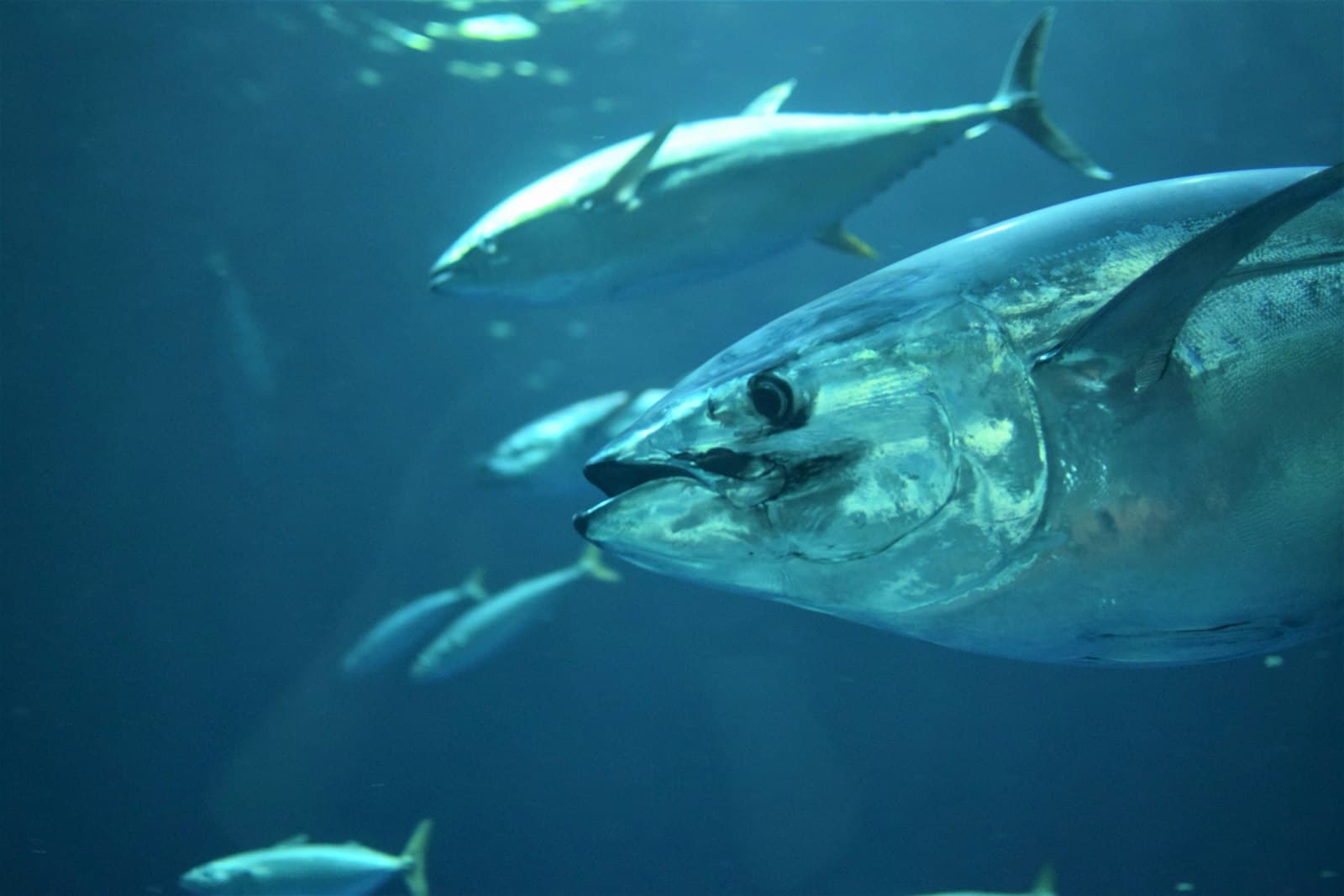
NOAA Closed the Commercial Atlantic Bluefin General Category Through November 30
NMFS closed the Atlantic bluefin General category from Oct. 17 through Nov. 30, 2026. It reopens Dec. 1. Recreational angling quota is separate.
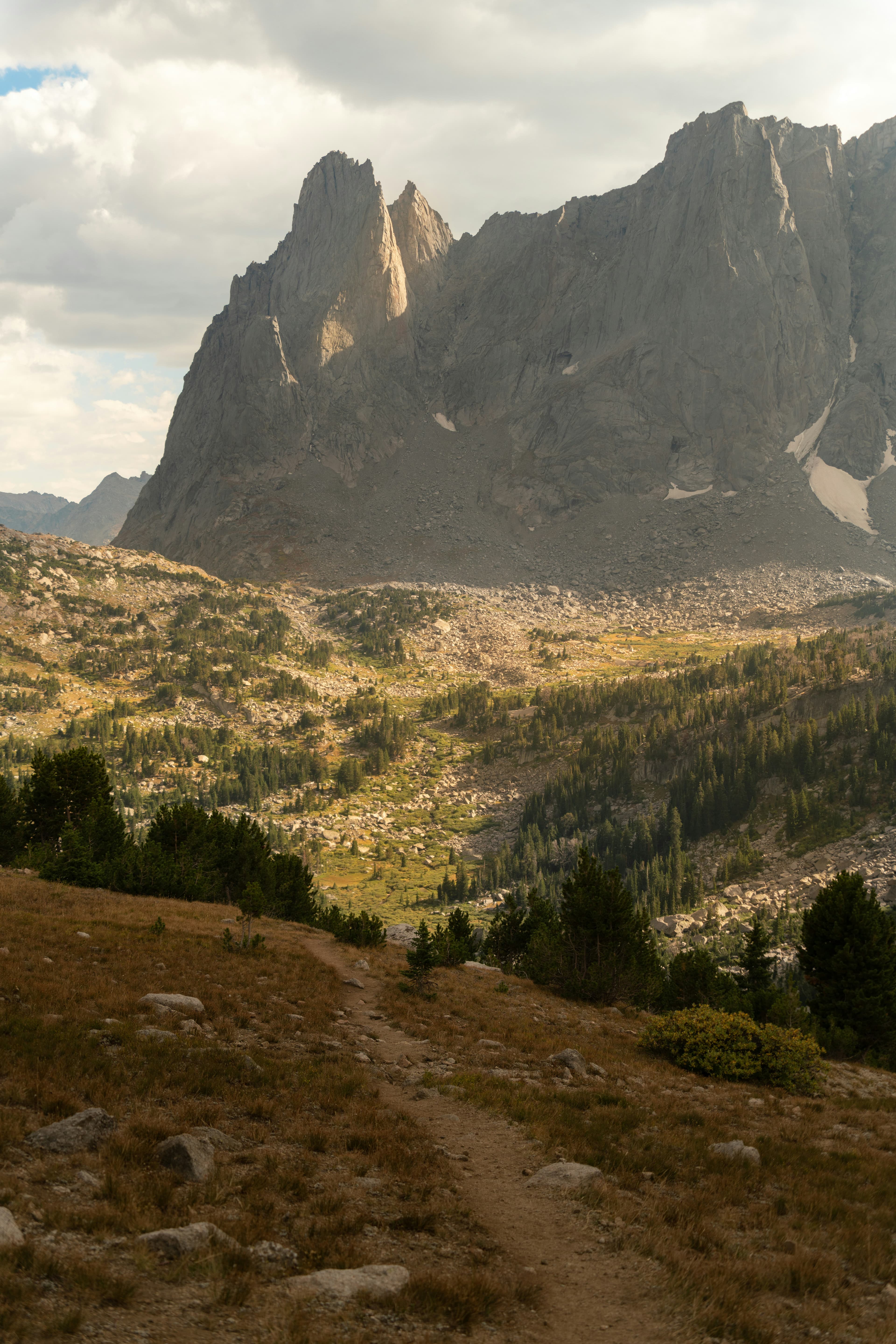
BREAKING: The Forest Service Just Moved to Kill the Roadless Rule for Good. 58 Million Acres of the Best Hunting and Fishing Left in America Are on the Table.
The Forest Service proposed rescinding the 2001 Roadless Rule, putting 58 million acres of backcountry hunting and fishing habitat at risk. Comment by Sept. 21.

IP28 Is Dead — For Now. Oregon's Hunting and Fishing Ban Fell 13,000 Signatures Short. Here's What Happens Next.
Oregon IP28 failed to qualify for the November 2026 ballot after falling about 13,000 valid signatures short. Here is what happened—and why hunters say the fight is not over.
The History of Hunting in America, Part 2: Hunting and Conservation Efforts and Success
How hunters turned crisis into recovery—fair chase, the Lacey Act, Duck Stamp, Pittman-Robertson, and the species comebacks that prove regulated hunting funds conservation.