
Montana Elk Hunting 2026: Season Dates, Combination License Draw, Costs & Where to Hunt
Montana elk hunting 2026—archery and general rifle season dates, nonresident combination license draw, preference points, license costs, shoulder seasons, top…
Montana elk hunting in 2026 spans archery (September 5 – October 18), a five-week general rifle season (October 24 – November 29), and shoulder seasons in select hunting districts. Nonresidents hunt through the Combination License draw—application window March 1 – April 1, 2026. Preference points ($100) improve odds; 75% of licenses go to top point holders. Always verify fees and district rules at fwp.mt.gov.
- Combo application: March 1 – April 1, 2026
- Draw results: ~April 15, 2026
- General rifle: October 24 – November 29, 2026
- Preference points: $100 each (max 3 when applying)
Quick Facts: Montana Elk 2026
| Archery Season | September 5 – October 18, 2026 |
| General Rifle Season | October 24 – November 29, 2026 |
| Muzzleloader Season | December 12–20, 2026 (select districts) |
| Shoulder Seasons | August 15 – February 15, 2026/2027 (varies by district) |
| Nonresident Combo Application Window | March 1 – April 1, 2026 |
| Draw Results | Approx. April 15, 2026 |
| Base Hunting License (Nonresident) | $50 |
| General Elk Combination License (Nonresident) | Approx. $1,112 (verify current total at FWP) |
| Preference Point (Nonresident Combo) | $100 |
| Maximum Preference Points | 3 total when applying for a license |
| Allocation | 75% of combo licenses to highest point holders; 25% random draw |
| Bow and Arrow License | $10 (required for archery hunters) |
| Official Source | fwp.mt.gov/hunt/regulations/elk |
Montana's nonresident license and fee structure is complex and bundles multiple required purchases (Conservation License, Base Hunting License, AISPP, Combination License). Total costs reported by various sources for the General Elk Combination range from roughly $1,000 to $1,150+ once all required add-ons are included. Confirm the exact current total directly at fwp.mt.gov/buyandapply before budgeting for your hunt.
Why Montana for Elk
Montana occupies a genuinely unique position among Western elk states: it's the one state where a committed nonresident hunter can realistically plan to draw a tag every two to three years through smart point management, rather than facing the multi-decade waits common in neighboring states for premium units. Montana's general-season elk districts cover most of the western third of the state plus scattered units in the east, giving nonresidents who draw a combination license access to a genuinely large footprint of huntable country across multiple regions in a single license.
The state's elk herds range from the timbered mountains of the Bitterroot and Bob Marshall country to the prairie breaks of eastern Montana, offering hunters a choice between classic high-country mountain hunting and big-sky, open-country glassing and stalking. Montana FWP's shoulder season program, which extends elk opportunity well beyond the general season in many districts, gives both residents and successful nonresident combo holders extended time in the field for population management hunts.
2026 Season Dates
Archery Season
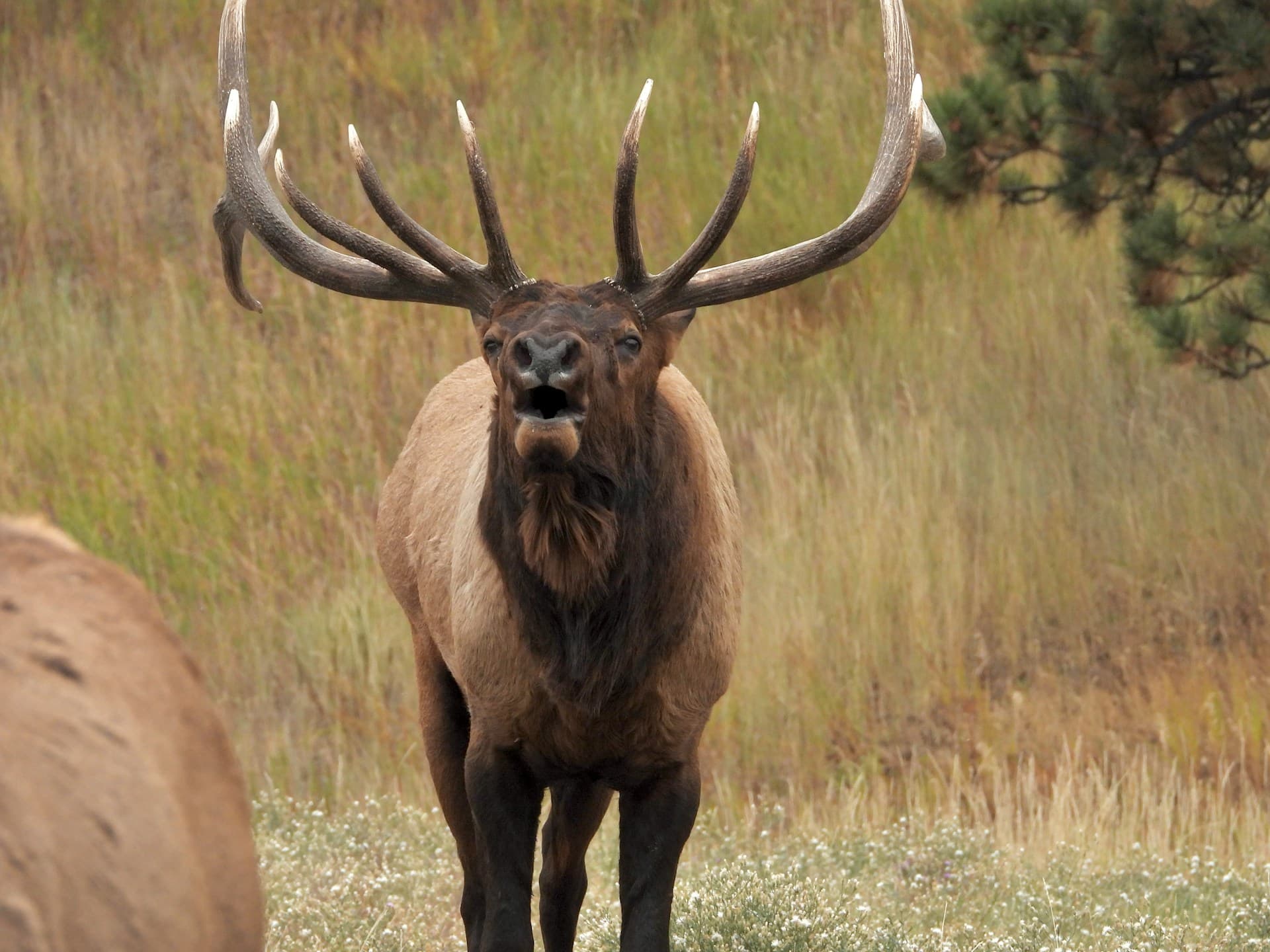
September 5 – October 18, 2026. This window covers Montana's elk rut, generally peaking in late September, making archery season the prime opportunity to hunt bugling, rutting bulls. Archers must hold a valid Bow and Arrow License ($10) in addition to their base elk license.
General Rifle Season
October 24 – November 29, 2026. Montana's general rifle season is one of the longest in the West at roughly five weeks, giving hunters substantial flexibility to plan around weather, work schedules, and elk movement patterns. This is the primary season most nonresident combination license holders use.
Shoulder Seasons
August 15 – February 15 (exact dates vary by hunting district). Shoulder seasons extend elk hunting opportunity before and/or after the standard archery and general seasons in specific districts as a population management tool, primarily targeting antlerless elk on private land near agricultural areas. Not all districts offer shoulder seasons—check your specific Hunting District (HD) regulations.
Muzzleloader Season
A muzzleloader-specific window, generally in mid-December (approximately December 12–20, 2026), is available in select hunting districts after the general season closes.
Licenses: The Combination License System
Montana's elk licensing for nonresidents centers on the Combination License—a single license that, once drawn, grants access to hunt elk (and often deer) across the general-season districts covering most of western Montana and other open units statewide.
Key License Components (Nonresident)
- Conservation License: Required, purchased separately
- Base Hunting License: $50, purchased separately
- Aquatic Invasive Species Prevention Pass (AISPP): Required, purchased separately
- General Elk Combination License: The core elk tag—approximately $1,112 reported by outfitter sources, though always confirm current total at fwp.mt.gov as fee tables update annually
- Bow and Arrow License: $10, required for archery hunters (in addition to bowhunter education or proof of a prior-year bowhunting license from another state)
Critical rule: A nonresident applicant may apply for only one Combination license per year. There is no stacking strategy here—choose your application carefully.
Other License Types
- General Elk License (residents and some nonresidents via specific eligibility): Available over the counter for Montana residents; most nonresidents cannot purchase this OTC and must draw a Combination License instead
- B License (antlerless elk): Quota-limited in some districts; available without a quota in others; expands or restricts the general license's opportunity for a particular hunting district
The Nonresident Draw System
Understanding Montana's draw mechanics is essential, since the system differs meaningfully from neighboring states' simple preference-point queues.
Application Window and Key Dates (2026)
- Application opens: March 1, 2026, at 5:00 a.m. MST
- Application deadline: April 1, 2026, at 11:45 p.m. MST
- Draw results: Approximately April 15, 2026
How Allocation Works
- 75% of Combination licenses go to nonresident applicants with the most preference points
- 25% are allocated through a random drawing among all other applicants, regardless of points
Preference Points
- Cost: $100 per point
- Nonresident hunters can purchase and accumulate preference points to improve their odds of drawing a Combination license in future years
- A maximum of 3 total preference points may be held when applying for a license—once you reach that cap, additional points cannot be banked beyond what's needed
- If you don't draw, you typically receive a refund of the license cost minus non-refundable portions (consult current FWP refund policy)
Bonus Points (Different From Preference Points)
Montana also uses a separate bonus point system for special/limited-entry permits (not the general Combination license). Bonus points are squared in the drawing—if you hold 3 points, that gives you 9 chances, plus 1 additional chance for the current year's application, for 10 total chances. The maximum bonus points a hunter can carry into the 2026 draw for deer and elk is 24.
Application fee: A nonrefundable $5 application fee applies to most applications; moose, sheep, goat, and bison applications carry a higher $50 application fee.
Where to Hunt Montana Elk
The Bitterroot and Sapphire Mountains (Southwest Montana)
Western Montana's Bitterroot Valley and surrounding national forest lands hold strong elk populations in classic mountain timber habitat. This region sees significant hunting pressure given its accessibility from Missoula but remains productive for hunters willing to get away from trailheads.
The Bob Marshall Wilderness Complex
One of the largest wilderness areas in the Lower 48, "The Bob" offers a true backcountry elk hunting experience for hunters willing to pack in on foot or horseback. Elk densities are strong in this remote, roadless country, and hunting pressure is naturally limited by the difficulty of access.
Eastern Montana Prairie and Breaks Country
The river breaks and prairie country of eastern Montana—particularly along the Missouri River corridor—hold elk in terrain entirely different from the mountainous west. This region tends to see less nonresident pressure and offers a genuinely different hunting style: long-range glassing and stalking across open country rather than timber hunting.
Note on land ownership: Eastern Montana contains substantial private land, often in checkerboard patterns with public BLM and state sections. Confirm legal access routes using FWP's hunt planner maps or onX Hunt before planning a trip in this region.
Public Land Access
Montana FWP's Hunt Planner provides maps and access information for FWP-managed Wildlife Management Areas, alongside the extensive USFS and BLM lands that make up much of the state's huntable elk country. Block Management Areas—private land enrolled for public hunting access through FWP agreements—are another major access point, particularly valuable in regions with significant private land checkerboarding.
Rut Timing in Montana
| Phase | Timing |
|---|---|
| Early bugling begins | Late August |
| Peak rut (breeding activity) | Mid-to-late September |
| Post-rut, bulls regrouping | Early October |
| General rifle season (post-rut) | Late October through November |
Montana's archery season (September 5 – October 18) is positioned to cover the entire rut window, giving bowhunters the best opportunity to call in and hunt actively bugling bulls. The general rifle season opens after the rut has concluded, when bulls have shifted into post-rut recovery and feeding patterns—still very productive, but a different hunting approach focused on bedding and feeding routines rather than calling.
Nonresident Elk Hunting in Montana
How to Hunt Elk in Montana as a Nonresident
Montana's nonresident elk access runs entirely through the Combination License draw—there is no OTC nonresident elk option in most of the state.
Step-by-step process:
- Apply during the window: March 1 – April 1, 2026, online at fwp.mt.gov
- Purchase required components: Conservation License, Base Hunting License ($50), and AISPP separately from the Combination License application
- Decide on preference points: If you don't plan to hunt this year, or want better odds in a future year, purchase a $100 preference point instead of (or in addition to, depending on strategy) applying for the license itself
- Wait for draw results: Approximately April 15, 2026
- If successful: Complete payment for your Combination License; if archery, also purchase the $10 Bow and Arrow License and complete bowhunter education if you haven't previously held an archery license
- If unsuccessful: Receive applicable refund per FWP policy; your preference point situation updates depending on whether you purchased a point
Strategic note: Because 75% of licenses go to the highest point holders, serious nonresident hunters often follow a "hunt every other year" strategy—applying for the license in years they want to hunt, and purchasing a preference point in off-years to maintain standing. The 3-point cap means this system rewards medium-term consistency rather than decades-long point accumulation, which is part of what makes Montana more accessible than states like Wyoming or New Mexico for premium units.
Apprentice Hunter Program: Youth ages 10–17 can hunt before completing hunter education under this program, provided they are accompanied by a mentor 21 or older and hold a $5 Apprentice Hunter Certification. Apprentice hunters cannot apply for limited-entry draws and are limited to two license years under this program before hunter education becomes mandatory.
Purchase licenses and apply at fwp.mt.gov/buyandapply.
Key Resources
- Montana FWP Elk Hunting (official): fwp.mt.gov/hunt/regulations/elk
- Nonresident license fees: fwp.mt.gov/buyandapply/hunting-licenses/nonresident-licenses/fees
- License purchase and applications: fwp.mt.gov/buyandapply
- Hunt Planner (maps, districts, Block Management Areas): Available at fwp.mt.gov
- Hunter education: Required for most adult hunters; complete through FWP-approved providers
For more elk hunting guides by state, visit The Inside Spread State Guides. See our full Montana hunting guide for mule deer, pronghorn, and bear hunting opportunities.
Sources
- Montana Fish, Wildlife & Parks. "Elk Hunting Regulations." FWP, fwp.mt.gov/hunt/regulations/elk. Accessed 2 Jun. 2026.
- Montana Fish, Wildlife & Parks. "Nonresident License Fees." FWP, fwp.mt.gov/buyandapply/hunting-licenses/nonresident-licenses/fees. Accessed 2 Jun. 2026.
- Montana Fish, Wildlife & Parks. "Buy and Apply." FWP, fwp.mt.gov/buyandapply. Accessed 2 Jun. 2026.
- Unsplash. "Bull Elk, Rocky Mountains." unsplash.com/photos/BBKfkOpo2w4. Accessed 2 Jun. 2026.
- Unsplash. "Bull Elk in Meadow." unsplash.com/photos/oRC1u_zL_iU. Accessed 2 Jun. 2026.
Official state agency
Montana Fish, Wildlife & ParksVerify seasons, bag limits, and license rules with the agency before you hunt.
Written by
The Inside Spread Team
The Inside Spread team covers hunting seasons and access across all 50 states. Our writers plan Montana elk combo licenses around the March–April draw window, preference points, and Block Management access.
Comments
No comments yet. Be the first to share your thoughts.
More in state-guides

Arkansas Duck Hunting 2026: Season Dates, WMA Permits, License Costs & Complete Guide
Arkansas duck hunting 2026-27—three-segment season dates, nonresident WMA waterfowl permits, Black River and Bayou Meto access changes, and Delta license costs.
Georgia Whitetail Deer Hunting 2026: Season Dates, Extended Counties, License Costs & Nonresident Guide
Georgia whitetail deer hunting 2026-27—archery, primitive weapons, and firearms dates, 29-county extended archery, 12-deer bag, Game Check, and the nonresident guide.
Kentucky Whitetail Deer Hunting 2026: Season Dates, Zone Changes, License Costs & Nonresident Guide
Kentucky whitetail deer hunting 2026-27—archery, crossbow, and modern gun dates, the 2026 zone map, license and deer permit costs, Telecheck, and the nonresident guide.
Michigan Whitetail Deer Hunting 2026: Season Dates, License Costs, UP vs LP & Nonresident Guide
Michigan whitetail deer hunting 2026—archery, firearm, and three-day December dates, DNR license fees, Upper vs Lower Peninsula rules, baiting, and the nonresident guide.