
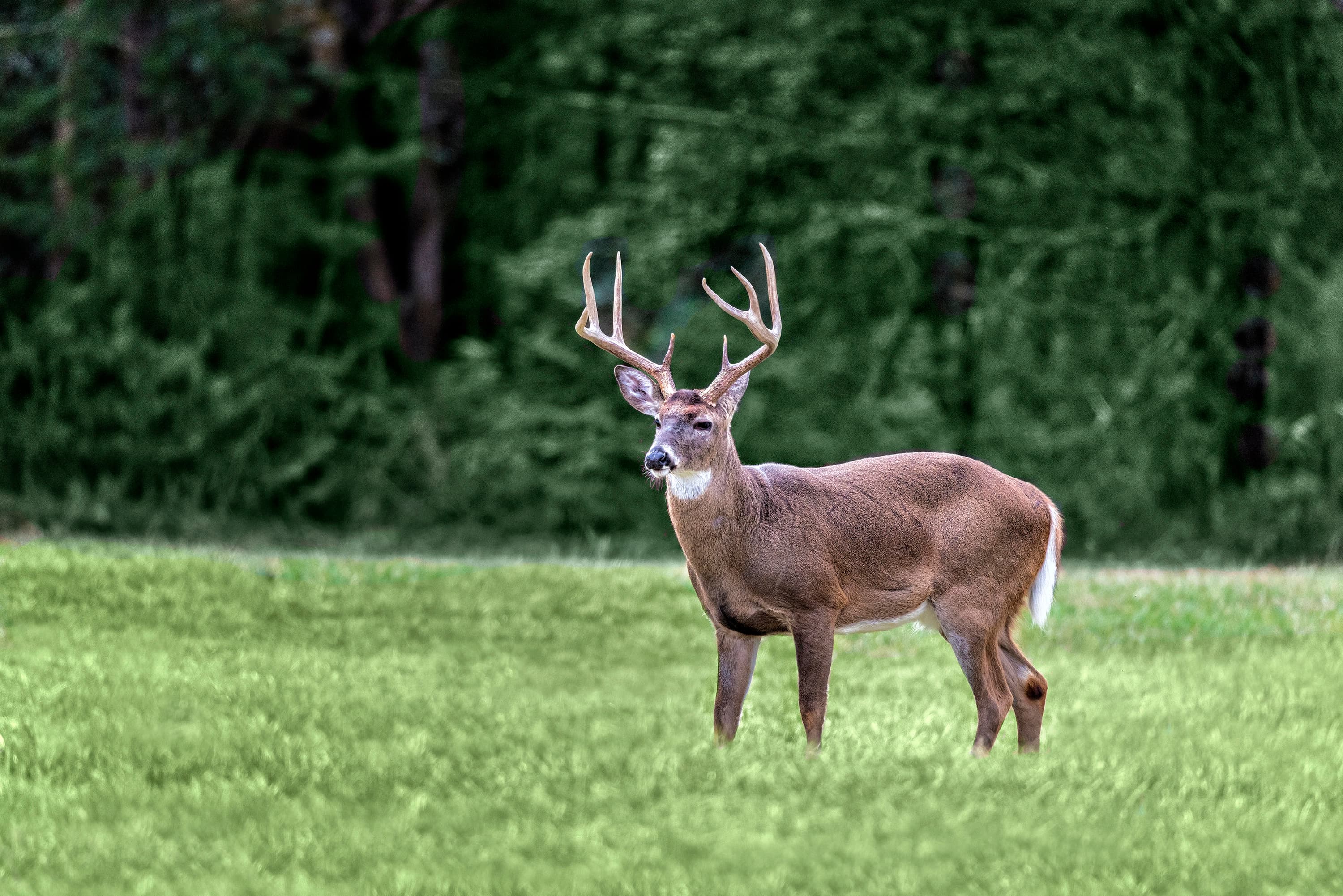
Texas Whitetail Deer Hunting 2026: Season Dates, Zones, Tags & Where to Hunt
Texas whitetail deer hunting 2026—North and South Zone season dates, TPWD license costs, county antler restrictions, nonresident guide, rut timing by region,…
Texas whitetail deer hunting in 2026 spans North Zone and South Zone firearms seasons, a long archery window, youth-only days, and county-specific antler restrictions and mandatory harvest reporting. Tags print on your license—there is no draw for general whitetail tags. Roughly 95% of Texas is private land, so access planning matters as much as season dates. Always verify your county in the TPWD Outdoor Annual before you hunt.
- Archery: September 27 – October 31, 2026
- Youth-only: October 24–26, 2026 (statewide)
- General firearms — North Zone: November 7, 2026 – January 3, 2027
- General firearms — South Zone: November 7, 2026 – January 18, 2027
- Bag limit: 5 deer total, no more than 3 bucks (all seasons combined)
Quick Facts: Texas Whitetail Deer 2026
| Archery Season | September 27 – October 31, 2026 |
| General Season – North Zone | November 7, 2026 – January 3, 2027 |
| General Season – South Zone | November 7, 2026 – January 18, 2027 |
| Youth-Only Season | October 24–26, 2026 (statewide) |
| Muzzleloader Season | January 4–17, 2027 (eligible counties) |
| Special Late Season | Varies by zone (antlerless and spike bucks only) |
| Bag Limit | 5 deer total, no more than 3 bucks, all seasons combined |
| Resident License | $25 (general) / $68 (Super Combo) |
| Nonresident License | $315 |
| Tag System | Tags print on license; digital reporting via Texas Hunt & Fish app |
| Mandatory Reporting | Required in select counties within 24 hours of harvest |
| Official Source | tpwd.texas.gov |
Always verify your specific county's season dates, bag limits, and antler restrictions in the TPWD Outdoor Annual before hunting. Regulations vary significantly by county and can change annually.
Why Texas for Whitetail Deer
Texas is the largest whitetail deer hunting state in the country by every meaningful measure. The state holds an estimated 5 million white-tailed deer spread across all 254 counties, producing more deer per year than any other state—commonly exceeding 700,000 harvested animals annually. The legendary South Texas brush country produces more Boone and Crockett record-book typical bucks than any other region on earth. World-class deer also come out of the Hill Country, the Piney Woods of East Texas, and increasingly from intensively managed properties throughout Central Texas.
Texas is also one of the most accessible states for deer hunting in terms of tag structure. There is no draw, no lottery, and no application deadline for general whitetail tags. Tags print directly on your license when you purchase it. The tradeoff is access: roughly 95 percent of Texas is privately owned, which means gaining permission or booking a lease or guided hunt is the single biggest factor in your success.
2026 Season Dates and Zone Structure
Texas divides its whitetail season by zone and weapon type. The North Zone covers roughly the northern two-thirds of the state; the South Zone covers the southern third, where the rut peaks later and management priorities differ.
Archery Season
Statewide archery opens September 27, 2026, and runs through October 31, 2026. This covers the early pre-rut period across the state and gives bowhunters first crack at velvet and early-season bucks before firearms pressure begins. Antlerless deer may be taken by hunting license tag during archery season except on MLDP properties, where antlerless take requires an MLDP tag.
Youth-Only Season
A three-day youth-only season runs October 24–26, 2026, statewide ahead of the general firearms opener. Hunters must be 16 years of age or under. All legal weapons are allowed, including rifles.
General Firearms Season
- North Zone: November 7, 2026 – January 3, 2027
- South Zone: November 7, 2026 – January 18, 2027
The South Zone's two additional weeks reflect the later rut cycle in South Texas, where peak breeding often occurs in mid-December through mid-January. Confirm your county's zone designation in the TPWD Outdoor Annual.
Muzzleloader Season
A late-season muzzleloader window runs January 4–17, 2027 in eligible counties. This season operates after the general firearms season closes and provides a quieter, lower-pressure opportunity.
Special Late Season
The Special Late Season follows in the North Zone (January 4–18, 2027) and South Zone (January 19 – February 1, 2027). Harvest is restricted to antlerless deer and spike bucks only during this period. It is designed for population management and provides additional opportunity for those targeting does or managing a property.
Licenses, Tags, and How to Buy
Texas uses a straightforward tag system: your deer tags print directly on your hunting license at the time of purchase. There is no separate deer tag purchase—the annual bag limit of 5 deer (no more than 3 bucks) is included with the license. Tags are filled out and attached immediately after harvest, and harvest must be reported digitally via the Texas Hunt & Fish mobile app or online within 24 hours in counties that require it (see Mandatory Reporting below).
License Costs
| License Type | Cost |
|---|---|
| Resident Annual Hunting License | $25 |
| Resident Super Combo (recommended — includes all endorsements) | $68 |
| Nonresident Annual Hunting License | $315 |
| Youth License (16 and under, resident or nonresident) | $7 |
Licenses are valid from the date of purchase through August 31, 2027. Purchase online at tpwd.texas.gov or through the Texas Hunt & Fish app.
Hunter Education: Required for all hunters born on or after September 2, 1971. Complete the free online course with a mandatory in-person field day at tpwd.texas.gov/education/hunter-education.
County Antler Restrictions
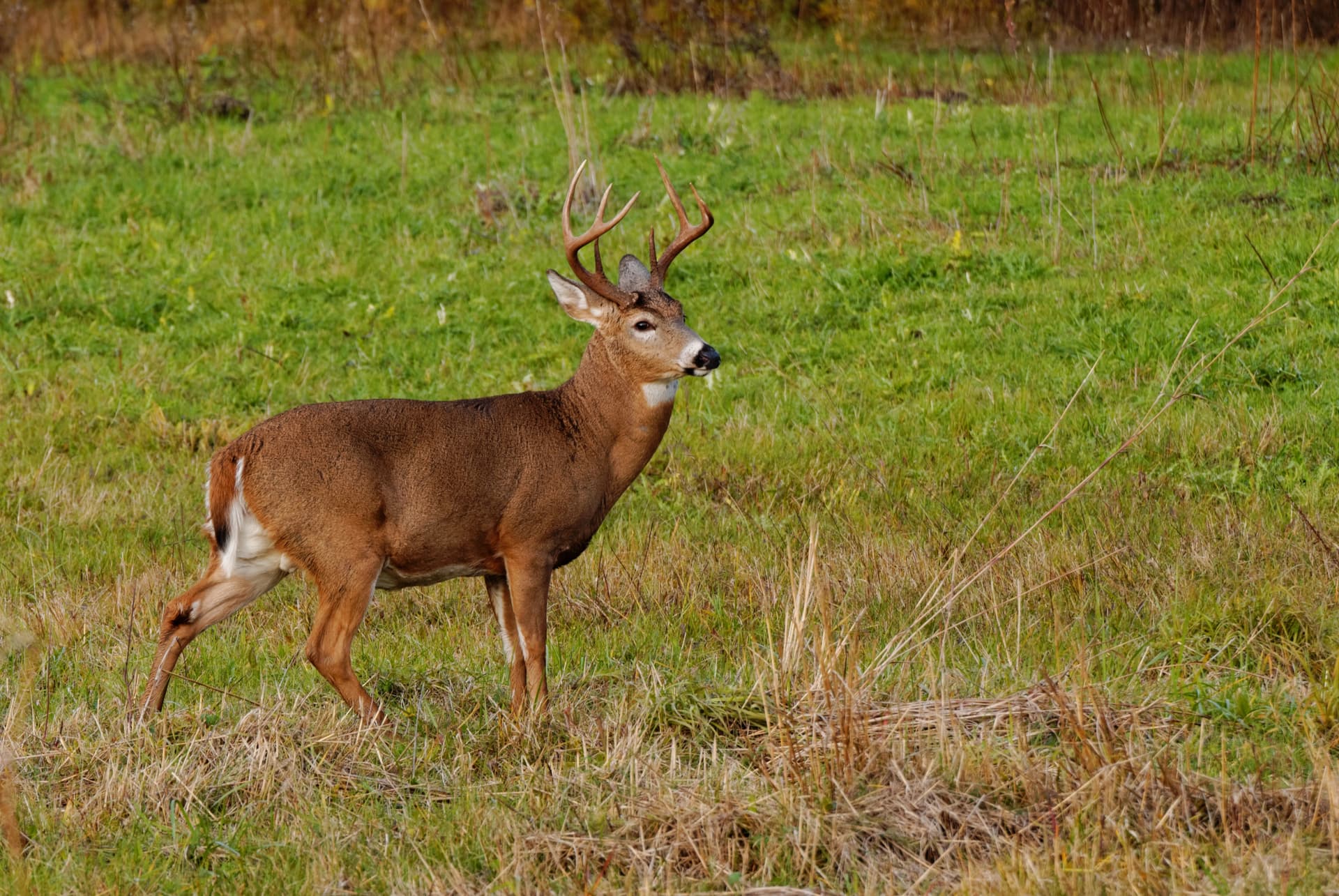
Many Texas counties enforce antler restrictions requiring bucks to meet minimum criteria before harvest. In most restricted counties, a legal buck must have:
- At least one unbranched antler (spike or better on that side), OR
- An inside spread of 13 inches or greater
A practical field test: If the buck's rack extends past the tips of its ears when relaxed, the inside spread is likely at or beyond 13 inches.
Antler restrictions vary by county, and individual county bag limits range from 1 to 5 deer. Always look up your specific county's rules in the TPWD Outdoor Annual county regulations table before hunting. Violating county-specific antler restrictions is a criminal offense.
Mandatory Harvest Reporting
Texas requires digital harvest reporting within 24 hours in specific counties. Mandatory reporting currently applies to:
- Buck and antlerless deer: Collin, Dallas, Grayson, Rockwall counties
- Antlerless deer only: Austin, Bastrop, Caldwell, Colorado, Comal (east of I-35), DeWitt, Fayette, Goliad (north of US-59), Gonzales, Guadalupe, Hays (east of I-35), Jackson (north of US-59), Karnes, Lavaca, Lee, Travis (east of I-35), Victoria (north of US-59), Waller, Washington, Wharton (north of US-59), Wilson
Report via the Texas Hunt & Fish app or at tpwd.texas.gov. Hunters without smartphones may report by phone.
Where to Hunt Texas Whitetails
South Texas Brush Country (The Golden Triangle)
Webb, La Salle, Dimmit, Maverick, Duval, and McMullen counties form the core of what many serious deer hunters consider the world's best trophy whitetail country. Dense Tamaulipan thornscrub, exceptional native browse, and decades of intensive private land management under TPWD's Managed Lands Deer Program (MLDP) have produced the state's highest concentration of mature, record-book class bucks. Average buck age on managed ranches runs 4.5 to 6.5 years. The typical hunting method is elevated blinds over senderos (cleared shooting lanes) and protein feeders.
Access: Nearly entirely private. Guided hunts on quality South Texas ranches range from $3,000 to $15,000+ for trophy-caliber properties. Outfitters and booking agents can assist in sourcing access.
Texas Hill Country
The Edwards Plateau—roughly centered on Kerrville, Fredericksburg, and Junction—is the most densely deer-populated region in the state and arguably in North America by square mile. The Hill Country supports extremely high deer density, but bucks typically score lower than South Texas due to genetics, nutrition, and harvest pressure. It is excellent deer hunting for volume and an ideal destination for hunters who want consistent action over trophy score.
Access: A mix of private leases, hunting ranches, and some public land. The Hill Country has a strong hunting lease culture. Prices are more accessible than South Texas.
East Texas Piney Woods
The national forests and WMAs of East Texas (Davy Crockett, Sabine, Angelina, Sam Houston National Forests) provide the state's most accessible public land deer hunting. Deer are here—bucks in East Texas can be exceptional given the region's agriculture and timber edge—but the hunting is more technically demanding in thick timber than in open brush country.
Public land access:
- Davy Crockett National Forest: roughly 160,000 acres
- Sabine National Forest: roughly 160,000 acres
- Texas WMAs: over 100 WMAs statewide; many require a Limited Public Use permit in addition to a hunting license
Central Texas and the Cross Timbers
Post oak savanna and cedar breaks country in areas like Llano, Mason, McCulloch, and Menard counties have produced increasingly impressive bucks as landowners have adopted management practices. Less famous than South Texas but growing in reputation for trophy quality.
Rut Timing by Region
Texas has one of the most varied rut windows in the country, driven by latitude and deer genetics. Understanding regional rut timing is critical to planning a hunt:
| Region | Peak Rut |
|---|---|
| Panhandle and North Texas | Mid to late November |
| Hill Country (Edwards Plateau) | Mid-November to early December |
| East Texas (Piney Woods) | Mid-November |
| Central Texas | Late November to early December |
| South Texas brush country | Mid-December through mid-January |
South Texas's late rut is the key driver of the South Zone's extended season. Hunters specifically targeting rut activity in South Texas should focus their trips in late December and early January.
The Managed Lands Deer Program (MLDP)
TPWD's MLDP allows landowners enrolled in approved habitat and harvest management plans to operate under a separate permit system that can extend or modify season dates and antlerless harvest opportunities. Many high-quality managed ranches in South and Central Texas operate under MLDP permits, which can provide:
- Extended season dates beyond the general season
- Additional antlerless tags beyond the standard county bag limit
- Season date flexibility for archery and firearms
If you're hunting a managed ranch, ask whether the property operates under MLDP before assuming standard county regulations apply. Full MLDP program details are available at tpwd.texas.gov/landwater/land/private/wildlife_management.
Nonresident Deer Hunting in Texas
How to Hunt Whitetail Deer in Texas as a Nonresident
Texas is a straightforward state for nonresident deer hunters in terms of tag acquisition—there is no draw, no application period, and no lottery. Any nonresident can walk in (or buy online) and purchase a hunting license that includes deer tags for the full annual bag limit of 5 deer (max 3 bucks).
What nonresidents need:
- Nonresident Annual Hunting License: $315 (includes all deer tags)
- Hunter Education Certificate: Required if born on or after September 2, 1971
- Texas Hunt & Fish app (recommended): for digital harvest reporting and zone/county lookup
What nonresidents do NOT need:
- A separate deer tag purchase
- A draw application
- A special nonresident permit
The real barrier for nonresidents is access, not tags. Approximately 95% of Texas is private land. Public hunting exists in East Texas national forests and through the TPWD Type II and III WMA system, but the most famous deer country—South Texas brush, the Hill Country—is almost exclusively accessible through guided hunts, hunting leases, or landowner relationships.
For first-time nonresident hunters in Texas, a guided hunt on a reputable South Texas or Hill Country ranch is the most reliable path. Outfitter costs vary widely: expect $500–$2,000+ for a Hill Country does-and-management-bucks hunt, and $3,000–$15,000+ for a trophy South Texas guided experience.
CWD travel restrictions: Texas has active CWD management zones. Hunters may not transport certain deer carcass parts from a CWD-positive zone to a non-CWD zone. Full carcass transport rules are at tpwd.texas.gov/huntwild/wild/diseases/cwd. Purchase nonresident licenses at tpwd.texas.gov/business/licenses or through any TPWD-licensed retailer.
Tactics by Season
Early Archery (Late September – October)
Early Texas season means heat. Bucks are still in velvet through early September and typically shed by mid-month. Focus on water sources in South and Central Texas—stock tanks and water troughs concentrate deer when temperatures remain in the 80s and 90s. Morning and evening hunts over senderos with good sight lines are productive in the brush country. In East Texas, food plots and timber edge stands work well.
General Season Firearms (November – January)
The pre-rut begins in earnest in mid-October in North Texas and the Hill Country, with bucks actively scraping and making rubs. Peak rut in Central and North Texas falls in the second and third weeks of November—the classic gun-season rut that drives significant hunting activity statewide. Hunting over protein feeders and senderos remains the dominant method on managed ranches. On public land, saddles, creek crossings, and timber edge transitions are productive stand locations.
Late Season (December – January)
In South Texas, this is prime time. The South Texas rut peaks from mid-December through mid-January, making the final weeks of the South Zone season among the best trophy-hunting days of the year. Bucks that have been nocturnal all fall begin showing in daylight during breeding activity. Cold fronts dramatically increase daytime deer movement across the state.
Hunting Apps and Scouting Tools
The Texas Hunt & Fish app is the official TPWD tool and should be on every hunter's phone—it provides zone and county rule lookups, digital harvest reporting, and WMA access information. For scouting and property mapping, platforms like onX Hunt and HuntWise overlay public/private land boundaries and habitat data on topo maps, which is especially useful for navigating complex Texas lease and WMA boundaries.
CWD Awareness
Chronic Wasting Disease is present and managed in Texas. CWD-positive zones have specific carcass transport and deer transport restrictions. Check current CWD zone maps and movement rules before your hunt at tpwd.texas.gov/huntwild/wild/diseases/cwd. TPWD offers voluntary CWD testing at deer check stations statewide.
Key Resources
- TPWD Outdoor Annual (official regulations): tpwd.texas.gov/regulations/outdoor-annual
- License purchase: tpwd.texas.gov/business/licenses/online-sales
- County-specific rules lookup: tpwd.texas.gov/regulations/outdoor-annual/regs/counties/hunt
- Texas Hunt & Fish app: Available on iOS and Android
- CWD zone maps: tpwd.texas.gov/huntwild/wild/diseases/cwd
- WMA access and permits: tpwd.texas.gov/huntwild/hunt/wma
- Hunter education: tpwd.texas.gov/education/hunter-education
For more whitetail hunting guides by state, visit The Inside Spread State Guides. See our full Texas hunting guide for license, fishing, and additional hunting species information. Pair archery planning with our complete bow hunting gear checklist.
Sources
- Texas Parks and Wildlife Department. "White-tailed Deer." Outdoor Annual, tpwd.texas.gov/regulations/outdoor-annual/regs/animals/white-tailed-deer. Accessed 2 Jun. 2026.
- Texas Parks and Wildlife Department. "2025–2026 Hunting Season Dates." Outdoor Annual, tpwd.texas.gov/regulations/outdoor-annual/hunting/2025_2026_hunting_seasons. Accessed 2 Jun. 2026.
- Texas Parks and Wildlife Department. "County Hunting Regulations." Outdoor Annual, tpwd.texas.gov/regulations/outdoor-annual/regs/counties/hunt. Accessed 2 Jun. 2026.
- Texas Parks and Wildlife Department. "Chronic Wasting Disease." TPWD, tpwd.texas.gov/huntwild/wild/diseases/cwd. Accessed 2 Jun. 2026.
- Texas Parks and Wildlife Department. "Wildlife Management Areas." TPWD, tpwd.texas.gov/huntwild/hunt/wma. Accessed 2 Jun. 2026.
Official state agency
Texas Parks and Wildlife DepartmentVerify seasons, bag limits, and license rules with the agency before you hunt.
Written by
The Inside Spread Team
The Inside Spread team covers hunting seasons and access across all 50 states. Our writers have hunted whitetails from the Edwards Plateau to South Texas senderos and East Texas national forests.
Comments
No comments yet. Be the first to share your thoughts.
More in state-guides

Arkansas Duck Hunting 2026: Season Dates, WMA Permits, License Costs & Complete Guide
Arkansas duck hunting 2026-27—three-segment season dates, nonresident WMA waterfowl permits, Black River and Bayou Meto access changes, and Delta license costs.
Georgia Whitetail Deer Hunting 2026: Season Dates, Extended Counties, License Costs & Nonresident Guide
Georgia whitetail deer hunting 2026-27—archery, primitive weapons, and firearms dates, 29-county extended archery, 12-deer bag, Game Check, and the nonresident guide.
Kentucky Whitetail Deer Hunting 2026: Season Dates, Zone Changes, License Costs & Nonresident Guide
Kentucky whitetail deer hunting 2026-27—archery, crossbow, and modern gun dates, the 2026 zone map, license and deer permit costs, Telecheck, and the nonresident guide.
Michigan Whitetail Deer Hunting 2026: Season Dates, License Costs, UP vs LP & Nonresident Guide
Michigan whitetail deer hunting 2026—archery, firearm, and three-day December dates, DNR license fees, Upper vs Lower Peninsula rules, baiting, and the nonresident guide.