
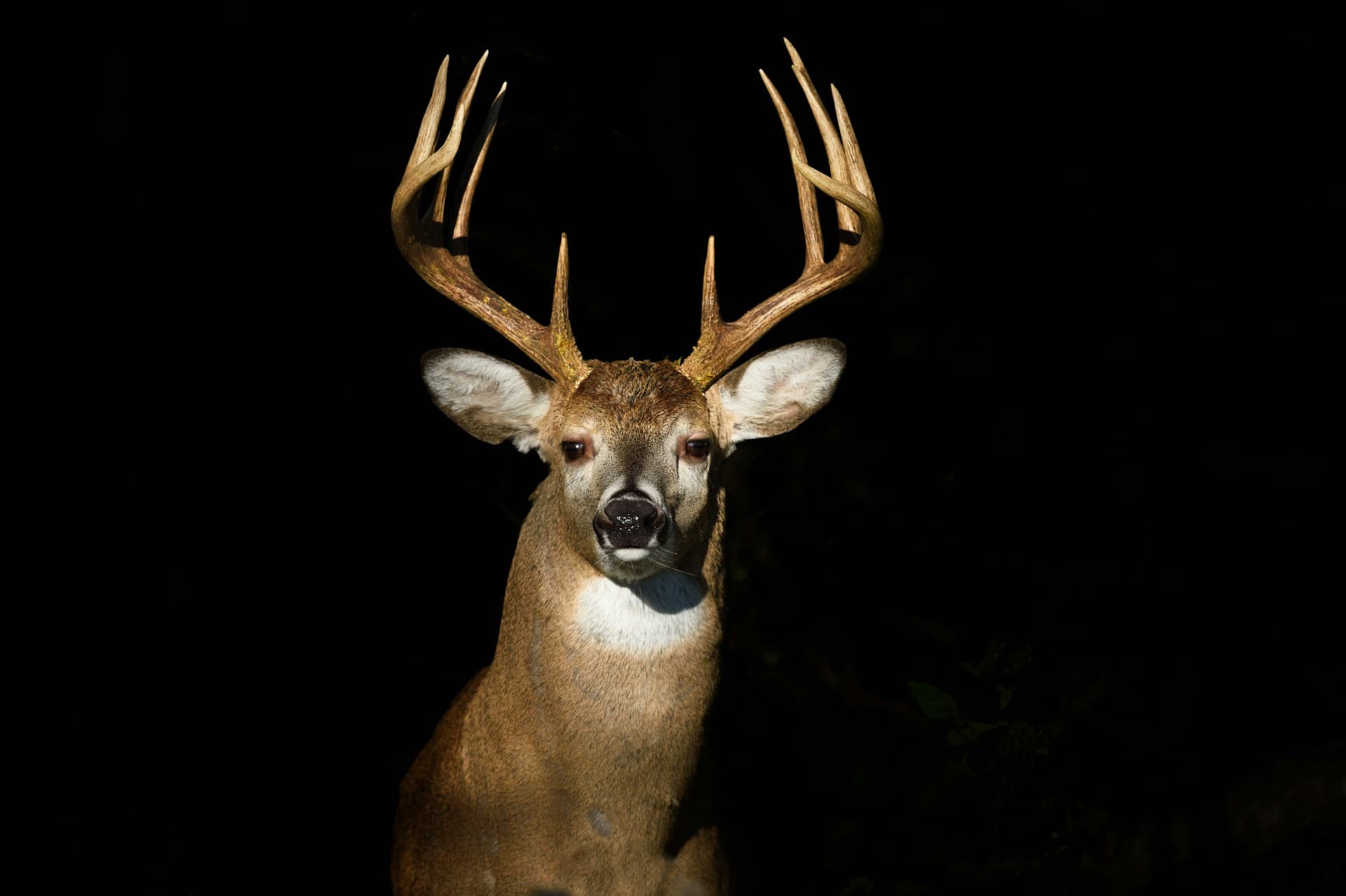
A complete pre-rut whitetail guide covering scrape lines, rub lines, scent-checking behavior, rattling tactics, and how to adjust your setup as bucks shift…
This is Part 2 of The Whitetail Almanac, our season-long series tracking deer behavior and hunting strategy from early season through post-rut. Read Part 1: Early Season if you missed it. Part 3 (Rut) publishes in late October.
If the early season rewarded patience and a good food source, the pre-rut rewards something completely different: paying attention to sign. Somewhere in the last couple of weeks, the predictable, food-driven bucks you were watching in September quietly turned into a different animal. They're still not chasing anything yet. But they're telling you exactly where they are and what they're thinking, if you know how to read it.
This is one of the most underrated stretches of the entire season. The woods are loud with fresh sign, bucks are starting to move in daylight for the first time since velvet, and the pressure most hunting areas see during this window is still relatively low. Here's exactly what's happening right now and how to hunt it.
What's actually changing in a buck's body and behavior right now
The pre-rut is driven by one biological trigger: testosterone. As daylight hours shorten through October, testosterone levels in mature bucks climb sharply, and that hormonal shift changes nearly everything about how they move and behave.
Bachelor groups that have been feeding together since summer are breaking apart for good right now, if they haven't already. The tolerance bucks had for each other in August and September evaporates as rising testosterone turns feeding companions into competitors. You'll start seeing bucks traveling alone, and you'll start seeing sparring matches — shorter, less intense versions of the fights that will happen in a few weeks once real competition for does kicks in.
Bucks are also shifting their core area right now, often moving away from the tight summer pattern centered on a single food source and expanding their range as they begin seeking out where does are concentrated. A mature buck's home range during this period typically runs somewhere between 300 and 1,000 acres depending on habitat and region — considerably larger ground than the tight little circuit he was running in September.
Most importantly for hunters: bucks are increasing their daylight movement, particularly in areas with lower hunting pressure. They're not chasing yet. They're patrolling, marking territory, and beginning to test which does in their range might be the first to come into estrus. That combination — more daylight movement, plus an animal that's leaving constant sign about exactly where he's traveling — is what makes the pre-rut such a productive window for hunters who know how to read it.
Reading scrapes: what they tell you and how to hunt them
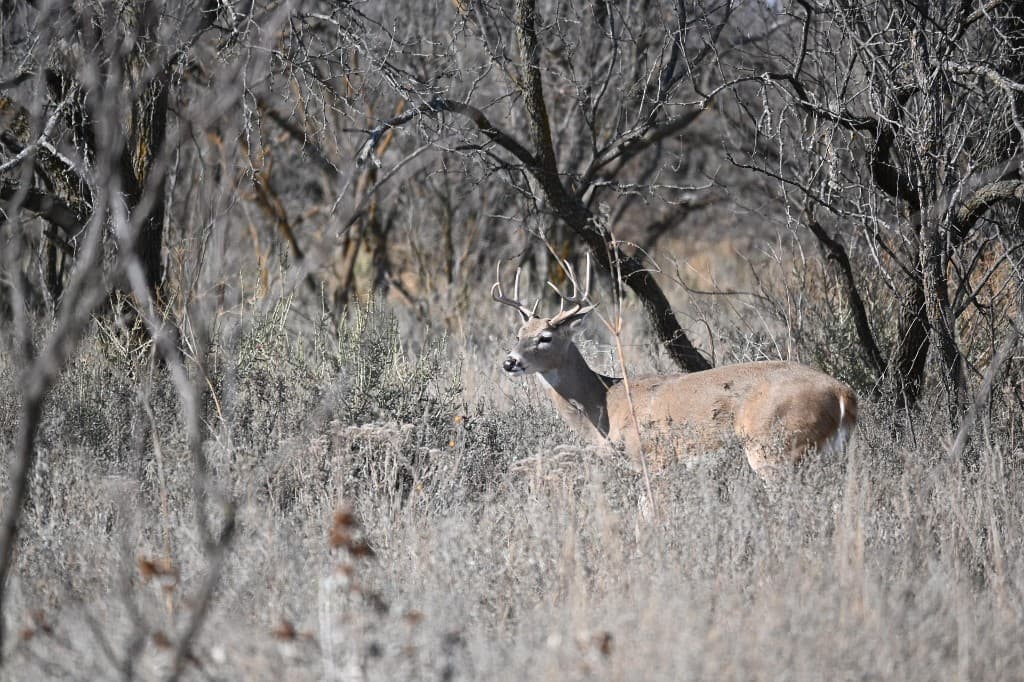
Scrapes are the single most valuable piece of sign you'll find during the pre-rut, and most hunters either walk past them or completely misunderstand what they're looking at.
A scrape is a patch of bare earth, typically found beneath a low-hanging branch, where a buck has pawed away leaves and debris and then urinated on the exposed ground, depositing scent that communicates his presence to every other deer that passes through. The overhanging branch itself — called a licking branch — is just as important as the scrape underneath it. Bucks rub their forehead, preorbital, and nasal glands on that branch, leaving additional scent markers, and both bucks and does will revisit an active licking branch repeatedly to check who else has stopped by.
A scrape with a well-worked licking branch above it, showing fresh pawing and a strong scent, is a genuine communication hub — not a one-time event, but a location specific deer in the area will return to check again and again throughout the pre-rut.
Here's the tactical read that matters most: a scrape found well off any obvious deer trail is often more valuable than one sitting on a heavily used path. A scrape in the open, away from major trail traffic, suggests a buck is deliberately checking that specific spot for scent — meaning he's likely to approach it cautiously, scent-checking from downwind rather than walking directly to it. That behavior is exactly what you want to set up for.
How to hunt a scrape: position your stand or ground blind 20 to 30 yards downwind of the scrape itself, not directly over it. Bucks frequently approach a scrape by skirting it from the downwind side and scenting it from a short distance rather than walking straight up to it, so a stand placed to intercept that downwind approach will often produce a shot at a buck that never actually steps into the scrape itself.
Primary scrapes — the biggest, most consistently freshened scrapes in an area, usually found on major travel corridors near field edges or ridge tops — are worth hunting from mid-pre-rut all the way through the end of a second estrus cycle in December. These are the locations multiple bucks in an area will check throughout the season, not just during the pre-rut window.
Reading rub lines: the roadmap bucks leave behind
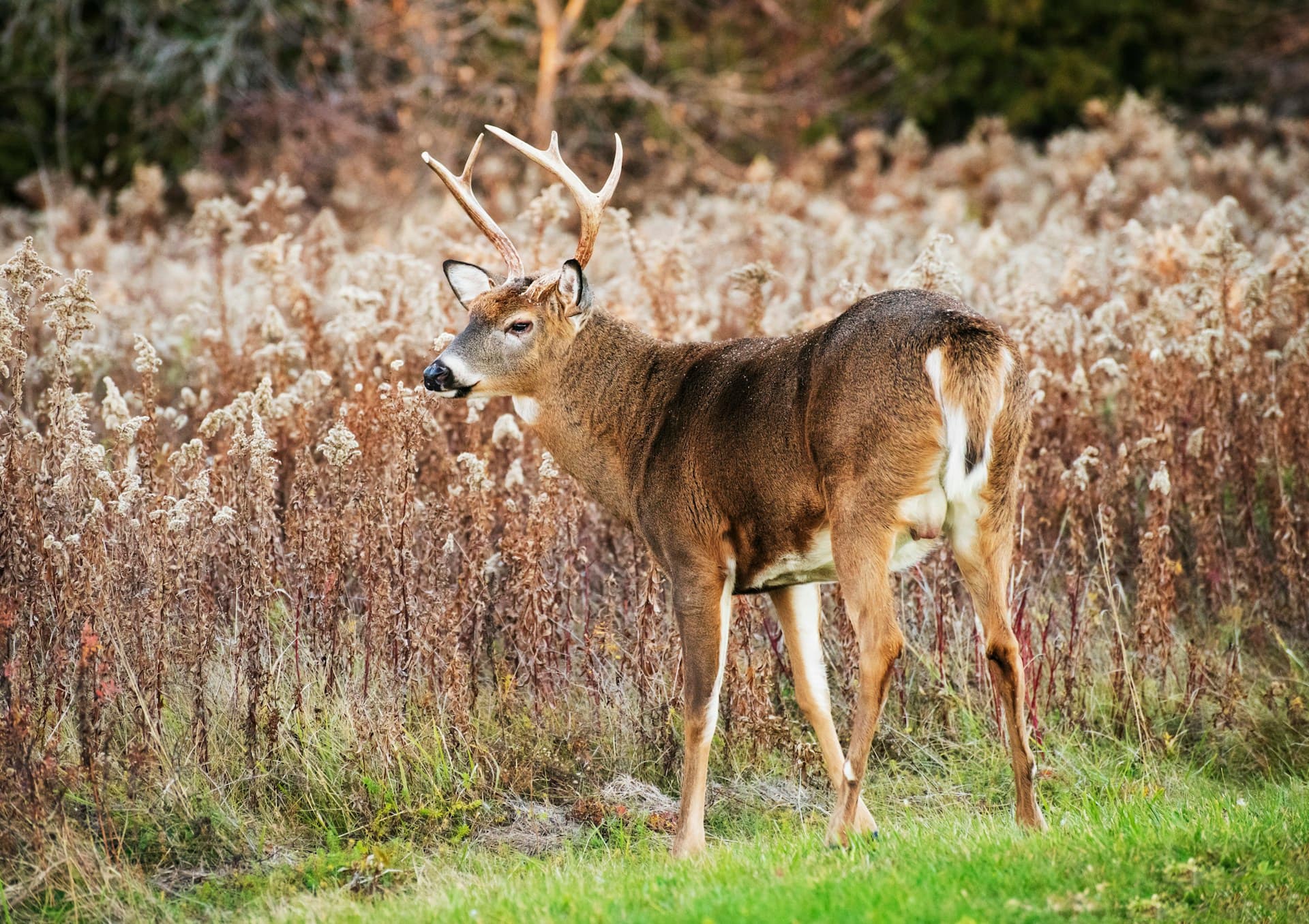
Where a scrape tells you a buck stopped and communicated, a rub line tells you where he's actually walking.
A rub is created when a buck scrapes his antlers against a sapling or small tree, stripping bark and leaving a visible scar. Unlike a scrape, which marks a single point, a series of rubs strung together along a consistent line is effectively a travel corridor marker — and reading that line correctly can tell you a buck's direction of travel, not just his general location.
The direction a rub faces typically corresponds to the direction the buck was moving when he made it — the damage tends to concentrate on the side of the tree facing the direction of travel. Follow a rub line and pay attention to that directional cue, and you can often work out whether you're looking at a morning route (bed to food) or an evening route (food to bed), which should directly inform when you choose to hunt that specific line.
Rub lines found along the edges of bedding cover, connecting to known feeding areas, are worth prioritizing over isolated rubs found in random locations. A cluster of heavy rubs concentrated in thick cover, rather than spread along an obvious trail, often marks a bedding area itself rather than a travel route — valuable information for staying out of a buck's core security zone, not necessarily a place to hang a stand.
Calling and scent tactics: what actually works right now, and what to avoid
The pre-rut is genuinely one of the better windows all season to use calling and scent tactics — but it requires a different touch than what works once the rut is in full swing.
Rattling and grunting. Light rattling and soft contact grunts can be effective right now, because bucks are actively sparring to establish dominance and are generally more receptive to the sound of competition than they will be in a few weeks, once real breeding competition raises the stakes considerably. The key word is light. Short, soft rattling sequences — simulating two bucks sparring rather than fighting — tend to outperform aggressive, prolonged sequences this early. Overdoing it is one of the most common pre-rut mistakes; a call sequence that sounds like an all-out brawl in mid-October, before real competition exists, can read as unnatural to a mature buck and do more harm than good.
Mock scrapes. If you've found good sign in a location that doesn't quite line up with a huntable setup, building a mock scrape nearby — clearing a patch of ground beneath a natural or artificial licking branch and refreshing it with scrape-specific scent — can pull a curious buck into range on your terms rather than his. Scent drippers that automatically dispense scent throughout the day can help maintain a fresh scrape location without requiring you to physically visit and potentially contaminate the area with human scent. For a full preseason mock-scrape workflow, see our 90-day early archery preparation guide.
Scent drags. Dragging a scent-soaked rag behind you on the walk to your stand, or dribbling scent along your final approach, is a tactic worth deploying once real sign starts showing up in mid-October. The idea is to create an intercepting scent trail a cruising buck might cross and follow directly to your setup. This works best paired with sign you've already confirmed is active — don't bother dragging scent into an area with no scrapes or rubs to suggest a buck is actually working that ground.
What to avoid: going overboard with any of this. Excessive calling, oversaturating a mock scrape with scent, or dragging scent trails through areas with no supporting sign tend to educate deer rather than attract them. The pre-rut rewards a light touch paired with confirmed sign far more than it rewards aggressive, blanket tactics.
Where to actually set up during the pre-rut
Your setup priorities should shift meaningfully from where you were sitting during the early season.
Transition zones between bedding and feeding remain productive, but you should expect bucks to be using them differently than they were in September — less direct, more scent-checking, more willing to swing wide of a trail to check wind before committing to it.
Field edges, hunted from the downwind side, are a strong pre-rut strategy specifically because seasoned, mature bucks will frequently scent-check a field from the edge of cover without ever stepping into the open — meaning a stand positioned to catch that downwind pass can produce a shot at a buck that a hunter watching the field itself would never see.
Primary scrape lines, as covered above, deserve dedicated sits during this window, particularly scrapes found along major travel corridors near field edges or ridge tops rather than isolated scrapes in random cover.
Thick cover and draws near bedding, hunted carefully and sparingly, can be productive specifically because pre-rut bucks are beginning to cruise through cover looking to scent-check nearby bedding areas for the first does that might be approaching estrus. These are higher-risk, higher-reward setups — closer to bedding means more potential to blow up the whole area if you get busted, but also a better shot at intercepting a buck before he ever reaches the more heavily hunted field edges.
Timing within the day also shifts. Many pre-rut bucks move heaviest in the first hour after daylight and the last hour before dark, similar to the early season pattern — but unlike September, you should now expect genuine daylight movement at other points in the day as well, particularly as the pre-rut progresses into its later stages in the back half of October. Don't assume a midday sit is wasted time during this window the way it might have felt in early September.
A rough timeline: how the pre-rut unfolds
Pre-rut timing varies by latitude and regional deer density, but the general pattern across most of the whitetail's range in the northern two-thirds of the country tracks reasonably consistently:
Early pre-rut (roughly October 1-10): The first scrapes and rubs begin appearing. Bachelor groups are breaking up. Movement is still relatively close to established summer patterns, but sign is building.
Mid pre-rut (roughly October 10-22): Scrape and rub activity increases noticeably. Bucks are scent-checking regularly, daylight movement is climbing, and this is widely considered the best window to hunt fresh sign near bedding-to-feeding transitions before things shift into the frenzy of the seeking phase.
Late pre-rut / seeking phase (roughly October 23 through the first days of November): Movement accelerates further as bucks begin covering serious ground searching for the first receptive does. Younger bucks in particular start ranging more widely during this stretch. This is the bridge into what most hunters think of as the rut itself.
Exact dates shift depending on your latitude and local deer density — hunters in the Deep South should expect this entire sequence to run later than hunters in the upper Midwest or Northeast — but the sequence of behaviors generally holds true across the whitetail's range. For rut-phase timing in your area, cross-check local patterns with our best days to hunt whitetail deer breakdown and your state agency's harvest data where available.
What's coming next: the rut
Everything covered here has a short shelf life. Once the seeking phase gives way to true chasing behavior — typically in the first one to two weeks of November across most of the country — bucks abandon the cautious, pattern-based behavior described above almost entirely. Scrape checking takes a back seat to active pursuit. Daylight movement peaks. And the tactics that work right now get replaced by a completely different approach.
We'll cover that transition in full in Part 3 of this series. For now: find fresh sign, hunt it with a light touch, and take advantage of a window where bucks are moving more than they have all season but still haven't thrown caution to the wind completely.
Frequently Asked Questions About Pre-Rut Whitetail Hunting
When does the pre-rut start for whitetail deer? The pre-rut generally begins in early to mid-October across most of the whitetail's range, driven by rising testosterone levels as daylight hours shorten. Exact timing varies by latitude, with northern regions typically starting earlier than the Deep South. Most frameworks place the core pre-rut window between roughly October 10 and October 22, transitioning into the seeking phase in the final days of October.
What is the difference between a scrape and a rub? A scrape is a cleared patch of bare earth, usually beneath an overhanging licking branch, where a buck paws the ground and urinates to deposit scent. A rub is created when a buck scrapes his antlers against a small tree or sapling, stripping the bark. Scrapes function as communication points that multiple deer revisit; rub lines mark a buck's direction of travel and help indicate established routes between bedding and feeding areas.
Where should I set up a stand near a scrape? Position your stand or ground blind 20 to 30 yards downwind of the scrape rather than directly over it. Bucks frequently scent-check a scrape by approaching from the downwind side without stepping directly onto it, so a downwind setup is more likely to produce a shot.
Does rattling work during the pre-rut? Yes, but it should be used with a lighter touch than during the rut itself. Short, soft rattling sequences that mimic sparring, paired with soft contact grunts, tend to work better during the pre-rut than aggressive, prolonged sequences, since real breeding competition hasn't begun yet and overly aggressive calling can read as unnatural to a mature buck.
What does it mean when a buck is "scent-checking" a doe or a field? Scent-checking refers to a buck approaching an area — a field edge, a doe bedding area, a scrape — primarily to assess scent for signs of estrus activity, rather than to feed or actively pursue a doe. During the pre-rut, bucks are testing which does might be approaching estrus first, but typically won't commit to full chase behavior until the actual rut begins.
How big is a mature buck's home range during the pre-rut? Research generally places a mature buck's home range at roughly 300 to 1,000 acres during this period, depending on regional habitat and deer density — a meaningful expansion from the tighter, more concentrated summer pattern most bucks run in August and September.
Should I hunt mornings or evenings during the pre-rut? Both can produce during this window, which is a shift from the evening-biased pattern of early season. Many pre-rut bucks are still moving heaviest in the first hour after daylight and the last hour before dark, but genuine daylight movement at other points in the day becomes increasingly common as the pre-rut progresses, particularly in its later stages.
What's the most common mistake hunters make during the pre-rut? Overdoing calling and scent tactics. Aggressive rattling sequences, oversaturated mock scrapes, and scent drags through areas with no confirmed sign tend to educate deer rather than attract them. The pre-rut rewards a light touch paired with fresh, confirmed sign far more than aggressive, blanket tactics applied without evidence a buck is actually using the area.
Next in The Whitetail Almanac: Part 3 covers the rut itself — the seeking and chasing phases, peak breeding, and the all-day sits that define the best two weeks of the whitetail season.
Sources: Bowhunting.com, Mossy Oak, Grand View Outdoors, HuntWise, AFM Real Estate, Cedar Ridge Whitetails, Magic Eagle
The Inside Spread covers hunting, fishing, shooting, and conservation. Learn more at theinsidespread.com.

Written by
Kenny Flermoen
Kenny Flermoen is the owner and CEO of The Inside Spread. Growing up in the Upper Midwest he spent most of his childhood outside—rain, snow, or shine. He writes about hunting, fishing, and conservation with a focus on public-land access, habitat, and the decisions that shape the future of America's outdoor heritage.
Comments
No comments yet. Be the first to share your thoughts.
More in hunting
Early Season Whitetail Guide: What Deer Are Doing Right Now (And How to Cash In Before the Rut)
A complete early season whitetail guide covering deer behavior, food source patterns, buck sighting tactics, and the best time to harvest a doe before the rut kicks in.
What to Look for When Walking Hunting Land for the First Time
On the first walk of hunting land, look past acreage. Judge food, water, cover, and neighboring properties the way deer actually use the landscape.
Best Trail Camera Deals This Week: Cellular Cameras, Feeders & Bows Worth Buying
This week's Academy Sports hot deals—cellular trail cameras, feeders, and archery gear worth buying, plus a few we'd skip.
A Corrections Officer Spent Years Poaching Oregon's Big Game. It Cost Him His Career, $114,000, and Every Hunting Right He Had for Life.
Oregon banned Christopher Matson from hunting for life and fined him $114,000 after a multi-county poaching case. Sentence, charges, and why it matters.